Vatican declares Society of St. Pius X in schism, excommunicates bishops

Vatican Places Society of St. Pius X in Schism, Excommunicates Bishops
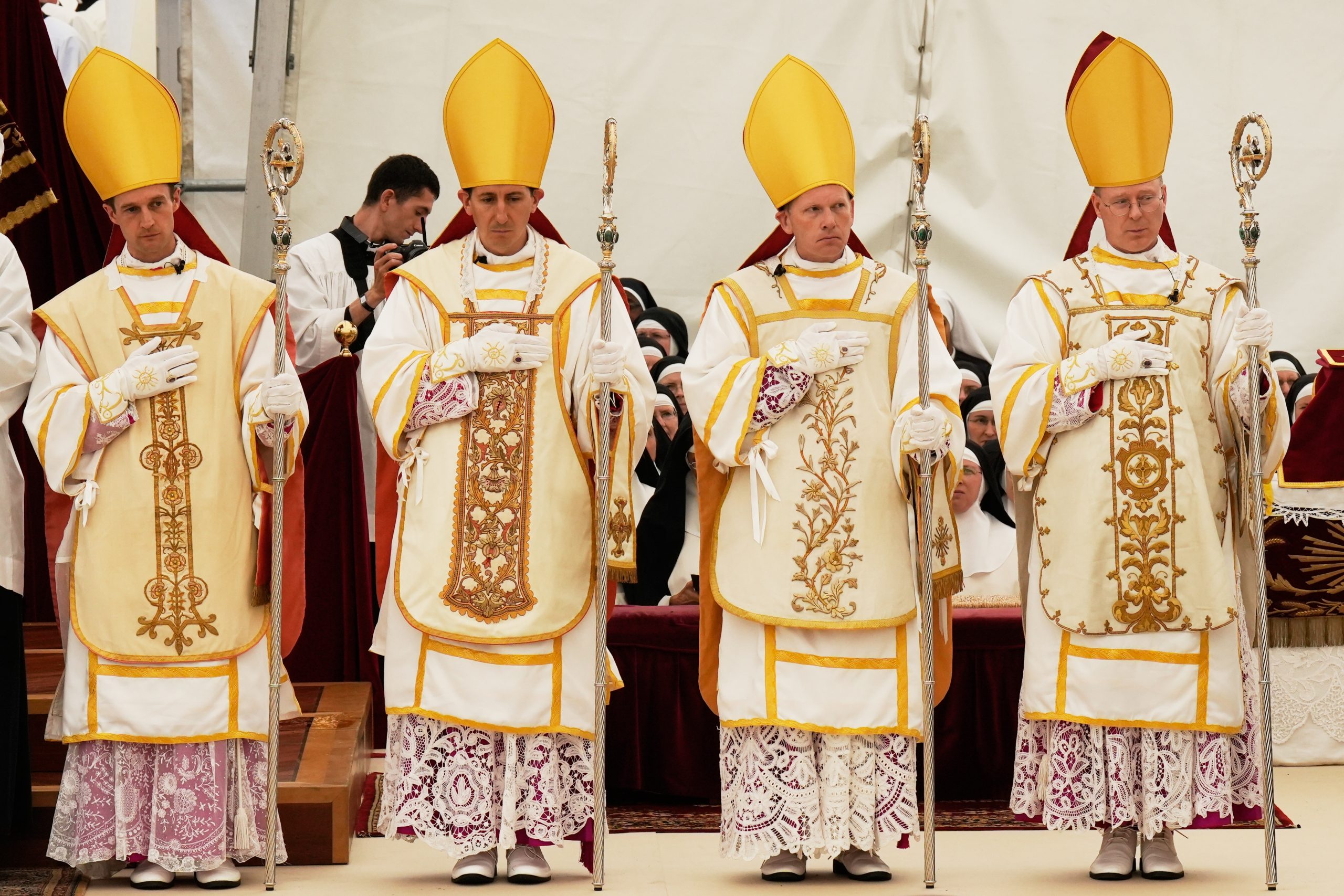
Vatican declares Society of St Pius – VATICAN CITY — In a decisive move, the Vatican announced on Thursday that the Society of St. Pius X has entered a state of schism. The decree excommunicated its bishops and priests, while warning its followers that they too may face severe penalties within the Catholic Church. This action followed the group’s recent consecration of four new bishops at its Econe seminary in Switzerland, an act deemed a direct challenge to papal authority.
Unprecedented Sanctions in Response to Consecrations
The Vatican’s doctrine office took extraordinary measures, surpassing the standard penalties outlined in canon law. The consecrations, which occurred on Wednesday, were not just seen as a violation of protocol but as a fundamental break from the Church’s unity. The four newly ordained bishops, along with the two who participated in the ceremony, were labeled as schismatic. The Vatican asserted that the society itself had created a rupture with the broader Catholic Church, declaring the event a “schismatic act.”
Defiance of Modernizing Reforms
The Society of St. Pius X, known as SSPX, has long opposed the reforms introduced during the Second Vatican Council. It upholds traditional practices, such as the Latin Mass, and views modern changes as heretical. The group accuses the Church of straying from its original teachings, labeling it as rife with modernism and liberalism. Its leaders argue that only the SSPX remains faithful to the true doctrine of Christ.
The consecrations, held during a grand five-hour Mass attended by over 15,000 people and their children, symbolized the SSPX’s continued resistance to Vatican II’s reforms. These changes, which began in the 1960s, redefined the Church’s engagement with other faiths and allowed Mass to be celebrated in local languages rather than Latin. The society sees these shifts as a departure from the ancient traditions it cherishes.
Excommunication and Sacramental Invalidations
Thursday’s decree not only excommunicated the four bishops but also extended the sanction to all SSPX priests, declaring them schismatic. The Vatican invalidated the sacraments of confession and marriage performed by these clergy, effectively severing their authority within the Church. This step was particularly harsh, reversing earlier concessions made by the Vatican to accommodate the SSPX’s needs.
The decision has alarmed the society’s followers, who are now warned that attending their Masses could result in formal excommunication. The Vatican emphasized that adherents who align with the SSPX’s practices are no longer considered part of the Church’s communion. The move underscores the gravity of the group’s actions, which the Holy See sees as a threat to its unity and authority.
Historical Context and Ongoing Tensions
The SSPX was founded in 1970 by French Archbishop Marcel Lefebvre, who opposed the modernizing changes of Vatican II. His 1988 consecration of four bishops without papal approval initially led to excommunication, a penalty that was later lifted by Pope Benedict XVI in 2009. Despite this, the society has remained steadfast in its position, claiming to preserve the Church’s original faith.
However, Pope Leo XIV’s recent stance has shown a renewed commitment to unity. As an American pontiff, he has prioritized reconciliation with conservative factions that felt sidelined during his predecessor’s tenure. Yet, the excommunication decree signals that the Vatican is now willing to take stricter measures against those who persist in their defiance.
The Vatican’s aggressive response is partly due to the SSPX’s growing influence. The group represents a parallel, ultra-traditional version of the Church that has expanded since its founding. With six bishops, 751 priests, and 264 seminarians training in five seminaries, the SSPX has maintained a significant following across 50 countries. Its adherents include 145 religious brothers, 88 oblates, and 250 religious sisters, all of whom now face the possibility of formal separation from the Church.
Justification and Spiritual Motivation
Rev. Davide Pagliarani, the SSPX’s superior, defended the consecrations during the Mass. In a
homily, he stated, “We are accused of not respecting the pope. But it is precisely because we love the pope as the vicar of Christ, as the head of the church, that we don’t want to see the pope humiliated anymore, on the side of false shepherds representing false religions.”
He framed the act as a necessary measure to protect the Church’s integrity and ensure that its leaders are not compromised by external influences.
The Vatican’s decision to excommunicate the SSPX reflects a broader effort to reassert control over its traditionalist factions. After nearly five decades of dialogue, the Holy See has concluded that the group’s continued resistance undermines its authority. The move is expected to intensify tensions within the Church, particularly between progressive and conservative voices.
While the SSPX maintains that its actions are driven by a desire to preserve the faith, the Vatican sees them as a threat to its centralized power. The group’s ability to sustain its structure and attract followers has made it a persistent challenge, even as it faces stricter sanctions. This latest decree marks a turning point in the ongoing conflict, signaling the Vatican’s resolve to enforce its teachings without compromise.