Part of a key firearms law lapsed following a federal court decision. What happens now?

Daftar Isi
A Federal Judge Just Stripped Away Decades of Gun Registration Rules — But Only for Some Americans
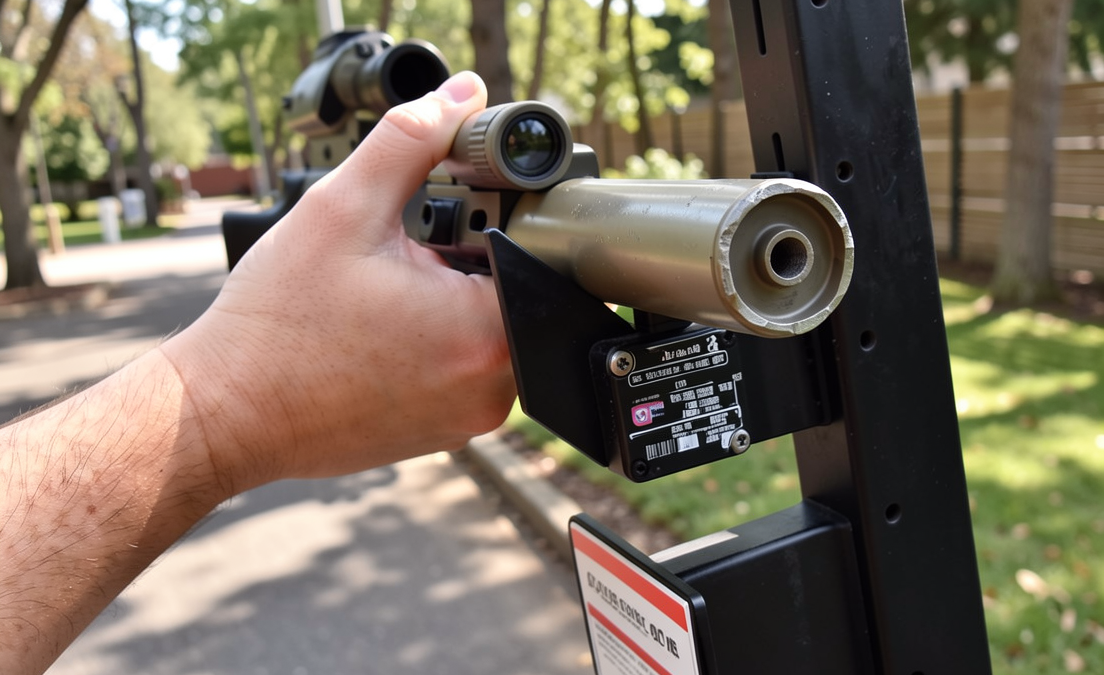
Ecorescuezone.com – For nearly a century, anyone wanting to purchase a silencer, a short-barreled rifle, or a short-barreled shotgun in the United States had to register the weapon with the federal government, submit photographs, and provide fingerprints. That bureaucratic gauntlet, rooted in a 1934 statute, has now been dismantled — at least for a specific group of plaintiffs in Texas. The practical effect: those individuals can buy and sell suppressors and certain compact firearms without any prior federal registration step.
The Ruling and Its Immediate Scope
Judge James Wesley Hendrix of the U.S. District Court for the Northern District of Texas struck down core provisions of the National Firearms Act across more than a dozen states. His decision, issued last week, did not go into effect immediately. Hendrix granted the Justice Department a single week to file an emergency appeal. That deadline passed without action from the department. A longer window — over one month — remains open for a standard, non-emergency appeal, though observers consider such a filing improbable given the administration’s broader posture on firearms regulation.
The ruling’s reach is narrow by design. It binds only the named plaintiffs in the Texas litigation: Gun Owners of America, the Silencer Shop Foundation, several other gun-rights organizations, and their individual members residing in the states covered by the case. Everyone else remains subject to the existing registration framework unless and until Congress or another court changes the landscape.
How a Prohibition-Era Tax Became the Linchpin of Modern Gun Regulation
The National Firearms Act was enacted in 1934, a direct legislative response to the wave of gang violence that had erupted during Prohibition. Lawmakers at the time viewed certain weapons — compact shotguns, short rifles, and sound-suppressing devices — as particularly dangerous and sought to curb their circulation. The mechanism was fiscal: a $200 excise tax on the manufacture and transfer of those firearms, paired with a mandatory registration requirement for owners.
That tax endured on the books for nine decades. Then, in 2025, Congress enacted the One Big Beautiful Bill Act, which included a provision reducing the transfer and manufacture tax to zero dollars for short-barreled shotguns, short-barreled rifles, and silencers. The legislative change was modest in dollar terms but seismic in constitutional architecture. Without a tax to justify, proponents argued, the accompanying registration and reporting mandates lost their legal footing under Congress’s taxing power.
Several states and gun-rights organizations moved quickly after the bill’s passage to challenge the remaining NFA requirements in federal court. Hendrix agreed with their central argument. In his written opinion he observed:
“By zeroing out the transfer and making taxes for most NFA firearms, Congress eliminated the constitutional basis for the regulations that formerly supported the taxes for those firearms. No longer can the challenged NFA provisions be justified — as they have been for nearly 90 years — under Congress’s taxing power.”
What the Ruling Covers — and What It Does Not
The invalidated provisions apply to three categories of firearms: short-barreled shotguns, short-barreled rifles, and suppressors (the colloquial “silencers”). They also extend to a residual federal category labeled “any other weapons,” a catch-all designation for concealable or unconventional firearms that do not fit standard classifications — items such as pen guns, umbrella guns, and other gadget-style weapons.
What the ruling does not eliminate: state-level registration or licensing requirements, and certain federal paperwork obligations that flow from the separate Gun Control Act of 1968. Gun Owners of America itself cautioned that some states may still impose additional rules, and that federal firearm registration forms could remain in play under that older statute. Given the resulting legal ambiguity, the organization’s senior vice president, Erich Pratt, advised prospective buyers to consult an attorney before skipping any registration step.
Reactions From Both Sides of the Gun-Regulation Divide
Gun-rights advocates framed the decision as a landmark constitutional victory. Pratt, speaking for Gun Owners of America, put it bluntly:
“This is truly one of the greatest Second Amendment victories in the last 100 years. It’s something that we have wanted since we were first incorporated in 1976.”
Public-safety advocates saw the opposite picture. Jack Budish, federal counsel for Everytown for Gun Safety, characterized the move as a direct threat to community safety:
“It is the antithesis of public safety to now all of a sudden say, we’re going to unleash these weapons into communities and onto our streets.”
The Wider Administrative Context
The Texas decision arrived amid a broader administrative push to restore firearms access for people with felony convictions, subject to carve-outs for violent offenses including domestic-violence convictions and gang-related crimes. A final rule reflecting that policy was published on Monday, signaling that the Justice Department views the NFA’s registration architecture as part of a larger regulatory overreach it intends to unwind.
What Happens Next
Two additional lawsuits challenging the National Firearms Act are pending in federal courts in Missouri and Kentucky. In those matters, the Justice Department has continued to defend the statute. The department did not answer questions about whether it plans to appeal the Texas ruling in the future, but issued a brief statement: “The Department respects Americans’ Second Amendment rights and is currently assessing the impact of the court’s ruling.”
Meanwhile, gun-rights organizations and Republican members of Congress are pressing for a permanent, nationwide application of the Texas decision — either through executive action or new legislation that would codify the elimination of registration requirements for all Americans, not just the Texas plaintiffs. The Bureau of Alcohol, Tobacco, Firearms and Explosives, the agency that administers NFA paperwork, said in a statement that it is still “processing forms and will continue” its existing operations, leaving the practical question of how long the old system persists unanswered.
For the roughly two dozen states where the Texas ruling now operates, the immediate effect is real: silencers and compact firearms can change hands without the federal registration step that has governed their commerce since the 1930s. For everyone else, the answer remains a waiting game — one that will likely be decided by the next appeal, the next congressional session, or the next court to weigh the question.
Related Reading
Frequently Asked Questions
What is Part of a key firearms law lapsed?
Part of a key firearms law lapsed is the main topic of this guide. The article explains the context, practical details, and next steps readers should understand.
Why does Part of a key firearms law lapsed matter?
Part of a key firearms law lapsed matters because readers are looking for a useful answer, not just a short summary. Good content should match search intent and help them decide what to do next.