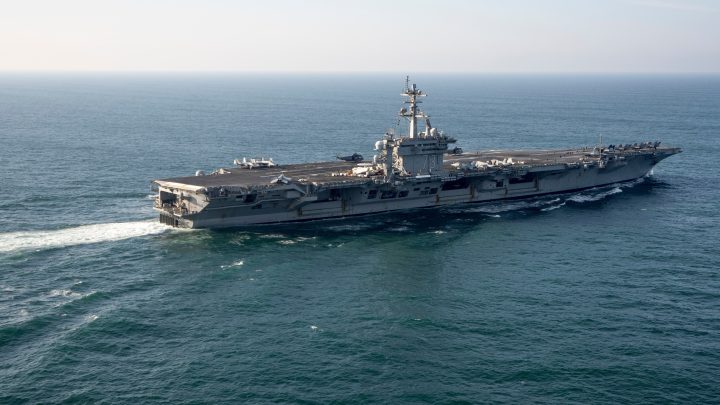
Trump orders Pentagon to scale back joint exercises with South Korea

Daftar Isi
Pentagon Ordered to Trim Joint Drills with Seoul as Trump Pivots Toward Pyongyang
Ecorescuezone.com – The annual summer war game between the United States and South Korea kicked off on Monday under a cloud of uncertainty after President Donald Trump directed the Department of Defense on Sunday to slash the scope of the training. The order, delivered through a social media post, reframed a decades-old alliance ritual as an act of provocation toward Pyongyang and cast Seoul’s refusal to join a broader military campaign against Iran as a personal slight.
The decision lands at a moment when Washington has already strained relationships with European NATO partners over what the White House frames as insufficient backing for its Iran operations, while simultaneously pressing a harder line against Russia in the Baltic. South Korea, long treated as a cornerstone of the U.S. Indo-Pacific posture, now finds itself caught between its principal security guarantor and a neighbor the president insists he can manage through personal rapport.
The President’s Rationale
In his post, Trump characterized the drills as expensive and, more pointedly, as a message sent to the wrong audience. He described North Korea under Kim Jong Un as
“unthreatening and respectful”
throughout his second term, and called the exercise signal
“totally inappropriate and hostile”
to the North Korean leadership. Because the training had already begun, the president said cancellation was no longer possible, so he issued a directive instead:
“Therefore, and based on the fact that it is too late to cancel, I have instructed Secretary of War, Pete Hegseth, to substantially reduce the Joint Military Exercises!”
Trump also recounted a recent conversation in which he asked South Korea’s president whether Seoul would participate in what he termed the
“denuclearization”
of Iran. His account of the reply was blunt:
“and they said, ‘No thanks!'”
What the Exercises Were Meant to Do
Ulchi Freedom Shield, the summertime counterpart to a springtime drill, is one of two principal combined operations the two militaries run each year. This year’s edition was slated to run for 11 days and draw roughly 18,000 South Korean service members into joint scenarios designed to sharpen readiness against a North Korean attack.
The U.S. military had described the exercise as reinforcing
“the role of the alliance as the linchpin for regional peace and security”
and reaffirming
“the ironclad commitment between the United States and the Republic of Korea to defend their homelands.”
Planned activities included a live-fire segment testing joint precision targeting and maneuver, a wet-gap crossing to simulate riverine operations, and the distribution of prepositioned equipment stored in South Korea for rapid use in a crisis. Seoul’s Defense Ministry confirmed the drills commenced on schedule despite the president’s Sunday post.
A Sharp Reversal from May
The tone shift from Washington’s public posture toward Seoul is striking when measured against remarks made only months earlier. In May, Secretary of War Pete Hegseth, meeting with South Korean counterparts at the Pentagon, commended the ally for its
“commitment to increase defense spending”
and its
“leadership in assuming primary responsibility for the security of the Korean Peninsula.”
He went further, telling the assembled officials:
“It demonstrates alliance burden-sharing that all of America’s partners would do well to follow.”
That praise, offered in the context of broader pressure on NATO members to shoulder more of the cost of American security commitments, now reads as a prelude to the very exercise the president ordered curtailed.
Pyongyang’s Reaction and Missile Testing
The timing compounds the awkwardness. Days before the drills were to begin, North Korea resumed ballistic missile launches in defiance of United Nations Security Council resolutions, ending a lull that had stretched since late June. South Korea, the United States, and Japan tracked two such launches earlier in the month; both missiles fell into waters off the North Korean east coast.
On Friday, Pyongyang issued a warning of unspecified
“stern steps”
against both Washington and Seoul, branding the military drills
“a rehearsal for an aggressive war”
that it claimed was destabilizing the region. Analysts note that such rhetoric is a staple of North Korean communications ahead of major allied exercises and often serves as cover for accelerated weapons testing and domestic mobilization around the leader’s image.
Since the collapse of high-level diplomacy between Kim and Trump in 2019, the North has steadily expanded its nuclear and missile stockpiles. Experts assess that a larger arsenal strengthens Kim’s bargaining position should talks ever resume, giving him leverage to extract concessions without surrendering existing capabilities.
Criticism and the Personal Axis
Democratic Senator Mark Kelly, a former Navy aviator, was among the first to register opposition. Within hours of the president’s post, Kelly wrote that
“hollowing out these joint exercises is shortsighted and a mistake.”
The broader question the order raises is whether a president’s personal chemistry with an adversary can override institutional alliance management. Trump met Kim three times during his first term, most recently in 2019, and has signaled since returning to office that he would welcome a continuation of those conversations. In September 2025, Kim himself referenced
“good personal memories”
of the former president and floated a return to talks, conditional on Washington dropping what he called
“its delusional obsession with denuclearization”
of the North. Whether that personal channel can substitute for the deterrence architecture that Ulchi Freedom Shield and its springtime twin are designed to maintain remains the central open question for Seoul, for U.S. service members stationed on the peninsula, and for the regional security order that has depended on the alliance since 1953.
Related Reading
Frequently Asked Questions
What is Trump orders Pentagon to scale back?
Trump orders Pentagon to scale back is the main topic of this guide. The article explains the context, practical details, and next steps readers should understand.
Why does Trump orders Pentagon to scale back matter?
Trump orders Pentagon to scale back matters because readers are looking for a useful answer, not just a short summary. Good content should match search intent and help them decide what to do next.