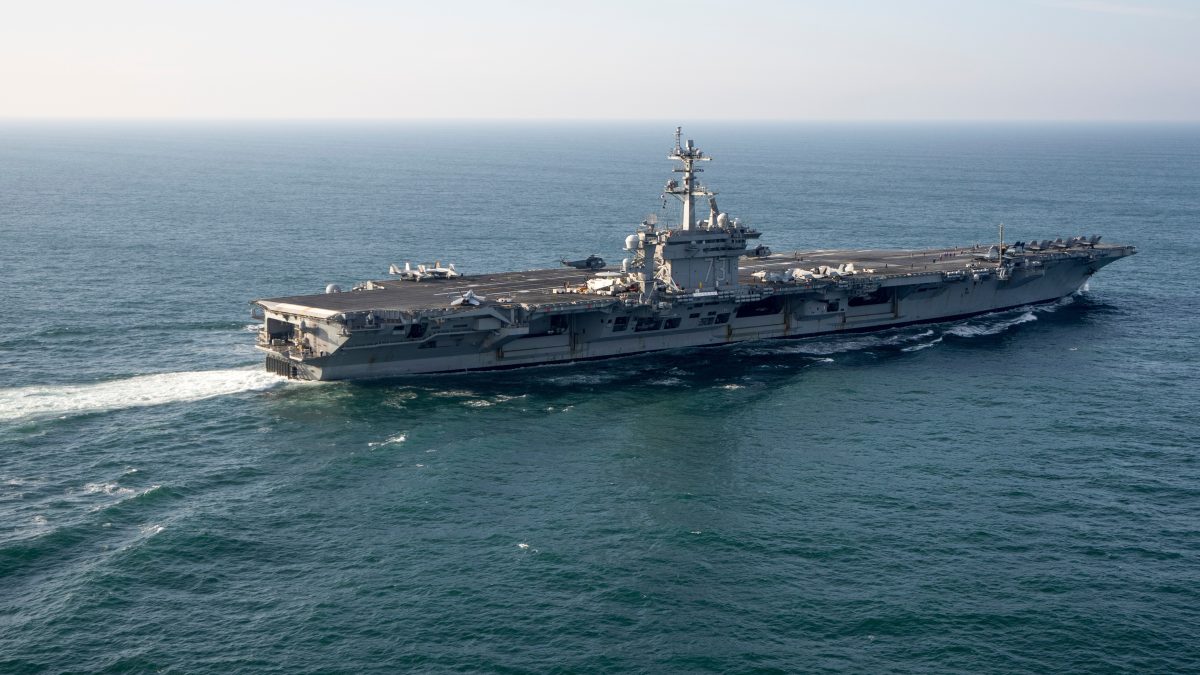
New aircraft carrier heads toward Mideast after reports of issues on long-deployed USS Lincoln

Daftar Isi
U.S. Naval Forces Shift Strategy as Carrier Crisis Unfolds in Middle East Waters
Ecorescuezone.com – The United States Navy is executing a significant strategic realignment in the Middle East, dispatching the USS George Washington to reinforce regional presence while addressing mounting concerns about conditions aboard the USS Abraham Lincoln. The Pacific-based carrier departed from Da Nang, Vietnam, last week, beginning its journey toward waters where it will likely assume the role of one of two American aircraft carriers currently stationed in the region.
This deployment comes as reports of mental health challenges and supply shortages aboard the Lincoln have intensified, prompting calls for accountability from Congress and the Pentagon. The Lincoln has been operating in support of American military operations against Iran, maintaining a record-setting deployment of more than 260 consecutive days at sea—far exceeding typical carrier rotation schedules.
Supply Chain Disruptions and Crew Welfare Concerns
The extended deployment has exposed vulnerabilities in the Navy’s logistical capabilities. According to official Navy statements, the conflict created what officials described as “a highly contested environment where traditional supply hubs in the Middle East were disrupted by combat actions.” These disruptions cascaded into tangible problems for sailors aboard the carrier, including shortages of essential supplies and the loss of mail that had been accumulating for months.
Navy leadership implemented a prioritization system to address these challenges. “Leadership prioritized mission-critical supplies: first food, then hygiene items, then mail,” the statement explained. The Navy further assured that sailors aboard the Lincoln now have access to clean water and “healthy meal options,” though the timeline for full restoration of normal supply chains remains uncertain.
Mental health concerns have emerged alongside material shortages. Extended periods away from family, combined with the stress of active conflict and limited port access, have taken a toll on crew members. The Lincoln was originally scheduled to return home in May, but the ongoing situation has extended its stay considerably.
Strategic Realignment and Regional Implications
The arrival of the George Washington carries significant strategic implications for U.S. naval positioning. Once the Washington completes its transit through the Strait of Malacca—which links the Pacific and Indian oceans—the Pacific region will temporarily lack a U.S. aircraft carrier presence. This represents a notable shift in American naval posture.
The Trump administration has characterized China, the dominant regional power, as “a settled force” that primarily requires deterrence rather than the more confrontational approach taken under the previous administration. This philosophical difference influences how the Navy allocates its carrier resources between regions.
Meanwhile, the Navy has reimposed a blockade on Iranian ports in the strategically crucial Strait of Hormuz. Defense Secretary Pete Hegseth told reporters that the United States can maintain this blockade “indefinitely,” signaling no immediate plans to reduce pressure on Iranian maritime operations.
Political Response and Oversight Efforts
Democratic lawmakers have been particularly vocal about the situation. Hegseth on Thursday characterized reports of problems aboard the Lincoln as “completely misrepresented,” but congressional pressure continues to mount.
Connecticut Senator Richard Blumenthal, a member of the Senate Armed Services Committee, emphasized the broader significance of the situation. “The Lincoln’s prolonged deployment is especially significant because it is occurring in the context of continuing military operations against Iran and the possibility that substantial US naval forces will be required in the region for an extended period,” Blumenthal wrote in a letter to Navy leadership requesting detailed responses to multiple questions.
Arizona Senator Ruben Gallego, a Marine Corps veteran, announced plans to organize a bipartisan delegation for an official oversight visit to the carrier. Gallego expressed strong concerns about sailor treatment, stating on social media that the way sailors are being treated is “not just disgusting; it’s dangerous.”
Navy Leadership Takes Action
Navy officials, including acting Secretary Hung Cao, held a tense town hall meeting last week with families of troops aboard the Lincoln. During this gathering, commanders of both the Navy’s air and surface forces made commitments to do everything possible to relieve the aircraft carrier and address the mounting concerns.
Defense Secretary Hegseth, during a separate visit to Panama, expressed his desire to see the Lincoln’s sailors return home and crews rotated as quickly as possible. However, he also pushed back against negative reports about conditions aboard the ship.
“We make sure that every ship, every crew, every captain has everything we can provide them at every single moment. Some deployments are longer than others, and I have more respect and gratitude for those sailors than anybody. What they do in those high seas in those austere conditions with less port calls — it’s incredible.”
The Navy initially pushed back against reports of food shortages when they first surfaced in April, but the accumulation of concerns has made it increasingly difficult to dismiss the problems. As the George Washington continues its journey through the Singapore Strait and toward the Indian Ocean, the Navy faces the dual challenge of maintaining operational effectiveness while addressing the welfare of sailors who have been deployed longer than any carrier crew in recent history.
The Trump administration has offered limited clarity on how it intends to wind down the conflict with Iran, leaving military planners and sailors alike uncertain about when normalcy will return to the region. For now, the American Navy continues to project power through the Middle East, but the experience aboard the Lincoln serves as a reminder of the human and logistical costs of prolonged military engagement.
Related Reading
Frequently Asked Questions
What is New aircraft carrier heads toward Mideast?
New aircraft carrier heads toward Mideast is the main topic of this guide. The article explains the context, practical details, and next steps readers should understand.
Why does New aircraft carrier heads toward Mideast matter?
New aircraft carrier heads toward Mideast matters because readers are looking for a useful answer, not just a short summary. Good content should match search intent and help them decide what to do next.