Lala is again a tropical storm, sending drenching rain and winds across Hawaii

Daftar Isi
Aftermath and Warning: Tropical Storm Lala Leaves Hawaii Reeling
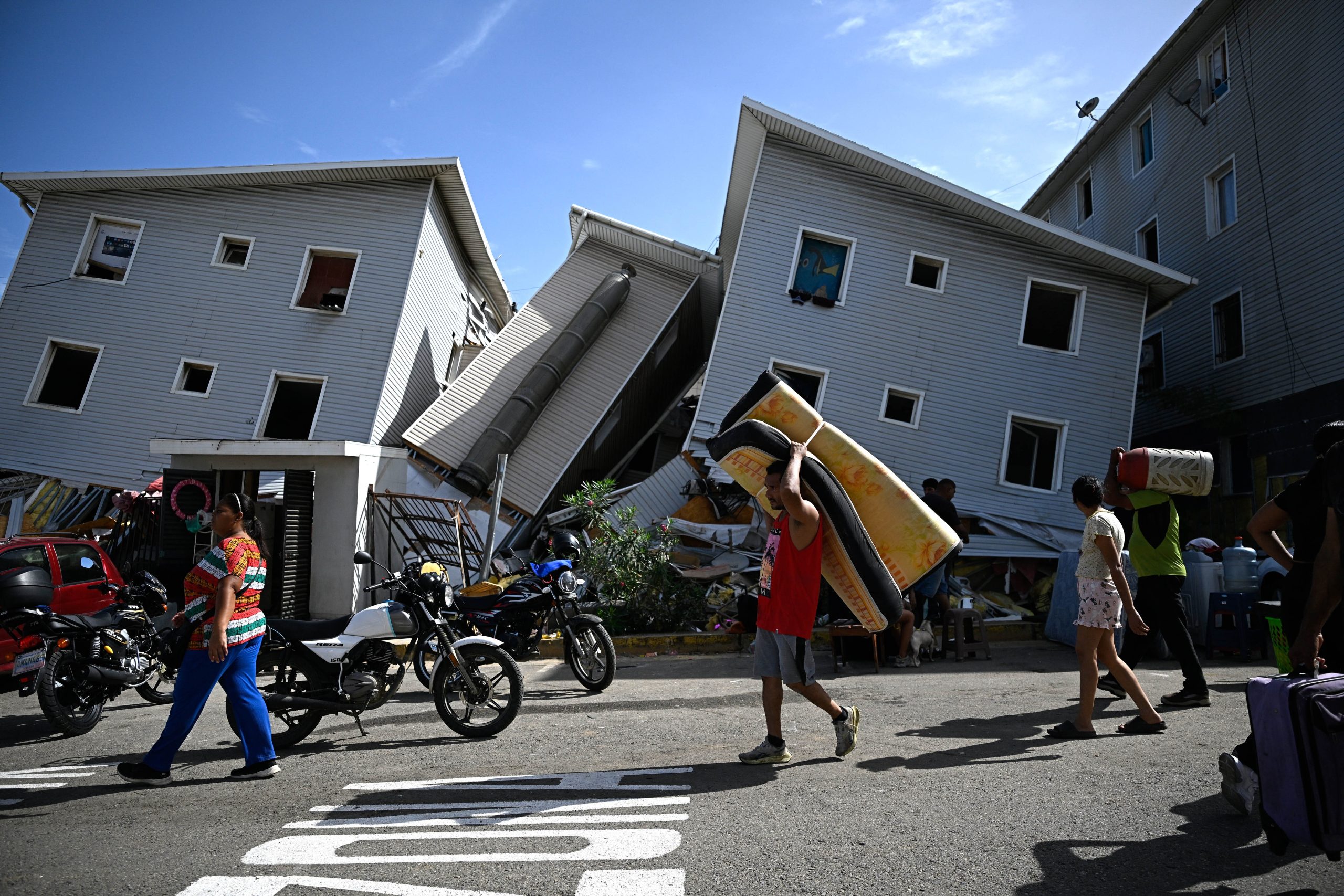
Ecorescuezone.com – Hawaii’s Big Island bore the brunt of a punishing storm passage Sunday morning, when Hurricane Lala had already shed its hurricane designation but continued delivering hurricane-force gusts to windward ridges. The system skirted the archipelago without making landfall, yet the damage it inflicted was severe: at least one fatality from a vehicle collision near South Point, nineteen roofs torn away, and more than 130,000 households plunged into darkness across the three largest islands by early Sunday, per outage-tracking data. Governor Josh Green confirmed that at least three hospitals were running entirely on backup generators.
The governor described the event Saturday evening as an “enormous storm” and noted that road crews had already responded to more than thirty damage sites.
“There have been a lot of roads impacted, our crews have already been out to more than 30 sites.”
Flash Floods Trigger Search-and-Rescue Operation
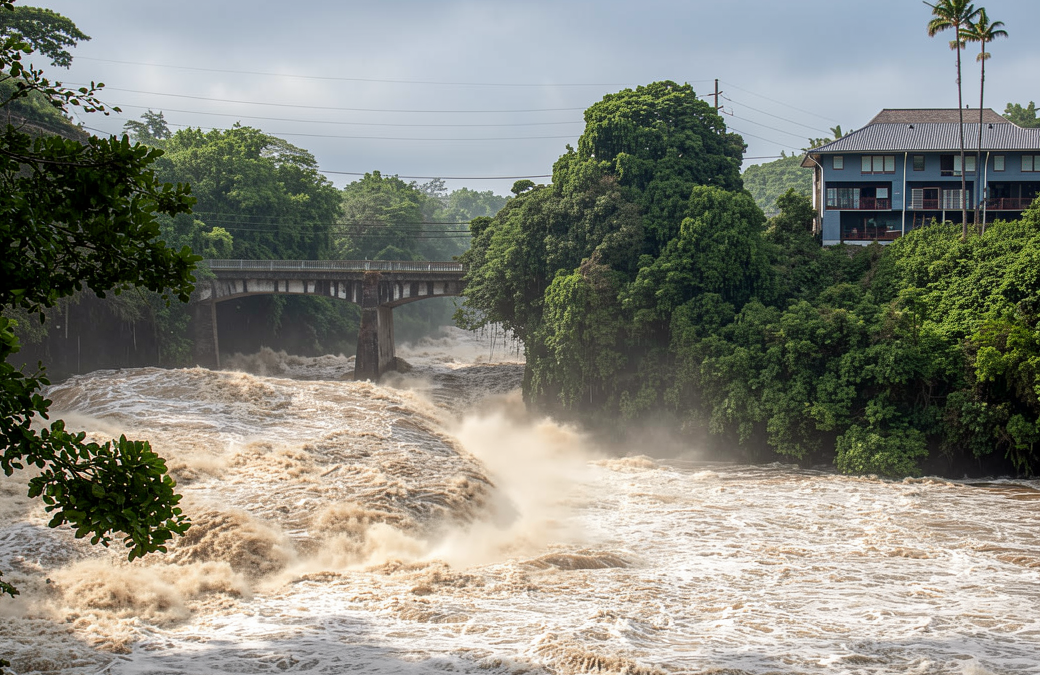
The most urgent operational challenge emerged in the island’s southern coastal communities. Flash floods apparently tore several occupied homes from their foundations in Na’alehu and Wai’ohinu, prompting a coordinated search-and-rescue deployment involving Civil Defense, the National Guard, and the Coast Guard. Hawaii County Mayor Kimo Alameda briefed reporters early Sunday on the conditions crews faced.
“What makes this very challenging is that there’s rushing water, there’s debris, and there’s boulders on the road and it’s dark.”
The flooding was not an isolated event. Residents across the island chain were still recovering from devastating March floods when Lala arrived, compounding infrastructure strain and psychological fatigue. Shelters opened ahead of the storm’s closest approach, scheduled events were canceled, and ranchers received explicit guidance to leave cattle in open pastures rather than in barns that might collapse under sustained wind loading.
Storm Mechanics: Why the Damage Exceeded the Category
The National Hurricane Center issued a critical caveat for anyone interpreting Lala’s downgraded status: wind speeds atop mountains and along both windward and leeward slopes routinely run up to 30 percent stronger than the near-surface measurements used to assign storm categories. In practical terms, a “tropical storm” at sea level can produce hurricane-force gusts on elevated terrain, which is precisely what struck the Big Island’s higher ridges as Lala passed.
As of 2 a.m. Sunday Hawaii time, the system sat roughly 105 miles (170 kilometers) west-northwest of Kailua-Kona and about 100 miles (160 kilometers) south of Honolulu. Tropical-storm-force winds stretched as far as 175 miles (280 kilometers) from its center. Sustained top winds measured 70 mph (110 kph), with the system tracking northwest at approximately 15 mph (24 km/h). Forecasters indicated Lala would likely regain hurricane strength midweek once it moved well clear of the island chain to the west.
Tropical storm warnings remained in effect for Maui, Molokai, Lanai, Kahoolawe, Oahu, Kauai, and Niihau as the system continued its westward drift. The combination of saturated ground, strong winds, and residual moisture raised the prospect of both destructive inland flooding and wind-ignited wildfires in dry leeward zones.
Rainfall Totals and Slope Instability
The heaviest precipitation fell on the higher windward slopes of the Big Island, where forecasters projected cumulative totals approaching three feet (one meter). In the most extreme microclimates beneath Mauna Kea’s towering flanks, some locations could receive as much as 35 inches (89 centimeters) by the time the system fully departed. Rivers swelled into fast-moving torrents, and steep slopes where roughly 210,000 islanders reside—many in off-grid, improvised housing—faced acute mudslide risk.
The hurricane center’s broader rainfall guidance called for 8 to 12 inches (20.3 to 30.5 centimeters) across Maui and the lower elevations of the Big Island, with 4 to 6 inches (10.2 to 15.2 centimeters) distributed across the remaining island chain.
Residents Describe a Night of Sustained Terror
Bobby Camara, 75, a lifelong resident staying at a care home just outside Hilo, described his plan as straightforward: stay put and pray for continuity of utilities. Gas stations ran through the night as neighbors filled tanks for chainsaws and vehicles.
“I think stocking up is part of life over here. … You learn to be self-reliant.”
In Keaau, along the island’s east coast, Mike Caputo—a 50-year-old local fire captain—had his generator fueled and a 10,000-gallon (37.8 kiloliter) household water tank topped off before the winds peaked. His principal worry was not wind itself but what the wind would drop: albizia trees, ubiquitous in Hawaiian landscapes, which grow enormous yet lack structural integrity.
“They’re not very sturdy, but they grow extremely large,” Caputo said. “They can make roads impassable.”
Christine Matsuda, living in Waimea on the island’s northern flank, reported gusts arriving every few minutes that shook the entire structure of her home.
“We’re finding unexpected leaks in places that don’t see water under normal conditions,”
Matsuda added. The sideways-driven rain—described by witnesses as blowing nearly horizontally—found gaps in roofing and siding that years of calmer weather had never stressed.
Looking Ahead
With Lala now a westward-moving tropical storm, the immediate threat shifts from wind to prolonged saturation. Roads already damaged by fallen trees and washed-out sections will require days of repair before normal traffic resumes. Hospitals running on generators face fuel-supply constraints if outages extend beyond 48 hours. And the communities that lost homes to flash flooding in Na’alehu and Wai’ohinu enter a recovery phase while still processing losses from March’s floods—a compounding burden for both residents and county emergency-management staff.
Related Reading
Frequently Asked Questions
What is Lala is again a tropical storm?
Lala is again a tropical storm is the main topic of this guide. The article explains the context, practical details, and next steps readers should understand.
Why does Lala is again a tropical storm matter?
Lala is again a tropical storm matters because readers are looking for a useful answer, not just a short summary. Good content should match search intent and help them decide what to do next.