A real-world study of Oregon’s nonmedical psilocybin program shows promise

Daftar Isi
What Oregon’s Psychedelic Program Tells Us About Regulating Magic Mushrooms Outside the Clinic
Ecorescuezone.com – For decades, the question of whether psilocybin could be safely administered to ordinary adults outside a hospital ward remained largely theoretical. Oregon answered that question in 2020 when voters approved a statewide nonmedical framework allowing anyone over 21 to receive a guided psilocybin session at a licensed center — no prescription, no physician’s referral, no clinical trial enrollment required. Now, nearly three years into the program’s operation, a peer-reviewed analysis of almost 350 participants offers the most detailed real-world safety and outcomes picture yet for regulated, nonmedical psychedelic use in the United States.
The findings, published Wednesday in JAMA Network Open, paint a broadly encouraging portrait. The vast majority of participants characterized their session as beneficial, and more than half placed the experience among the most meaningful events of their lives. Serious adverse reactions were rare. The data, in short, suggests that a structured commercial-adjacent model for delivering psilocybin can function without producing the kind of catastrophic failure that skeptics had predicted.
Safety: Behavioral Risks, Not Physical Ones
The four participants classified as having “serious adverse reactions” were all first-time users of psilocybin. One individual was transported to a hospital after experiencing what the report describes as a “violent reaction” during the session; another later visited an emergency room because of acute anxiety. Beyond those incidents, the overall adverse-event rate tracked what clinicians typically observe with other psychiatric interventions.
One data point warrants attention: one week after their session, three participants reported new thoughts of dying or suicide. By the three-month follow-up, that number had doubled. While small in absolute terms, the trajectory underscores that psychological monitoring after a psychedelic experience may need to extend well beyond the session itself.
Mental-Health Outcomes and Their Interpretive Limits
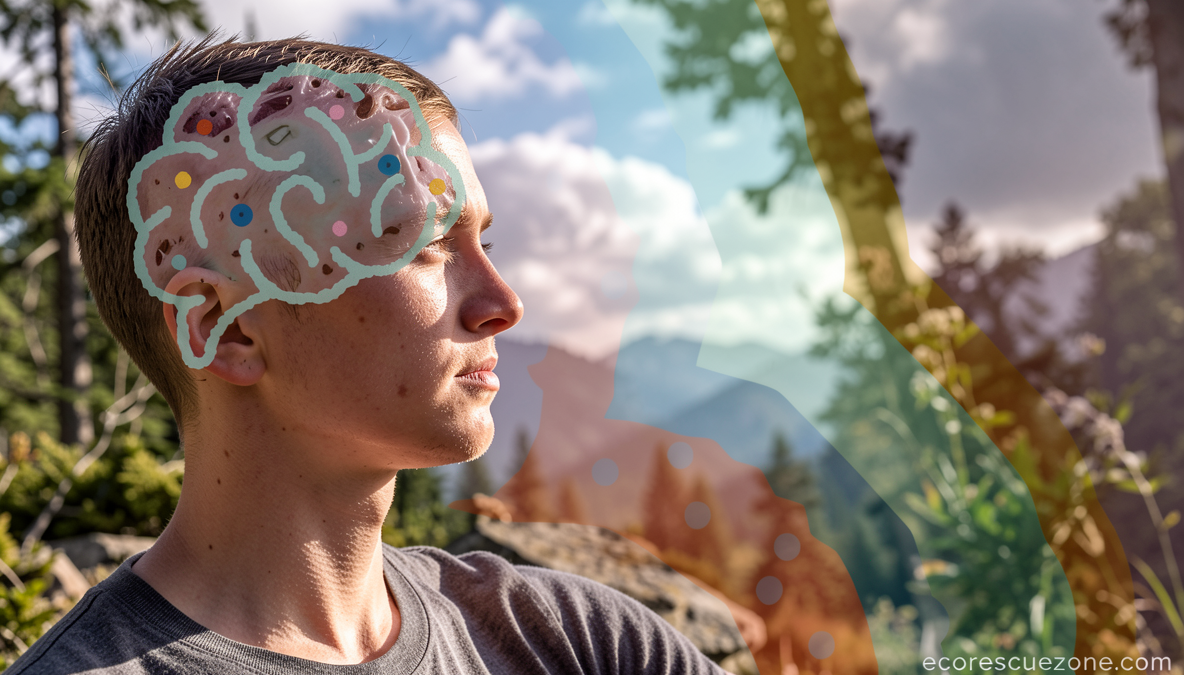
More than half of the cohort reported improvement in mental-health symptoms following their session. However, because the study was uncontrolled — there was no comparison group — and because participants entered with widely varying baseline symptom severity, those self-reported improvements are difficult to attribute causally to the psilocybin experience alone.
A separate measure, positive change in overall mental well-being, showed effects comparable in magnitude to those documented in meditation and mindfulness research, according to Balázs Szigeti, a clinical data scientist at the University of California, San Francisco, who was not involved in the Oregon study.
A Different Pathway from the FDA Pipeline
The momentum around psychedelics in recent years has been dominated by pharmaceutical development trials aimed at securing Food and Drug Administration approval so that psilocybin, LSD, and related compounds can be prescribed for treatment-resistant depression and other conditions. Psilocybin itself may receive that approval as early as next year, based on large-scale studies using a synthetic form of the molecule.
Oregon’s model represents something categorically different. Rather than a tightly controlled medical intervention administered by physicians, the state’s framework places a trained facilitator in a designated center and allows adults to walk in, receive roughly 30 milligrams of psilocybin — a dose somewhat higher than what is typically used in clinical trials — and undergo a guided integration process. Colorado has since launched its own psychedelic program, though adults there retain the option of using the substance outside a supervised setting.
The average dose in the Oregon cohort, at approximately 30 milligrams, sits above the range commonly employed in FDA-track trials, a distinction that may explain why the state’s experience profile differs from what pharmaceutical sponsors observe in their controlled studies.
Expert Reactions and the Question of Generalizability
Dr. Todd Korthuis, who led the research team based at Oregon Health & Science University, acknowledged that he had initially doubted whether dosing adults with psilocybin outside a tightly controlled medical environment would hold up under real-world conditions.
“The data has swayed me,” he said. “These results are very reassuring.”
Szigeti, observing from outside the study, expressed surprise that the real-world results looked so favorable given the comparatively lower level of medical oversight.
“In clinical settings, there are a lot of eyes on the patients, a lot of medical attention,” he noted. “To see that the whole thing did not blow up in this regulated business environment is definitely good news for psilocybin.”
Who Participated, and What That Means
The study cohort represents only a small fraction of the more than 20,000 people who have passed through Oregon’s licensed psilocybin service centers since the program launched. Participants were predominantly white and college-educated; roughly one-third reported a household income exceeding $200,000. Korthuis stated that the demographics of the study sample closely mirror the broader population visiting the state’s centers, which are concentrated in the Portland metropolitan area.
Still, the possibility remains that the low adverse-event rate is partly an artifact of who chose to enroll in a research study — individuals who may feel more comfortable reporting their experience to investigators, or who selected the program precisely because they felt psychologically prepared for it. Whether the safety profile holds for a more diverse, less affluent, or less psychologically screened population remains an open question that future data will need to address.
What the Oregon experience does establish, with reasonable confidence, is that a nonmedical, facilitator-guided psilocybin model can operate at scale without producing a wave of physical harm. That finding carries implications well beyond the Pacific Northwest: it suggests that regulatory frameworks need not be limited to physician-supervised clinics if structured oversight, trained personnel, and post-session follow-up are in place. As other states and countries weigh their own psychedelic policies, the Oregon dataset offers a rare, empirically grounded reference point for what regulated nonmedical psychedelic delivery looks like in practice.
Related Reading
Frequently Asked Questions
What is A real world study of Oregon?
A real world study of Oregon is the main topic of this guide. The article explains the context, practical details, and next steps readers should understand.
Why does A real world study of Oregon matter?
A real world study of Oregon matters because readers are looking for a useful answer, not just a short summary. Good content should match search intent and help them decide what to do next.