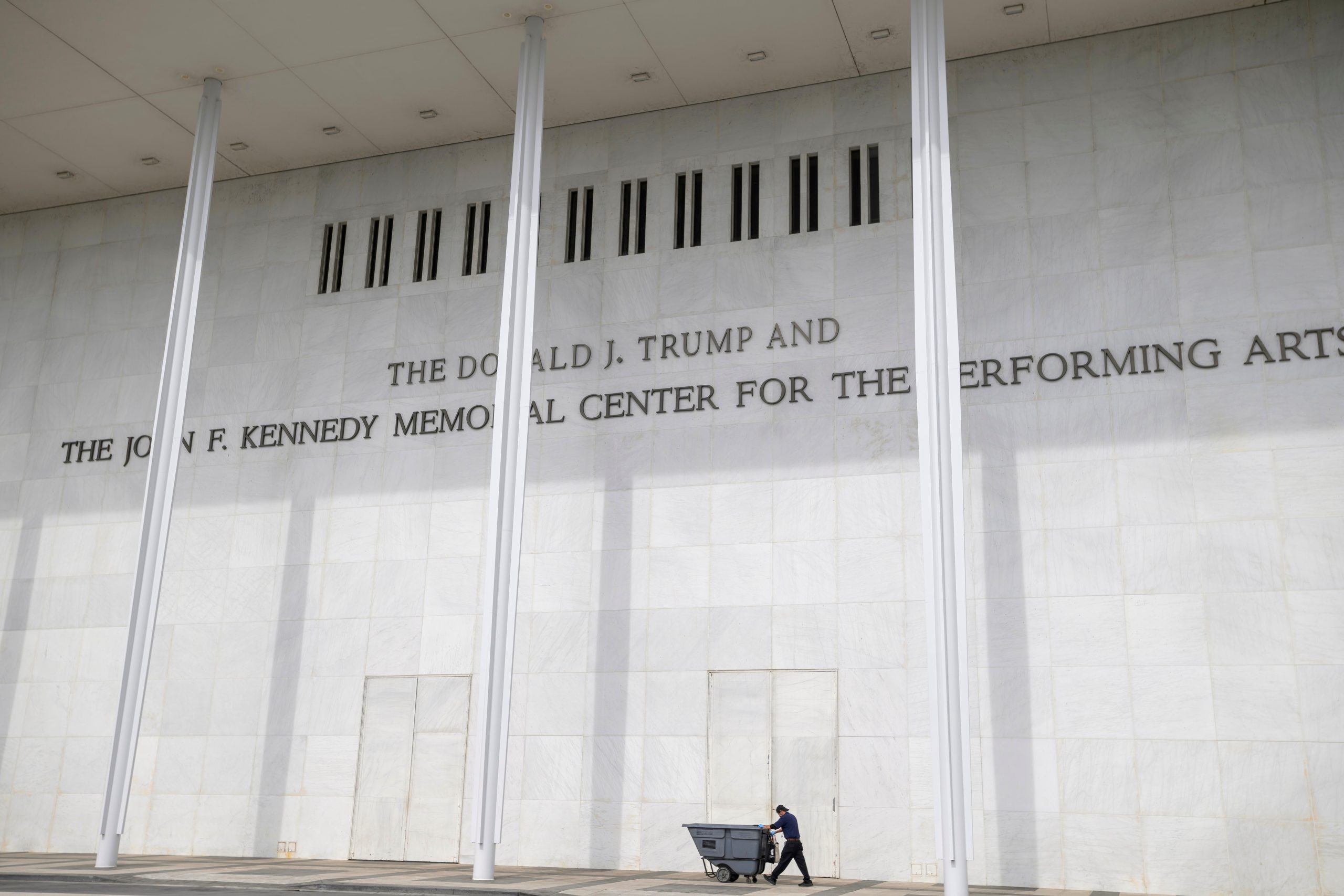
Kennedy Center Board Challenges Court Order to Remove Trump’s Name
Kennedy Center board seeks pause of ruling – WASHINGTON — Just days before a federal court mandated the removal of former President Donald Trump’s name from the Kennedy Center’s facade, the institution’s board of trustees has launched a final-ditch attempt to retain the moniker. The decision comes as part of a broader effort to delay the enforcement of a ruling issued by U.S. District Judge Christopher Cooper on May 29, which declared Trump’s name was improperly added to the cultural landmark. The board’s action, taken on Thursday, aims to suspend the court’s order until a potential appeal can be considered.
Legal Battle Over Name Change
The board’s move follows a series of escalating tensions between the Trump administration and the Kennedy Center. Cooper’s ruling, which emphasized that only Congress had the authority to alter the center’s official designation, required all references to Trump’s name to be erased by Friday. The decision also halted plans for a major renovation project set to begin in July, which would have transformed the venue over the course of two years. The administration had previously argued that the name change was a matter of executive discretion, but Cooper disagreed, citing legal procedures that must be followed for such a designation.
The formal request for a stay was submitted late Thursday, according to an anonymous source with knowledge of the board’s private meeting. This action marks a critical juncture in the dispute, as the board seeks to reverse the court’s directive before the deadline. The board’s decision reflects a last-minute strategy to prevent the immediate removal of Trump’s name from the building’s iconic exterior, which has become a symbol of his influence over the arts sector.
Shift in Official Messaging
In contrast to earlier guidance, the Kennedy Center’s Office of General Counsel issued a June 4 memo to staff instructing them to use the name “The John F. Kennedy Center for the Performing Arts” or “Kennedy Center” in all official communications. This directive signaled a significant shift from the previous practice of including Trump’s name in public-facing materials. However, the board’s recent vote to seek a stay suggests a split in opinion within the organization, with some members prioritizing legal challenges over compliance with the court’s ruling.
The center’s website has already updated its branding, removing Trump’s name from the main page. Additionally, an email sent earlier this week to members for the June 28 Mark Twain Award for American Humor ceremony was dispatched under the Kennedy Center’s name without any mention of the former president. These changes underscore the administration’s push to formally rebrand the institution, a move that has sparked debates about its implications for the arts community.
Contested Legal Grounds
“The Trump administration’s 11th-hour gambit after waiting nearly two weeks evinces desperation,” said Norm Eisen, a board member of Democracy Defenders Action, and Nathaniel Zelinsky, senior counsel at the Washington Litigation Group. “That is what they should be feeling because they don’t have a legal leg to stand on. We will be vigorously contesting this latest ploy as we have throughout the case on behalf of Congresswoman Beatty and the American people.”
The board members’ statement highlights the administration’s perceived lack of legal justification for maintaining Trump’s name. They argue that the court’s ruling leaves the center with no choice but to comply with the order, while the board continues to fight for its position. The legal battle also centers on the role of Congress in authorizing such changes, with the board insisting that the name addition was a valid exercise of executive power.
Rep. Joyce Beatty, D-Ohio, an ex-officio member of the Kennedy Center’s board, filed the lawsuit that led to Cooper’s ruling. Her legal team has been at the forefront of the case, emphasizing that the center’s name change should be a bipartisan decision rather than a unilateral act by the executive branch. The lawsuit has drawn support from various lawmakers and advocacy groups, who view the name addition as a political maneuver rather than a cultural necessity.
Trump’s Influence and Rebranding
Trump’s return to the Kennedy Center has been marked by a series of appointments and strategic decisions. During his first term, he had largely bypassed the institution, but his second presidency saw a dramatic shift. In a matter of weeks, he replaced the center’s leadership with a board of trustees composed of loyal allies, appointing himself as chairman. The new board also included Richard Grenell as president, a position he held until March when Matt Floca took over. This overhaul has been interpreted as an effort to align the Kennedy Center more closely with the administration’s agenda.
Since the name change, the center’s programming has increasingly featured content favorable to Trump. Events such as the premiere of First Lady Melania Trump’s documentary, “Melania,” have been hosted at the venue, further cementing his presence in the cultural sphere. The board’s decision to rename the facility the “Trump Kennedy Center” has also been met with criticism from scholars and lawmakers, who argue that such a designation should be initiated by Congress rather than an executive board.
Artists and Executives React
The controversy has had immediate consequences for the arts community. Several high-profile figures, including actor Issa Rae, musician Bela Fleck, and author Louise Penny, have distanced themselves from the Kennedy Center, citing concerns about its alignment with Trump’s policies. Additionally, consultants such as musician Ben Folds and soprano Renée Fleming have resigned from their roles, reflecting a broader unease among professionals in the field. The fallout has extended to the management level, with Jean Davidson, the former executive director of the National Symphony Orchestra, leaving her position to head the Los Angeles-based Wallis Annenberg Center for the Performing Arts.
These departures highlight the growing divide between the Kennedy Center and the artists it serves. While the center continues to host events under its new branding, the removal of Trump’s name from the building’s facade has been seen as a symbolic gesture of reconciliation. However, the board’s decision to pursue a stay suggests that they are still determined to keep the name on display, despite the legal setbacks.
Resolution and Future Implications
Alongside the stay request, the board approved a resolution expressing its support for Trump’s “commitment to uphold this cherished American institution.” The resolution was framed as a tribute to the former president’s efforts to promote the arts, even as the legal battle over his name continues. This gesture has been interpreted by some as an attempt to balance the board’s political and cultural responsibilities, while others see it as a delaying tactic.
The outcome of the stay request will determine whether the Kennedy Center’s facade remains adorned with Trump’s name or if it is removed by the end of the week. The situation has raised questions about the role of the executive branch in shaping cultural institutions and the importance of legislative oversight. As the court’s deadline approaches, the board’s actions will be closely watched by both supporters and critics, with the final decision likely to set a precedent for future name changes at the Kennedy Center and other similar organizations.