Russian Attack Sets Fire to Religious Site in Kyiv, Kills 5 in Kharkiv
Russian attack sets fire to religious – Kyiv, Ukraine — A major Russian offensive on Monday triggered widespread destruction across Ukraine, resulting in the deaths of five emergency responders in Kharkiv and injuries to at least 20 individuals in the capital. The assault included a series of coordinated strikes that ignited residential buildings and targeted key infrastructure, with one incident causing a significant blaze at a revered religious landmark in Kyiv.
Escalating Violence in Kharkiv and Kyiv
According to Interior Minister Ihor Klymenko, the attacks in Kharkiv involved a second wave of Russian strikes that claimed the lives of five rescuers as they worked to extinguish a fire caused by an earlier attack. The minister added that at least five other emergency workers were injured, highlighting the intense pressure on rescue teams during the onslaught.
In Kyiv, a sequence of powerful explosions rattled the city, with ballistic missiles and Shahed drones hitting multiple locations. As people rushed to take shelter underground, officials issued urgent calls for residents to seek cover. The strikes targeted civilian areas, including the Shevchenkivskyi district, where five separate blasts occurred within a 30-minute window. These included a devastating hit on a 25-story apartment complex, which caught fire alongside a market and a grocery store.
Meanwhile, in the Obolonskyi district, a nine-story residential building was directly struck, exacerbating the chaos. Tymur Tkachenko, head of the Kyiv City Military Administration, stated that the attacks were deliberate, with Russia focusing on residential zones to maximize damage. “The attacks on apartment blocks were targeted,” Tkachenko said, emphasizing the strategic intent behind the strikes.
Devastation at Kyiv-Pechersk Lavra
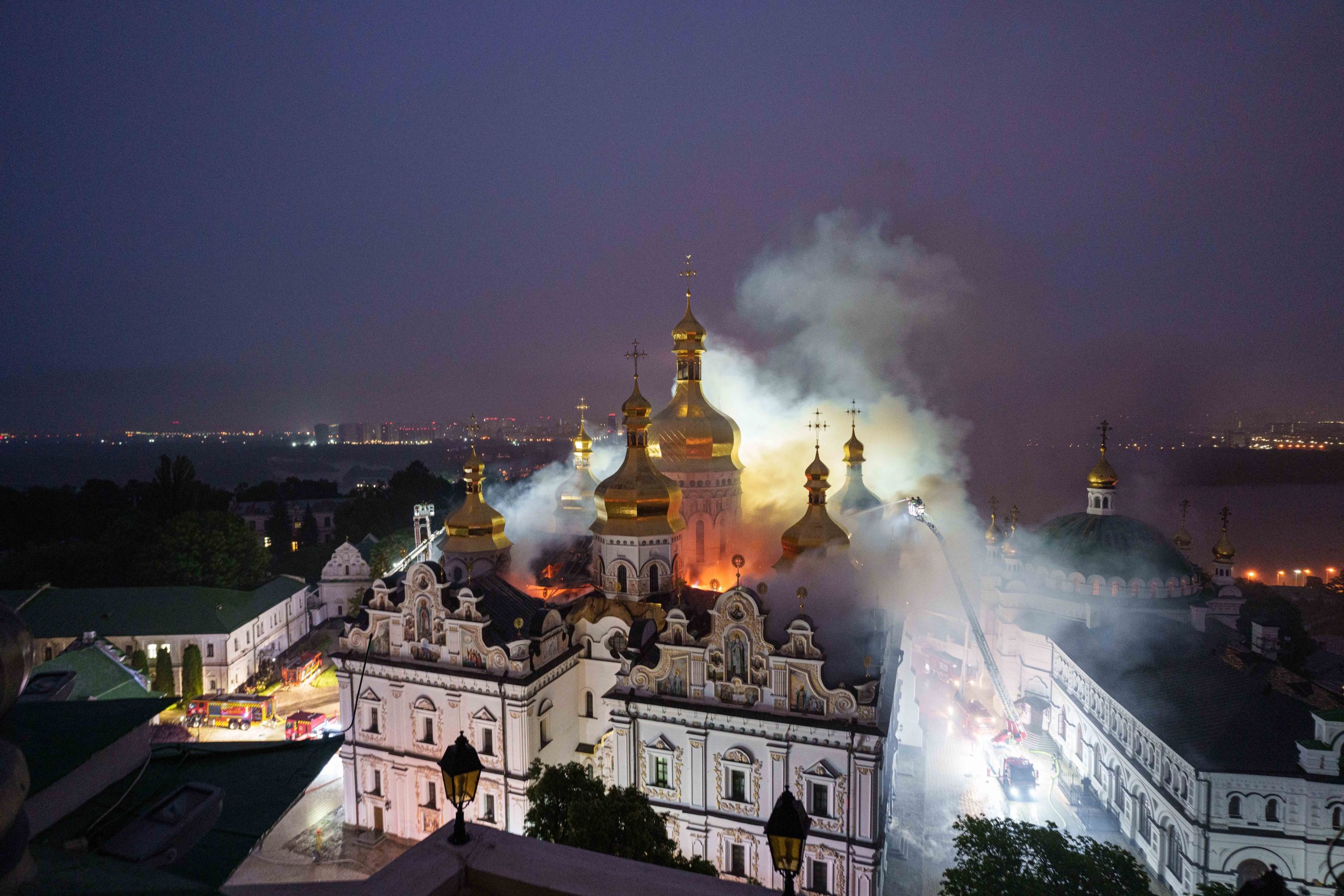
Among the most alarming incidents was the fire at the Kyiv-Pechersk Lavra, a historic monastic complex that holds immense cultural and religious significance. The roof of the Dormition Cathedral was damaged during an overnight attack, prompting Metropolitan Epiphanius of the Orthodox Church of Ukraine to issue a strong condemnation. In a
statement, he called the strike “a crime against humanity, against history, against Christianity,” urging prayers to preserve the site.
The Kyiv-Pechersk Lavra, also known as the Monastery of the Caves, is a sprawling network of churches, chapels, and underground chambers that have stood for over 900 years. Its architecture spans multiple centuries, with some structures dating back to the 11th century. The complex is not only a spiritual center but also a UNESCO World Heritage Site, recognized for its unique blend of religious and historical value.
The fire, which broke out amid the attack, threatened to destroy centuries-old buildings and artifacts. Tkachenko accused Russia of intentionally targeting “the heart of one of the largest Christian shrines,” underscoring the symbolic and practical impact of the assault. The flames consumed parts of the site, which has long served as a pilgrimage destination for believers from around the world.
Historical and Cultural Significance of the Lavra
The Kyiv-Pechersk Lavra is more than just a religious site—it is a symbol of Ukraine’s deep-rooted heritage. Its labyrinthine system of caves, carved into the rock, connects various parts of the monastic complex and has been a site of worship and retreat for generations. The cathedral, in particular, is a focal point of the community, with its towering spires and intricate mosaics drawing visitors and pilgrims alike.
Historians note that the Lavra has played a crucial role in preserving Orthodox Christianity in Eastern Europe. During the Soviet era, it endured suppression but emerged as a bastion of faith and resistance. Today, its survival is seen as a testament to the resilience of Ukrainian culture, making the attack particularly painful for the nation.
The damage to the site has sparked international concern. UNESCO officials have expressed alarm over the potential loss of irreplaceable historical structures, while local leaders have vowed to protect the heritage. Metropolitan Epiphanius described the strike as an “attack on the soul of Kyiv,” linking it to broader efforts to undermine Ukraine’s identity.
Broader Impact of the Russian Campaign
The attacks across Kyiv and Kharkiv reflect the escalating intensity of the Russian campaign, which has seen a focus on both military and civilian targets. The Shevchenkivskyi district, known for its dense population and historical buildings, was hit particularly hard, with reports of extensive damage to residential and commercial areas. The Obolonskyi district, which includes some of the city’s oldest neighborhoods, also suffered significant losses.
Residents in both cities described scenes of devastation, with smoke rising from burning structures and panic spreading through the streets. Emergency services struggled to contain the fires, while evacuations were underway in affected areas. The strikes have not only displaced families but also disrupted daily life, forcing many to seek refuge in basements or temporary shelters.
Klymenko’s remarks underscore the gravity of the situation, stating that the attacks have caused “significant destruction of civilian infrastructure.” This aligns with broader patterns of Russian strategy, which often prioritize the targeting of urban centers to sow fear and destabilize communities. The combination of ballistic missiles and drones has allowed for precise strikes, maximizing impact while minimizing the risk to Russian forces.
Global Response and Calls for Aid
As the fires raged and the toll mounted, calls for international support grew. Ukrainian officials have emphasized the need for aid to restore damaged sites and provide medical care to the injured. The Kyiv-Pechersk Lavra’s plight has drawn particular attention, with religious leaders and cultural organizations urging global solidarity to protect the monument.
The Orthodox Church of Ukraine, which manages the site, has taken to social media to highlight the destruction and appeal for assistance. Metropolitan Epiphanius’s statement, quoted in the article, adds a moral dimension to the crisis, framing the attack as an assault on shared human and spiritual values. Meanwhile, humanitarian groups are working to assess the damage and coordinate relief efforts in the affected regions.
Amid the chaos, some residents have expressed hope that the site will be saved, while others fear the worst. The resilience of the Ukrainian people, however, remains a recurring theme in the narratives emerging from the cities. “We will rebuild this place,” said one Kyiv resident, “because it is part of who we are.”
Continuing the Conflict
Monday’s attacks are part of a larger Russian strategy to weaken Ukraine’s defenses and inflict civilian casualties. As the war drags on, the focus on religious and cultural landmarks has intensified, with the Lavra becoming a symbol of the conflict’s human cost. The destruction of the cathedral and surrounding structures serves as a stark reminder of the toll the war is taking on Ukraine’s heritage and its people.
Officials in Kyiv have stated that the attacks will not deter the city’s resolve, and efforts to protect critical sites continue. The combination of military pressure and civilian casualties has galvanized support both domestically and internationally, with calls for increased aid and stronger sanctions against Russia. As the fires at the Lavra and other locations burn, the world watches closely, hoping to prevent further loss and preserve Ukraine’s cultural legacy.
With the war entering a new phase, the balance between military objectives and symbolic strikes remains a key concern. The Kyiv-Pechersk Lavra’s survival may hinge on the speed of the response, both from local authorities and global partners. For now, the city’s resilience shines through, even as the scars of the attack linger. As Metropolitan Epiphanius urged prayers for the site, the people of Kyiv stand united in their determination to safeguard their history and faith against the onslaught.