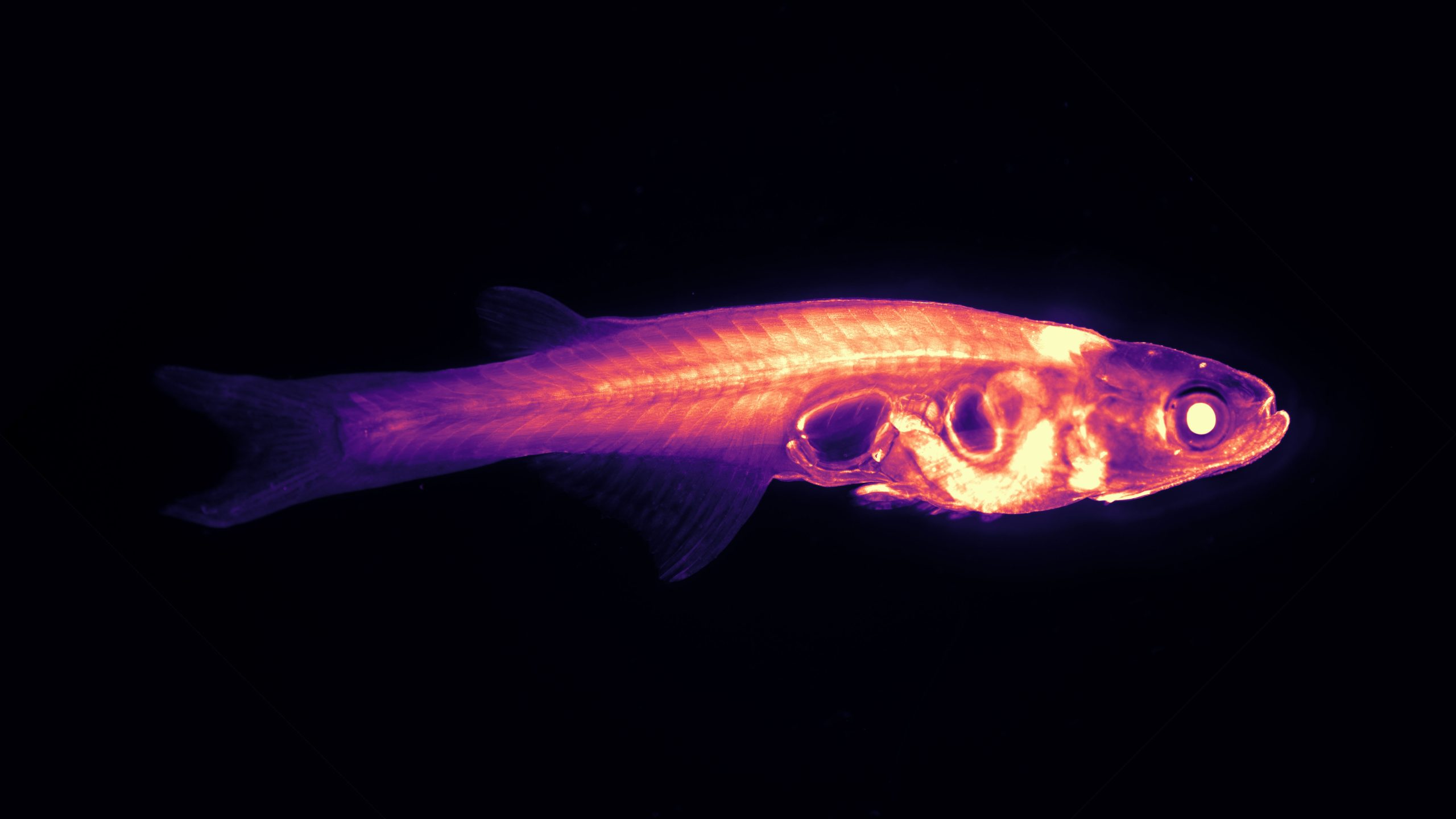
Is a Transparent Fish the Future of Brain Science? This Center is Betting on It
Is a transparent fish the future – At the forefront of neuroscientific innovation, a renowned research hub has committed to a bold experiment: studying the brain through a minuscule, translucent fish. The Howard Hughes Medical Institute’s Janelia Research Campus, situated near Washington, D.C., has launched a pioneering initiative to harness artificial intelligence alongside the Danionella species, a small fish with a unique biological trait that could revolutionize the understanding of complex behaviors such as social interactions.
The Promise of Danionella
Unlike traditional laboratory models like rodents, Danionella offers a rare opportunity to observe the brain in its natural state. Its lack of a top skull section and transparent skin allow scientists to peer directly into neural activity, bypassing the layers of tissue that obscure brain function in most animals. This feature, combined with its small size and rapid development, has made it an attractive subject for researchers aiming to decode the mechanisms behind behavior.
“It’s a big, risky bet,” says Gerry Rubin, Janelia’s founding executive director and head of biology. “But that’s what makes it interesting.”
Janelia’s focus on this tiny fish reflects a broader ambition to tackle one of biology’s most profound questions: how physical processes in the brain, such as neuronal firing, give rise to cognitive functions like memory, decision-making, and social behavior. While other species provide valuable insights, Danionella’s transparency could offer a clearer window into these processes, potentially bridging gaps in understanding between simpler organisms and humans.
Scaling Up the Experiment
To support this ambitious shift, Janelia is significantly expanding its facilities. The center plans to triple the space allocated for fish research to 6,000 square feet, creating room for thousands of new tanks. This growth is expected to attract a surge in scientific involvement, with the team of researchers working on Danionella projected to grow from about 10 to 100 or more. The investment underscores the belief that the payoff of such work will justify the risks.
For decades, Janelia has been synonymous with groundbreaking research on fruit flies, notably a 2024 project that mapped all 54.5 million connections in the insect’s brain. Now, the team is turning its attention to a new frontier, one that demands both advanced tools and creative approaches. “This is going to produce so much data that we’re going to need something like artificial intelligence to analyze it,” Rubin explains, highlighting the scale of the challenge.
Overcoming Challenges with Innovation
Despite its potential, Danionella is not as well understood as other lab models, such as zebra fish. While zebra fish are widely used and transparent during their larval stage, Danionella’s full transparency and smaller size make it a more complex subject. Its cerebrum, the part of the brain most studied by neuroscientists, was only officially recognized as a distinct species in 2021, which has since spurred growing interest in its use for research.
One of the key hurdles in studying Danionella is its natural mobility. Scientists often immobilize the fish to track brain activity, but this limits the ability to observe real-time behavior. Nelson Spruston, Janelia’s current executive director, emphasizes that the goal is to study these creatures in their natural, active state. “The ultimate goal is to do these experiments in freely swimming animals,” he says. “That’s going to require that we tackle some serious engineering challenges.”
“Having an animal that has a clear head and a clear body is extremely useful for neuroscience,” says Matt Lovett-Barron, a scientist studying Danionella at the University of California, San Diego.
As part of its strategy, Janelia aims to develop tools that will streamline research on Danionella. This includes creating a comprehensive map of every neural connection in the fish’s brain, akin to the fruit fly project. Such a map would enable scientists to trace how specific networks contribute to behaviors, providing a blueprint for future studies. The collaboration with AI is central to this effort, as the volume of data generated from observing the entire brain in action is immense.
One example of this innovation is the use of virtual reality environments to simulate social interactions. Lovett-Barron describes how researchers can place Danionella in controlled, immersive settings that mimic real-world scenarios. “We place our animals into, effectively, virtual reality environments—like little video games with virtual social partners,” he explains. “Then the scientists watch as the fish brains manage the animals’ busy social lives.”
These techniques not only enhance the accuracy of observations but also accelerate the pace of discovery. By reducing the need for physical constraints, scientists can better understand how the brain processes information and adapts to changing conditions. “Better tools and techniques to monitor those brains would make the work go faster,” Lovett-Barron adds, underscoring the practical benefits of this approach.
Evolution and the Link to Human Neuroscience
Researchers at Janelia argue that studying Danionella is more than just a quirky experiment—it’s a step closer to understanding human brain function. “We all evolved from fish, and our brains share many features of the brains of fish,” Spruston notes. This evolutionary connection suggests that insights gained from Danionella could have broader implications for neuroscience, particularly in unraveling the complexities of social behavior and cognition.
While the use of Danionella is still emerging, its potential is already being recognized by the scientific community. The challenge now lies in refining methods to study its brain without disrupting natural behaviors. Rubin highlights the importance of this work, stating that analyzing the entire brain in action requires cutting-edge technology to handle the data load. “If you really want to understand how the brain is working as a whole, you really need to see all the neurons firing at once,” he explains.
The integration of AI into this research is critical. With three times as many neurons to track compared to fruit flies, the data generated from Danionella could be overwhelming without advanced analytical tools. This collaboration between biology and artificial intelligence represents a new era in neuroscience, where technology aids in deciphering the brain’s intricate networks. As Janelia moves forward, its focus on Danionella could set a precedent for how future studies approach brain-behavior relationships.
A Long-Term Vision
Erin O’Shea, president of the Howard Hughes Medical Institute, describes the initiative as a “bold new challenge” that could unlock fundamental mysteries of biology. While the immediate goal is to map the fish’s neural connections and develop tools for real-time observation, the ultimate aim is to apply these findings to other species, including humans. “Even then, answering the brain-behavior question is a long-term goal,” O’Shea says. “I would be ecstatic if in 10 years we understand just one complex behavior through this work.”
The journey is far from simple, but the potential rewards are immense. By combining the unique advantages of Danionella with the power of artificial intelligence, Janelia hopes to create a model that captures the dynamic interplay between neural activity and behavior. As scientists continue to refine their methods, the transparent fish may prove to be a key player in unlocking the secrets of the brain. The future of neuroscience, it seems, is swimming in a different direction—one where clarity and complexity coexist in the study of life’s most intricate systems.