As American elections become more tense, officials are turning to local police

As American elections become more tense, officials are turning to local police
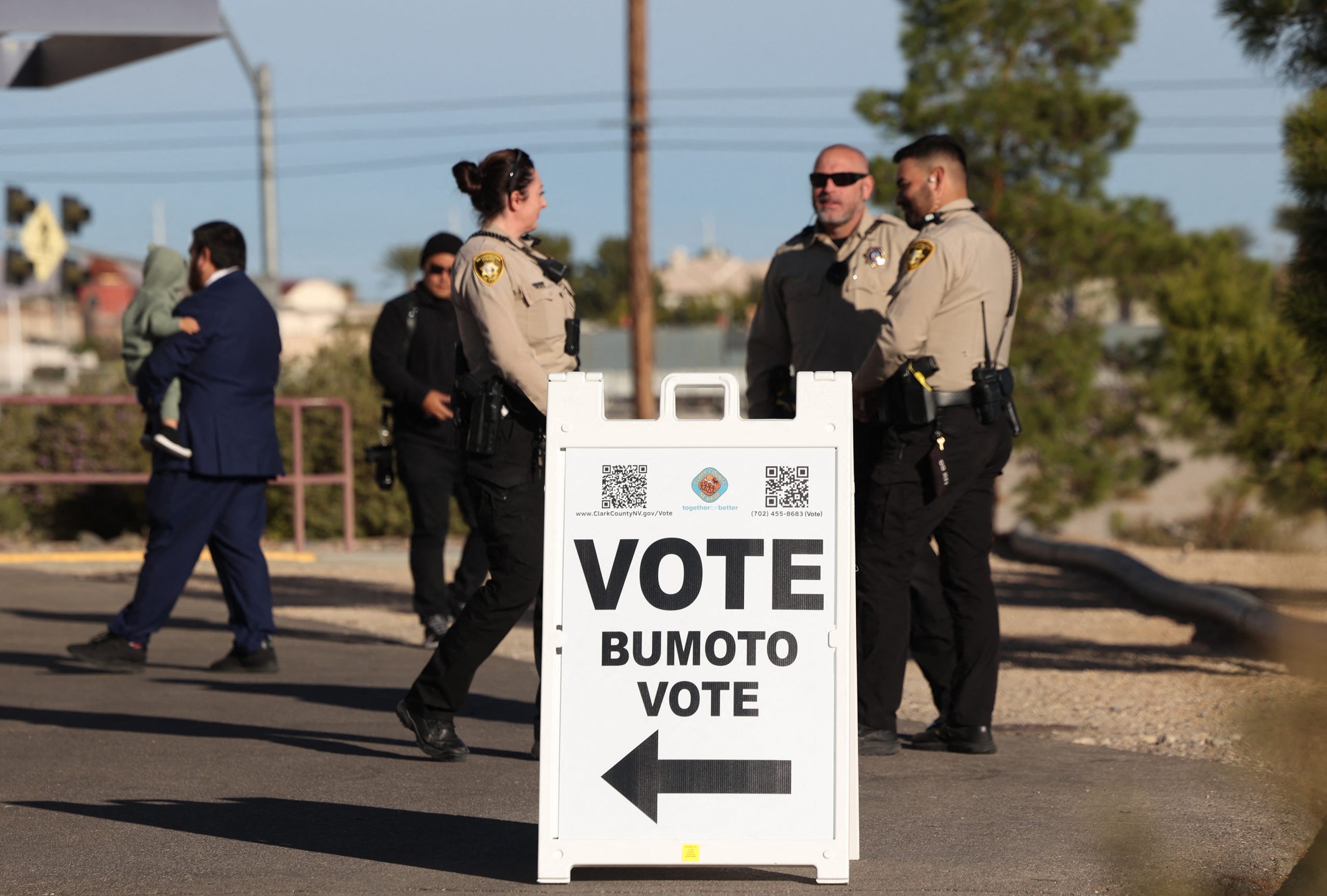
As American elections become more tense – Chris Davis, who has spent more than three decades in law enforcement, recalls how election days used to pass with little fanfare. Over the years, he observed that officers rarely prioritized Election Day, as it seldom figured into their daily routines. But today, the landscape has shifted dramatically. In his current role as chief of police in Green Bay, Wisconsin, Davis finds himself deeply engaged in election planning, a responsibility that spans far beyond the traditional confines of a single day.
“Back in the early days, Election Day was just another routine event,” Davis said. “You’d hear about it briefly, maybe on a roll call, but it wasn’t a priority. Now, it’s something we think about constantly.” His experience mirrors a growing pattern across the nation: since the 2020 election, local police departments have increasingly taken on a central role in ensuring electoral security, often collaborating with election officials well before the polls open.
The Rising Role of Law Enforcement
According to Katie Reisner of the nonpartisan States United Democracy Center, the heightened involvement of law enforcement stems from the escalating threats faced by election workers and jurisdictions. “The number of threats that election officials and staff encounter has surged,” she explained. “This means law enforcement is no longer just a backup option—they’re a critical part of the process, active throughout the year.”
Reisner emphasized that the role of police extends beyond mere presence during voting. “It’s not about responding to an emergency on Election Day,” she said. “It’s about anticipating risks and working proactively with election administrators to prevent them.” This shift reflects a broader concern: the need for sustained, cross-functional collaboration to maintain public confidence in the electoral system.
A Nationwide Trend
A recent survey by the Brennan Center for Justice sheds light on this trend, revealing that 32% of local election officials reported facing “threats, harassment, or abuse” due to their work. The numbers have spiked significantly since the 2020 election, particularly after President Trump’s unfounded claims of widespread fraud. These allegations fueled a wave of anxiety among election workers, leading to record-breaking turnover in voting roles across the country.
“The climate has become much more hostile for those running elections,” Reisner noted. “It’s not just about individual incidents anymore—it’s about systemic pressure and the constant fear of disruption.” This environment has pushed officials to seek stronger partnerships with law enforcement, ensuring that potential threats are addressed before they escalate.
Collaboration Across the Country
Even outside traditional battleground states, the collaboration between local agencies is becoming a common practice. The Brennan Center survey found that 89% of election administrators planned to coordinate with at least one other department ahead of the 2026 midterms. “This isn’t limited to states with high political stakes,” Reisner said. “It’s a nationwide effort to build resilience and ensure every election is as secure as possible.”
Tina Barton, co-chair of the Committee for Safe and Secure Elections, echoed this sentiment. With two decades of experience in election administration—half of which was spent in Michigan—she described the necessity of ongoing dialogue between law enforcement and election officials. “Elections happen year-round, and this is something we’re always preparing for,” she said. “The key is to start those conversations as soon as you realize they’re needed.”
Barton stressed that the preparation includes not only training but also understanding the nuances of election law. In Green Bay, Davis shared how early discussions with city officials revealed gaps in his department’s knowledge. “We didn’t fully grasp the intricacies of electioneering or the rules around voter challenges,” he admitted. “Those details matter, because a single misunderstanding could lead to a major incident.”
Training and Preparedness
The importance of early planning was underscored by Barton, who highlighted the role of tabletop exercises and drills in ensuring smooth operations. “The 2024 election was relatively calm for the average American,” she said. “But that quietness was the result of years of preparation—training, planning, and rehearsing responses to potential issues.”
Bomb threats, in particular, have surged in recent years, prompting police departments to integrate election security into their standard protocols. “The frequency of these threats has increased, and they’re not just about intimidation,” Davis noted. “They can create real chaos, and we need to be ready to handle them swiftly.”
Reisner emphasized that such preparedness is vital for maintaining trust in the electoral process. “If we’re always reacting on the fly, it leaves room for doubt,” she said. “But when law enforcement and election officials work together from the start, they can prevent problems before they arise.”
Despite the challenges, the partnership has proven beneficial. In Green Bay, for example, the police department’s proactive approach has helped mitigate tensions at polling sites. “We’ve had situations where voters challenged each other’s eligibility, and without clear understanding of the rules, it could have turned into a full-blown conflict,” Davis explained. “But by educating our officers, we’re better equipped to handle these scenarios calmly.”
A Call for Continuous Engagement
Barton and Reisner both agree that communication between election officials and law enforcement should be a continuous process, not an afterthought. “It’s a never-ending conversation,” Barton said. “There’s always something new to learn, and always room for improvement.”
“We encourage people to avoid scrambling on Election Day,” Reisner added. “Instead, they should build relationships and strategies well in advance. That way, when the moment comes, everyone knows their role and can act confidently.”
This approach has not only improved coordination but also fostered a sense of shared responsibility. As Davis pointed out, the stakes are high, and the police department’s involvement has added a layer of protection that wasn’t present before. “Elections are more than just a political event now—they’re a test of how well we can safeguard the process from both internal and external threats,” he said.
With the 2026 midterms approaching, the focus remains on reinforcing these partnerships. “The work we’ve done so far has paid off,” Barton said. “But we can’t afford to rest on our laurels. Every election is an opportunity to build on what we’ve learned and prepare for the next challenge.”
In the end, the collaboration between law enforcement and election officials is a response to a changing political climate. As Davis’s experience shows, the role of police has expanded from mere observers to essential participants in the electoral process. “It’s not about taking sides,” he said. “It’s about ensuring that every vote is counted, every candidate is protected, and every citizen feels secure when they go to the polls.”