Can a Vibrating Belt Help Protect Bones and Muscle Health?
A Personal Journey with Osteopenia
Can a vibrating belt help protect – Andrea Bloom, a 59-year-old resident of Pleasanton, Calif., discovered she had osteopenia after undergoing a bone density scan. The diagnosis came as a surprise, as she noted the results were just a fraction of a point shy of qualifying as osteoporosis. “The moment I saw the numbers, I realized how close I was to being in a higher risk category,” Bloom reflects. Her healthcare provider recommended the FDA-approved Osteoboost belt, a device designed to deliver vibrations to the spine and hips, targeting individuals with osteopenia, particularly post-menopausal women.
Understanding Osteopenia and Its Risks
Osteopenia is a condition characterized by lower-than-normal bone density, often a precursor to osteoporosis. Over 40 million adults in the U.S. aged 50 and older are affected, with the potential for bones to become brittle and prone to fractures if left untreated. While lifestyle adjustments like diet and exercise are commonly suggested, some patients seek additional tools to combat this issue. The Osteoboost belt represents a novel approach, combining wearable technology with therapeutic vibrations to stimulate bone growth.
The Mechanics of Vibration Therapy
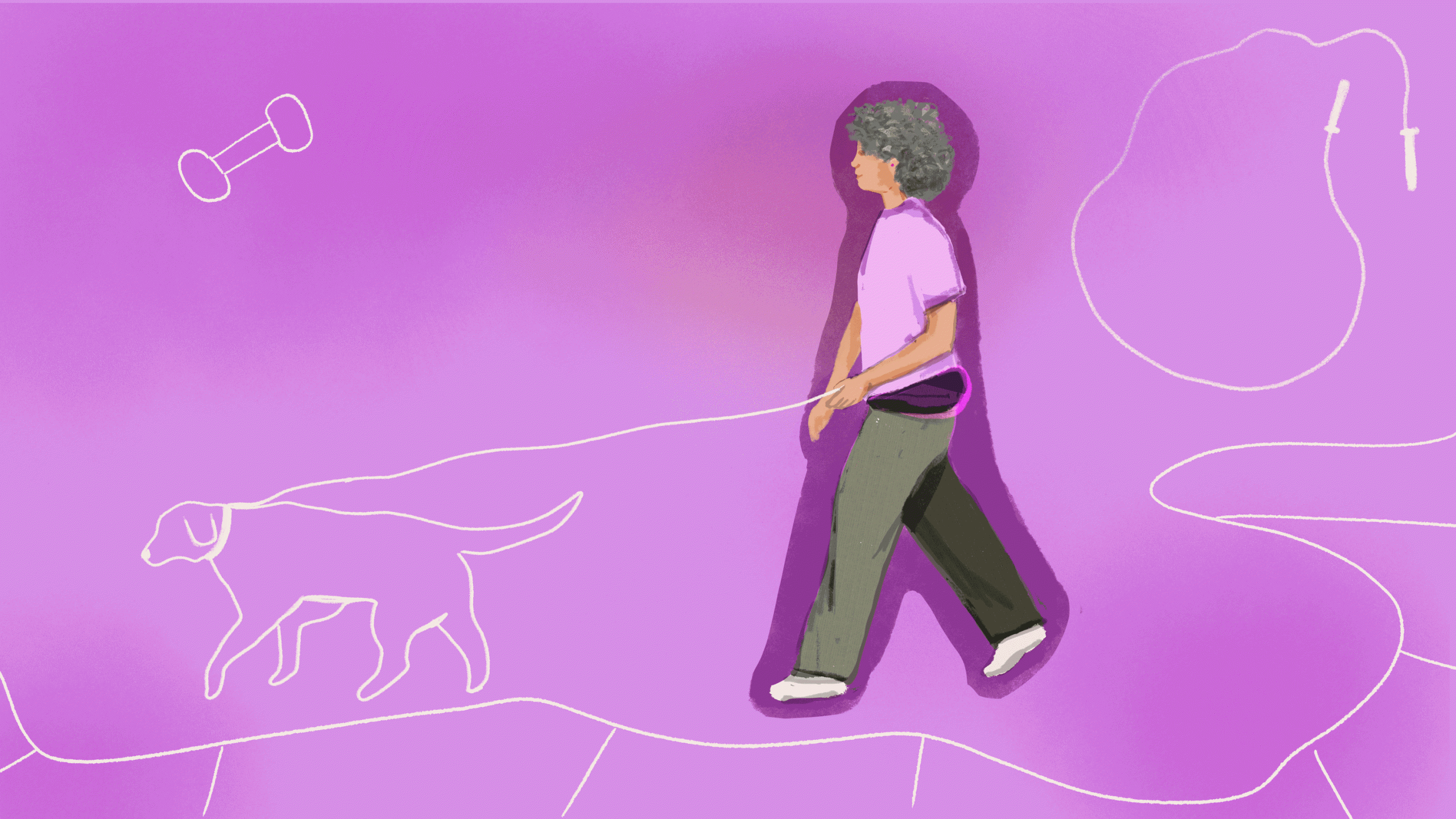
The Osteoboost device operates on the principle that low-intensity vibrations can mimic the mechanical signals generated during physical activity. These vibrations activate osteoblasts, the cells responsible for building new bone tissue. For Bloom, this translates to a daily ritual: she straps the belt on while walking her dog, experiencing a subtle yet consistent oscillation that she says feels like a “light massage.” The therapy is designed to be worn for 30 minutes a day, offering a passive method of support for bone health.
From Space to the Streets
The concept of vibration therapy has roots in aerospace research. In the 1990s, NASA funded studies to develop a solution for bone loss in astronauts during long-duration space missions. “The initial vibration plate was created to counteract the effects of microgravity, where bones weaken due to lack of mechanical stress,” explains Mike Jaasma, one of Osteoboost’s founders. On Earth, activities like walking or lifting weights exert pressure on bones, prompting them to strengthen. In space, this natural stimulus is absent, leading to rapid bone degradation. The Osteoboost belt aims to replicate this process on a smaller scale.
Early Evidence and Clinical Trials
In 2024, the FDA approved the Osteoboost device, marking a milestone in non-invasive bone health interventions. A randomized trial involving 126 women aged 50 and older demonstrated promising results: participants using the belt experienced less than half the rate of spinal bone density loss compared to a placebo group. “After 12 months, the treatment group lost just 0.5% of their bone strength, while the control group saw a 2.84% decline,” Jaasma notes. This translates to an 83% slowdown in spinal bone loss, a finding that has sparked interest in the device’s potential.
Scientific Debate and Criticism
Despite the encouraging data, some experts remain skeptical. A group of researchers from the Journal of Bone and Mineral Research questioned whether the device’s localized effects could justify its classification as a treatment for osteopenia, a systemic condition. “The study shows a reduction in bone loss at specific sites, but it doesn’t prove the device prevents fractures overall,” one scientist argues in a published critique. They emphasize that osteopenia affects the entire skeleton, not just areas under the belt, and that more research is needed to validate its broader applications.
Expanding the Scope of Vibration Therapy
Osteoboost researchers defend their findings, highlighting the device’s focus on high-risk areas like the lumbar spine and hips, where fractures can have severe consequences. “Our goal is to slow the progression of bone loss in these critical regions,” says Jaasma. Meanwhile, other studies are exploring the device’s potential beyond bone health. At MD Anderson Cancer Center, scientists are testing vibration plate technology in animal models to assess its role in preserving bone density in patients undergoing cancer treatments. “We’re seeing evidence that vibrations might also benefit muscle health, creating a two-way interaction between bone and muscle cells,” explains biomedical engineer Gabriel Pagnotti.
What Does This Mean for Patients?
For users like Bloom, the Osteoboost belt offers a convenient alternative to traditional exercise. “It’s something I can use without needing to go to the gym,” she says. However, the device’s cost—around $1,000 out-of-pocket—raises questions about accessibility. Insurance coverage is limited, making it a significant financial commitment. Yet, for those who can afford it, the potential benefits of slowing bone density loss and supporting muscle function may justify the investment.
Future Directions and Broader Implications
As interest in vibration therapy grows, researchers are investigating its role in various populations. Pagnotti’s work suggests that the technology could be adapted to address muscle atrophy in conditions like sarcopenia, a common issue among the elderly. “The vibrations not only trigger bone-building responses but also influence muscle adaptation,” he says. This dual effect may open new avenues for managing age-related health decline. Meanwhile, Osteoboost continues to refine its approach, aiming to integrate its method with existing treatments to create a comprehensive strategy for bone and muscle preservation.
Quotes from the Experts
“For 30 minutes a day, wearing the belt can stimulate those bone-building cells,” says Dr. Pamela Peeke, Osteoboost’s chief medical officer. She uses the device while exercising on an elliptical, adding it as an extra layer of support.
“Bone and muscle are maintained through a complex crosstalk mechanism,” says Gabriel Pagnotti. “Forces from one tissue can influence the other, meaning the health of the bone can directly impact muscle strength.”
“The placebo group lost 2.84% of their bone strength over the year, while the vibration therapy group lost only 0.5%,” Jaasma explains. “This suggests the device is effective in slowing bone loss at targeted sites.”
While the Osteoboost belt is currently the only FDA-approved device for osteopenia, its success could inspire further innovations in wearable health technologies. As research continues, the line between exercise and medical intervention may blur, offering new hope for maintaining physical vitality in aging populations.