EV battery recycling has a math problem

The Economics of Electric Vehicle Battery Recovery Face a Critical Challenge
EV battery recycling has a math – While major automakers celebrate the promise of circular economies for electric vehicles, independent salvage operators are discovering that the financial picture looks quite different on the ground. The fundamental question facing the industry is whether recovering valuable minerals from spent batteries can generate enough profit to justify the effort, or if these components are becoming costly burdens rather than valuable assets.
Salvage Yards Struggle with the Math
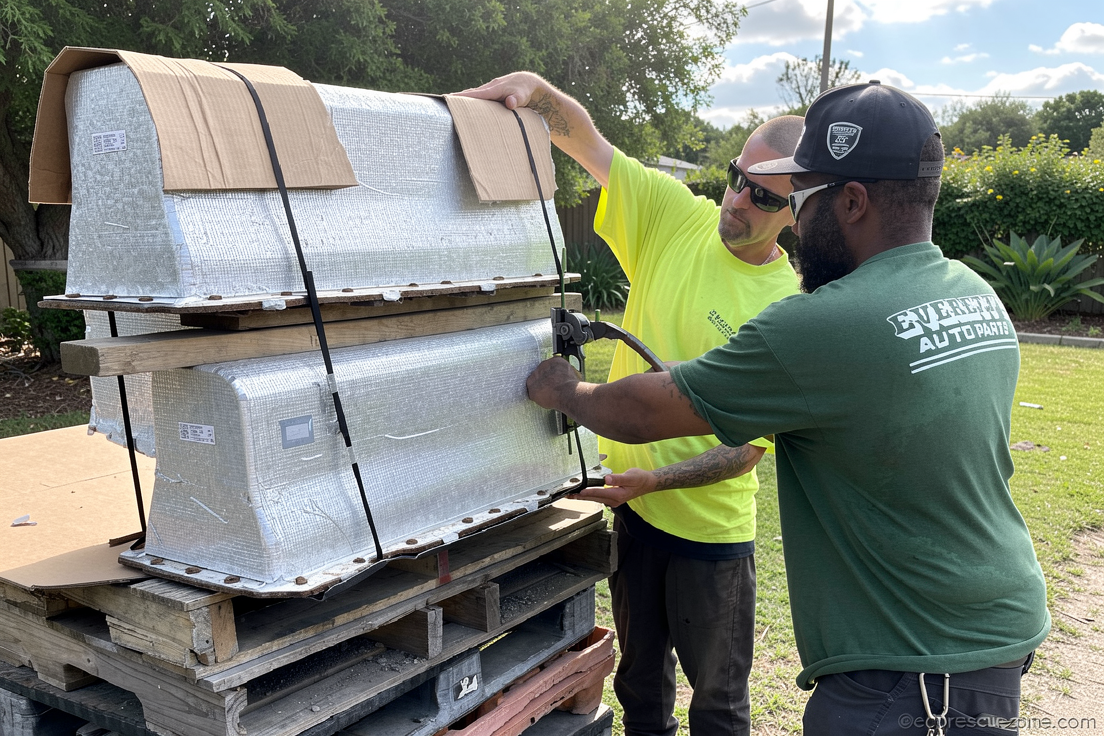
Thomas Andrade operates Everett Auto Parts in Massachusetts, where he recently watched workers secure two Chevrolet Volt hybrid batteries onto a shipping pallet. The process seems straightforward: these power units contain nickel, cobalt, manganese, and lithium—minerals that recyclers can extract after shredding the batteries into what the industry calls black mass. This material then feeds back into manufacturing new battery cells.
Yet when Andrade calculated his potential earnings from this shipment, the numbers disappointed him. “The good thing with these is, they’ll at least take them at no expense,” he explained regarding the recycler’s offer. His satisfaction at breaking even rather than losing money reveals a troubling trend. The vehicle recovery sector faces mounting pressure as batteries accumulate without generating meaningful revenue.
Proper battery disposal matters enormously for environmental and economic reasons. When electric vehicle batteries end up in landfills, they pose serious risks including toxic chemical leaching and potential fires. More importantly, treating these units as waste squanders resources that could power future transportation. Recycling critical minerals also strengthens American energy independence by reducing reliance on Chinese supply chains while simultaneously lowering the carbon footprint associated with producing new vehicles.
One Salvager’s Perspective
Just across Massachusetts at Westover Salvage Yard, CEO Brian Bachand confronts a different challenge. A massive Tesla battery, roughly the size of a mattress, occupies shelf space that could serve other purposes. Bachand estimates this unit could fetch up to $2,000 if a Tesla owner needed a replacement. He has marked it down to $1,200 to encourage sales.
“We try to price our parts to sell,” Bachand noted. “We don’t run a museum here.” Unfortunately, customers have not been interested. His alternative—shipping the battery to a recycler—offers even less optimism. The sole quote Bachand received for accepting this specific battery came with a negative value of $1,800.
This means Bachand would need to pay $1,800 to cover transportation costs for this hazardous material and compensate the recycler for processing effort. He calculated that bundling five similar batteries might secure free pickup, but currently possesses only one unit. “This is a liability,” Bachand stated. “No one’s paying me for it. I have to pay to get rid of it.”
Corporate Optimism vs. Reality
Industry leaders present a more encouraging vision. At a General Motors gathering in San Francisco, executives highlighted new battery formulations and plans to repurpose retired units for grid energy storage. The messaging emphasized circularity—the concept that batteries should remain in productive use rather than becoming waste.
J.B. Straubel, who founded and leads Redwood Materials, expressed confidence in improving economics. “Every year that goes by, every month that goes by, it’s getting more economical, it’s getting more competitive,” he observed. “We’ve got a fundamental economic tailwind because these materials are valuable to recycle.”
General Motors benefits from substantial internal battery volumes, including manufacturing scrap. Andy Oury, a GM battery engineer, described how recycling transformed from an expense into “a source of revenue” as recyclers began paying for scrap materials. “Capitalism is doing its thing, where there’s a positive incentive structure to go get those materials,” he remarked.
Oury acknowledged that transportation expenses reduce profitability, but emphasized that large corporations can optimize logistics through volume. Salvage yards like Bachand’s lack these advantages. Without sufficient battery quantities to bundle shipments, smaller operators face persistent financial challenges that may limit their participation in the growing electric vehicle recovery ecosystem.