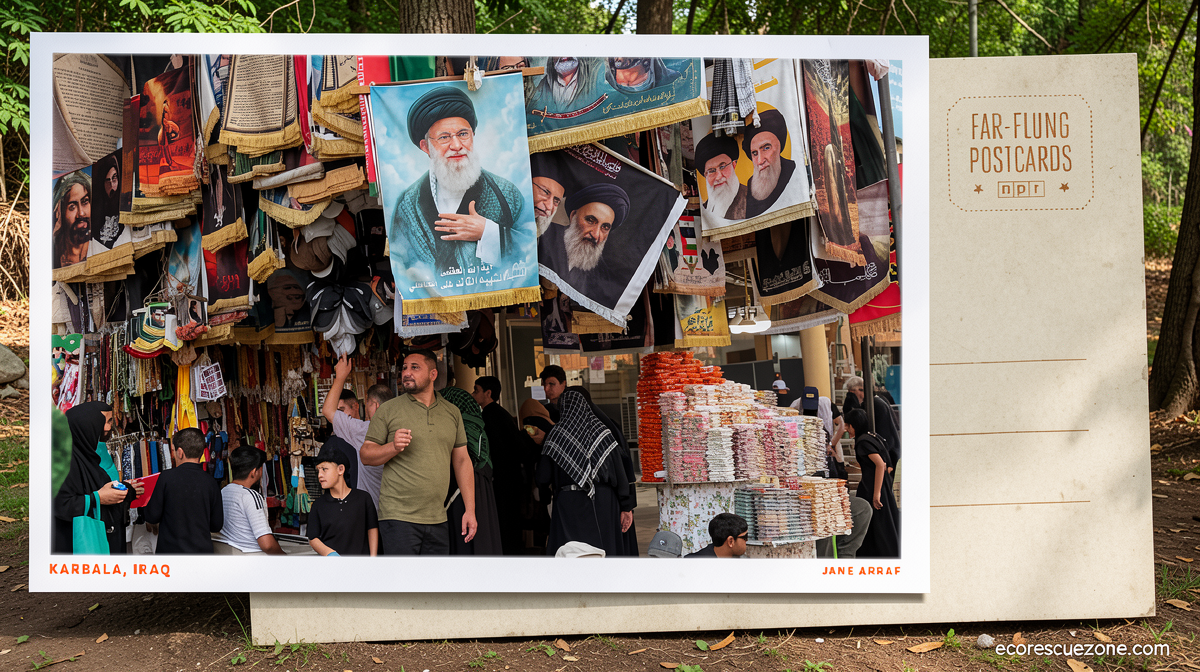
Greetings from Karbala, Iraq, where millions gathered for a Shia pilgrimage

Daftar Isi
Twenty Million Souls Converge on One Small Iraqi City for Arbaeen
Ecorescuezone.com – Central Iraq’s city of Karbala swells each year into something closer to a temporary metropolis than a town of modest size. More than 20 million Shia Muslims descend upon its streets, its shrines, and its surrounding highways to observe Arbaeen, the commemoration that fell earlier this month. The occasion marks the fourteenth-century anniversary of the death of Imam Hussein, the Prophet Muhammad’s grandson, whose martyrdom at the Battle of Karbala remains the single most formative wound in Shia collective memory. For believers, the day is not merely historical recollection; it is a living act of grief, devotion, and communal solidarity that reshapes the city’s entire social fabric for weeks.
A Pilgrimage That Crosses Continents
The sheer geographic reach of the gathering is staggering. Devotees arrive by air from South Asia, East Africa, Europe, and the Americas, filling Baghdad’s and Najaf’s airports with a steady stream of travelers bound for the two holy cities. Yet the most visually arresting arrivals are those who come on foot. Iraqi and Iranian walkers cover distances measured in hundreds of miles, trudging along highways and rural tracks under an August sun that routinely pushes past 110 degrees Fahrenheit. They walk in sandals or barefoot, many wearing simple white or black garments, their faces streaked with dust and exhaustion. The physical ordeal is understood within the tradition as an extension of the original grief — a bodily participation in the sorrow that first struck Karbala fourteen centuries ago.
Inside the shrine precincts, the mood is one of solemn mourning: recitations of elegies, prostrations on the marble floors, and long hours of weeping before the tomb. Step outside, however, and the tone shifts. The surrounding streets hum with a near-festive energy — vendors calling out, children darting between legs, the clatter of cooking pots. The duality is not contradictory. In Shia practice, communal celebration of hospitality and shared sustenance is itself an act of devotion, a way of honoring the dead by ensuring no living pilgrim goes hungry.
The Non-Commercial Heart of the Event
What distinguishes Arbaeen from most large-scale religious gatherings anywhere in the world is its deliberate rejection of commerce. No ticketed entry. No paid lodging within the shrine zone. No branded merchandise stalls lining the approach roads. Instead, for weeks before the commemorative day, the highways feeding into Karbala and the open land around the shrines become carpeted with rows of hospitality tents — sometimes numbering in the tens of thousands. Volunteers, organized by local families, charitable foundations, and informal neighborhood groups, set up open kitchens and serve food at no cost to any passerby.
The menu ranges from simple bean stew and rice to grilled chicken, lentil soup, flatbread, and sweetened tea. Walking any length of the approach road, a pilgrim will find it nearly impossible to take more than a few steps without a hand reaching out with a plate, a bottle of water, or a wrapped sandwich. The gesture is not transactional; no one asks for a name, a denomination, or a return visit. It is given freely, in the name of the tradition’s oldest ethic of mutual care.
Private homes along the route open their doors as well. Families clear sleeping space on floors, set aside extra meals, and absorb strangers into their daily routines for the duration of a pilgrim’s passage. This practice, known colloquially as hosting the traveler, has been sustained across generations and is regarded as a religious obligation rather than a courtesy. The result is a city that, for a brief window each year, functions less like a municipality and more like a single extended household.
Portraits, Martyrdom, and Political Memory
The visual landscape of Karbala during Arbaeen is dominated by images of Imam Hussein — soft-featured, soulful portraits reproduced on banners, wall hangings, phone cases, and for-sale textiles. This year, however, a second face appeared with unusual frequency: that of Iran’s former supreme leader, Ayatollah Ali Khamenei, who was killed by the United States in February. In Iran’s official narrative he is counted among the martyrs, and his likeness now shares display space with the Prophet’s grandson in shrines, processions, and printed materials throughout the city. The juxtaposition is pointed. It folds a contemporary political death into the ancient grammar of Karbala, suggesting that the line of martyrdom drawn fourteen centuries ago extends, in Shia theological imagination, into the present day.
Why the Gathering Matters Beyond the Faith
Arbaeen is often cited by sociologists and urban planners as one of the largest annual human movements on Earth, rivaling or exceeding the Hajj in sheer headcount. Its logistics — feeding, housing, and moving tens of millions of people through a single corridor of roads — place extraordinary strain on Iraqi infrastructure, yet the event proceeds with a degree of order that surprises outside observers. The absence of commercial extraction means that the economic footprint is distributed: local families earn through volunteer labor, small-scale food preparation, and the informal hospitality economy rather than through ticketed tourism.
For the pilgrims themselves, the week surrounding Arbaeen is less a vacation than a structured retreat from ordinary life. The rhythm of walking, eating, praying, and sleeping in borrowed rooms strips away the markers of daily routine. What remains is a compressed experience of community — the sense, recreated annually, that one belongs to a body of millions who share a single grief and a single act of care. In a region fractured by sectarian conflict, economic hardship, and political instability, that annual reassembly carries a weight that extends well beyond theology. It is, for many, the one week each year in which the Shia world speaks with a single voice, walks a single road, and breaks bread together without asking first who is sitting across the table.
Related Reading
Frequently Asked Questions
What is Greetings from Karbala Iraq where millions?
Greetings from Karbala Iraq where millions is the main topic of this guide. The article explains the context, practical details, and next steps readers should understand.
Why does Greetings from Karbala Iraq where millions matter?
Greetings from Karbala Iraq where millions matters because readers are looking for a useful answer, not just a short summary. Good content should match search intent and help them decide what to do next.