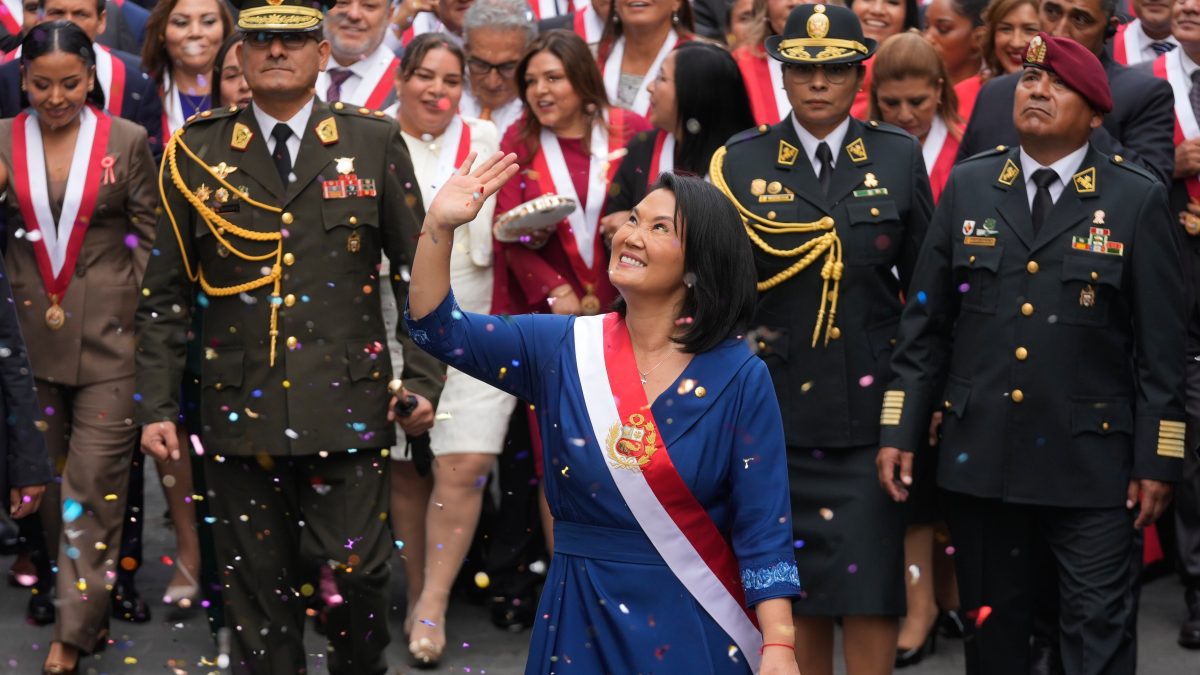
Keiko Fujimori is inaugurated as Peru’s president after historic win
Ecorescuezone.com – LIMA, Peru — Keiko Fujimori is inaugurated as Peru’s president on Tuesday, marking a pivotal moment for the South American nation following a razor-thin election victory. The conservative leader secured the presidency by fewer than 50,000 votes in the June runoff, signaling a broader regional shift toward right-wing politics across Latin America.
As the 51-year-old takes the oath of office, she becomes Peru’s ninth president in just ten years. Her administration faces immediate challenges including stabilizing turbulent politics, reducing crime rates, and stimulating economic growth for millions of citizens.
Political landscape and legislative power
Keiko Fujimori is inaugurated as Peru’s leader at a time when only three presidents have been elected by popular vote over the past decade. Most predecessors either resigned or were removed by congress amid corruption scandals. Her Popular Force party, alongside ally Popular Renovation, will control half the senate seats, providing stronger protection against impeachment attempts.
During her campaign, Keiko Fujimori promised to combat extortion rackets plaguing the nation. She also pledged to accelerate infrastructure development through public-private partnerships, making it easier for government agencies to collaborate with private investors.
Security reforms and social policies
“My goal is not only to administer the state,” Fujimori declared. “My main objective is to narrow the enormous social deficit that affects millions of Peruvians.”
Security remains central to her agenda. Keiko Fujimori is inaugurated as Peru’s president with plans to implement an “iron fist” approach to crime, drawing inspiration from Salvadorean President Nayib Bukele’s policies. A key initiative includes building a megaprison modeled after El Salvador’s notorious Cecot facility.
Additional measures include reforms to protect judges by allowing them to conceal their identities during criminal trials. The military will temporarily lead security operations in crime-affected regions, while social services will be reorganized to combat rural malnutrition.
On Tuesday, Fujimori also announced a 15% increase in Peru’s minimum wage and outlined preparations for the upcoming El Niño weather pattern, which typically brings flooding to coastal areas.
Opposition demands and economic outlook
Opposition leaders have urged the new administration to reverse laws passed by Peru’s previous legislature. Critics argue these statutes weaken anti-organized crime efforts by eliminating preventive arrests and limiting prosecutors’ ability to process political parties under criminal group statutes.
Lawmakers are also calling for a commission to investigate the deaths of 50 civilians during anti-government protests in late 2022 and early 2023. During the inauguration ceremony, opposition lawmakers protested outside parliament, displaying photographs of victims whose families refuse to recognize Fujimori as legitimate president.
While Fujimori won strong support in Lima and along the Pacific coast, voters in the Andean highlands with larger Indigenous populations backed left-wing candidate Roberto Sanchez. Sanchez challenged results citing voting irregularities at overseas consulates, though electoral authorities dismissed his complaints.
Despite political tensions, Peru remains one of Latin America’s most stable economies. The central bank maintains benchmark interest rates below 5%, and the government follows a conservative approach to public spending. However, critics highlight growing disparities between coastal prosperity and highland communities.
Frequently Asked Questions
When was Keiko Fujimori inaugurated as Peru’s president? Fujimori was inaugurated on Tuesday following her narrow victory in the June presidential runoff election.
What is Keiko Fujimori’s main policy focus? Her administration prioritizes security reforms, crime reduction, infrastructure development, and addressing social deficits affecting millions of Peruvians.
How did Keiko Fujimori win the election? She secured victory by fewer than 50,000 votes in the runoff, winning primarily in Lima and coastal regions while facing strong opposition in the highlands.
What challenges does Peru face economically? Peru maintains economic stability with low interest rates, but faces growing inequality between coastal and highland communities.
Who is Keiko Fujimori’s political opponent? Roberto Sanchez, an ally of former President Pedro Castillo, challenged the election results citing voting irregularities at Peruvian consulates abroad.