Medicare’s pilot GLP-1 discount program has a catch. Some sick patients don’t qualify

Medicare’s Pilot GLP-1 Discount: The Catch
Ecorescuezone.com – Medicare’s pilot GLP-1 discount program was announced in July as an 18-month demonstration that caps the monthly out-of-pocket cost of three weight-loss drugs at $50. The initiative, branded the GLP-1 Bridge, targets a segment of Part D enrollees and was built around a straightforward premise: if roughly one in five U.S. adults has already experimented with a GLP-1 receptor agonist — Wegovy, Zepbound, or the newer oral agent Foundayo — then removing the price barrier now could blunt downstream spending on heart attacks, diabetic complications, and other obesity-linked conditions. For the beneficiaries who qualify, the deal is genuinely transformative. For a large group of patients whose medical charts make them the strongest candidates for this class of therapy, the program’s eligibility language quietly closes the door.
Who Gets Locked Out
The $50 copay applies only when a prescriber documents weight loss as the sole indication. The moment a beneficiary carries any condition for which the FDA has separately approved a GLP-1 agent — Type 2 diabetes, moderate-to-severe obstructive sleep apnea, among others — Medicare routes that person back into conventional Part D cost-sharing. There, monthly copays for these brand-name drugs routinely reach several hundred dollars, sometimes eclipsing the $750 list price before any manufacturer discount is applied.
The structural irony is stark. A patient with a BMI of 42, a history of quadruple coronary bypass, prediabetes, and severe sleep apnea represents exactly the profile for which early GLP-1 intervention could save Medicare the most money. Yet that very combination of diagnoses disqualifies the patient from the subsidized tier and pushes the drug back into a cost-sharing structure that renders it effectively unaffordable.
A Patient’s Account
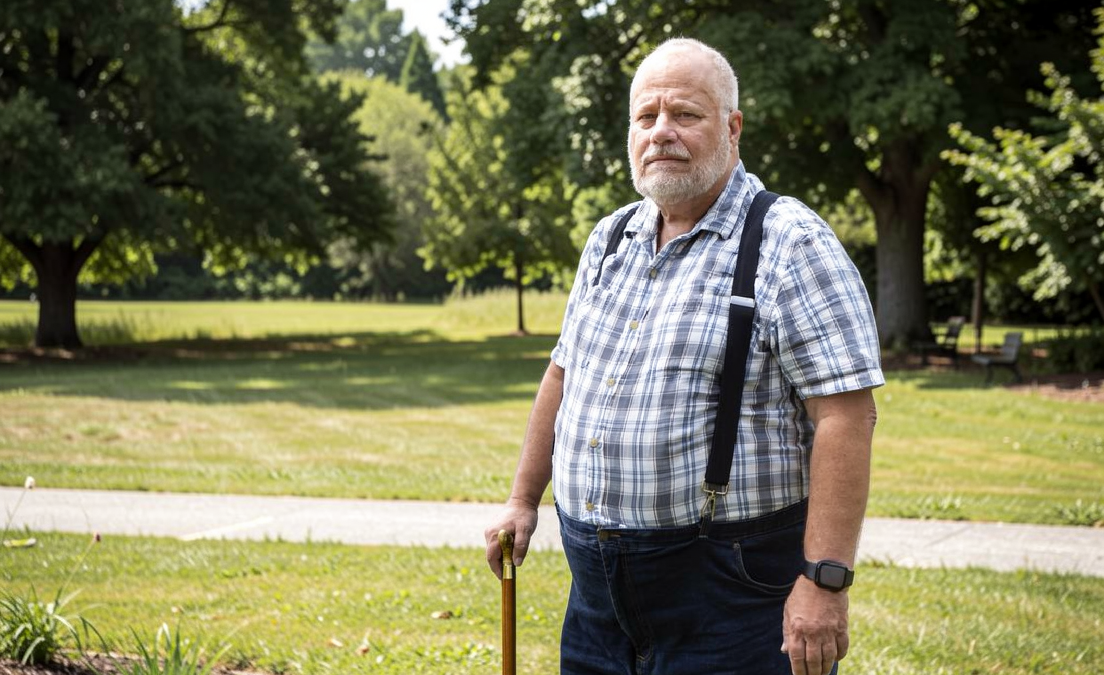
Jeff La Marca, 68, lives in Basking Ridge, New Jersey. He received a Zepbound prescription in January and faced a $750 monthly bill. When the Bridge pilot was announced, he saw a realistic path to treatment after years of cycling through diets and exercise programs without lasting results.
“I thought, ‘Thank God, we’re finally getting somewhere,'” La Marca recalled. Days later, a notification arrived stating he did not qualify. The letter offered no explanation. He attributes the denial to his severe obstructive sleep apnea diagnosis.
“I’m morbidly obese, BMI 42. I had quadruple heart bypass surgery. I’m at risk for stroke. I’m prediabetic. And yet I can’t get it. I’m livid,” he said.
His experience crystallizes the paradox embedded in the program’s design: the beneficiaries with the greatest cardiometabolic risk — and therefore the greatest potential savings to Medicare from early intervention — are precisely the ones steered back into a cost-sharing structure that makes the drug unaffordable.
Eligibility Mechanics and Operational Details
Participation requires a Medicare Part D plan. Eligibility then turns on body-mass-index thresholds. A BMI of 35 or higher qualifies a patient for the $50 tier provided the prescriber documents weight loss as the sole indication. Beneficiaries with a BMI between 27 and 34 may qualify only if they also carry a comorbidity such as prediabetes or cardiovascular disease — and again, only if no FDA-approved GLP-1 indication is present.
Three products are covered under the demonstration: Eli Lilly’s Wegovy, the KwikPen formulation of Zepbound, and the oral GLP-1 Foundayo. Prior-authorization requests bypass the patient’s Part D plan entirely; they are submitted to a separate electronic system run by a CMS contractor. In the program’s opening weeks, most authorizations were processed in under 12 hours, according to CMS spokesperson Timothy Foster, who noted that thousands of eligible beneficiaries had already filled prescriptions at pharmacies nationwide.
Cost Projections and Open Policy Questions
The federal government has not published a formal cost estimate for the demonstration. Juliette Cubanski, who directs the Program on Medicare Policy at KFF, a health-information nonprofit, has modeled the scenario. She estimates roughly 3.8 million beneficiaries meet the Bridge’s eligibility criteria. If a quarter of them enroll and remain on therapy for the full 18 months, total subsidy would land near $3.3 billion. Push enrollment to three-quarters and the figure climbs to approximately $10 billion.
Expanding coverage to the additional 5.9 million overweight beneficiaries who already hold Part D plans and qualify for GLP-1s through standard prescription-drug benefits would multiply those figures substantially. Whether Congress ultimately broadens the demonstration, narrows it, or lets it expire after 18 months will depend on how CMS reports outcomes and on the political appetite for sustained obesity-drug subsidies within a fixed-budget entitlement program.
Frequently Asked Questions
Who is eligible for Medicare’s pilot GLP-1 discount?
Beneficiaries must carry Medicare Part D and meet BMI thresholds (35 or higher, or 27–34 with a qualifying comorbidity). Critically, the prescriber must document weight loss as the sole indication. Any FDA-approved GLP-1 indication — Type 2 diabetes, moderate-to-severe obstructive sleep apnea, and others — disqualifies the patient from the $50 tier.
Which drugs are covered at the $50 price?
Three products: Wegovy (Eli Lilly), Zepbound KwikPen (Eli Lilly), and Foundayo (oral GLP-1). Prior authorization is handled through a dedicated CMS-contractor system, not the beneficiary’s Part D plan.
How long does the demonstration run?
The GLP-1 Bridge is an 18-month pilot that launched in July. CMS has not announced plans to extend or expand it beyond that window.
What happens if I’m denied?
The program’s notification letters do not include a detailed explanation. Patients who believe a comorbidity triggered the denial should contact their prescriber to review documentation and, if appropriate, request a Part D appeal through their plan.