Opinion: Algae Doesn’t Care About Our Party Lines
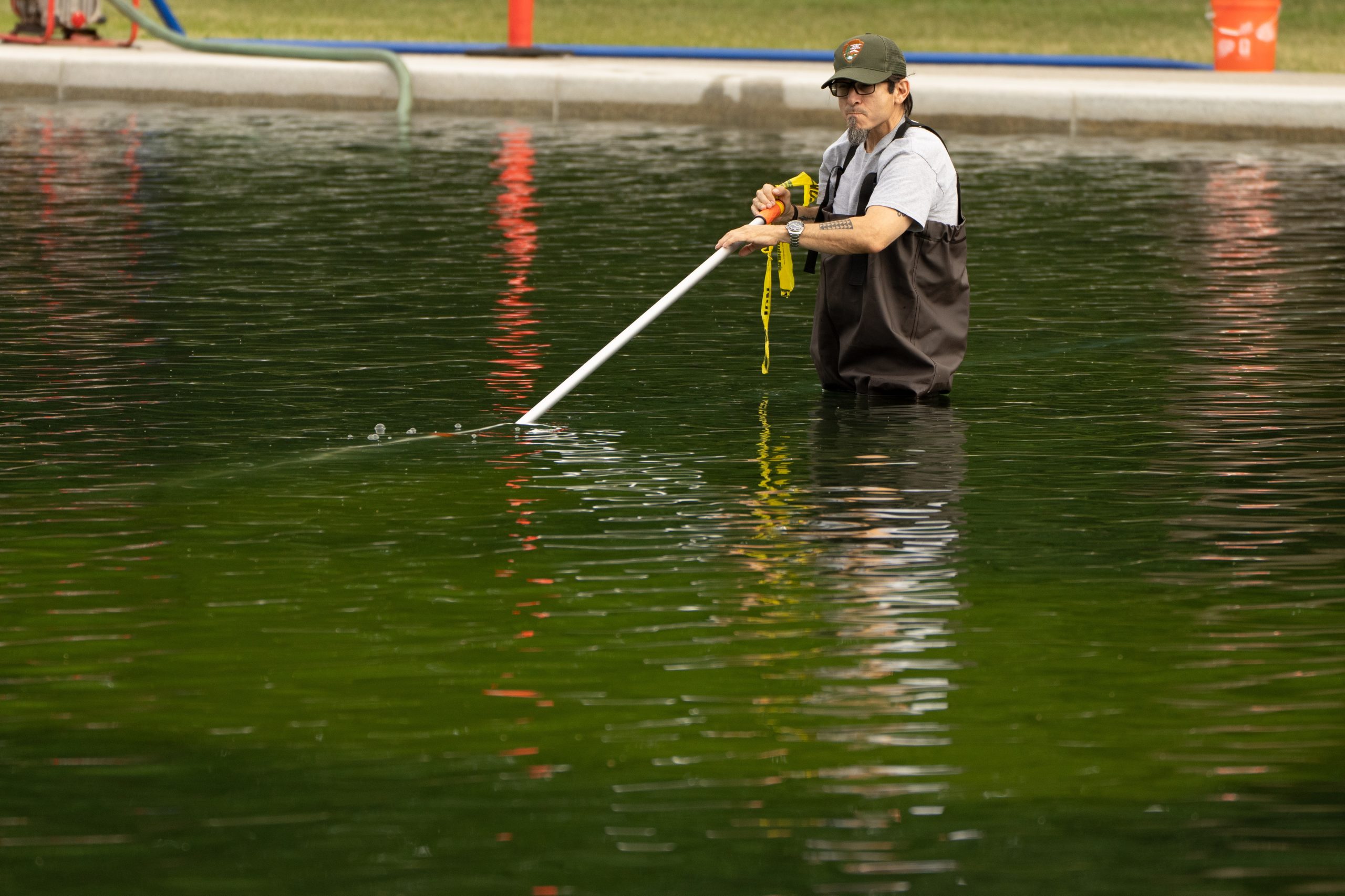
Opinion: Algae doesn’t care about our party lines – The Lincoln Memorial Reflecting Pool, a symbol of national unity and reflection, has stood as a silent observer to decades of American history. Its waters have mirrored the solemnity of presidential speeches, the fervor of protests, and the quiet moments of remembrance. Yet, in recent months, a subtle but persistent change has drawn attention: the once-pristine blue of the pool now carries a vibrant green hue, a result of an algae bloom that has sparked debate beyond its ecological origins.
Algae, the microscopic organisms responsible for this transformation, thrives in conditions that are as natural as they are political. The pool, which has remained a focal point since its completion in 1923, is no stranger to its presence. However, a recent surge in green algae has become a talking point in Washington, D.C., where the issue of water quality is being weaponized in partisan discourse. President Donald J. Trump, known for his blunt approach to public statements, took aim at the pool during a June 2026 press event, labeling its appearance as “filthy” and “disgusting.” This critique, though seemingly simple, has ignited a broader discussion about the role of environmental management in national politics.
“I have a guy who’s unbelievable at doing swimming pools,” the president boasted, prior to the National Park Service’s approval of a no-bid contract for the pool’s resurfacing. The decision, which cost taxpayers over $14 million, was framed as a bold move to restore the pool’s “American flag blue” for the July 4th festivities. But as the project neared completion, the result was less a patriotic display and more an ecological spectacle, with the pool now resembling a lush, emerald-green lake.
The algae’s dominance is not a random occurrence. Satellite imagery from the University of Virginia, analyzed by the Washington Post, revealed that the current bloom is the most significant in the past five years. This data underscores a pattern that has been exacerbated by environmental factors: the pool’s shallow depth and still water create an ideal habitat for algae, especially during the sweltering Washington summers. The organism’s growth is driven by sunlight, temperature, and nutrient levels, all of which have remained unchanged since the pool’s inception. Yet, the political narrative surrounding the issue has shifted the focus from natural processes to partisan accountability.
Despite the millions spent on modernization, the algae persists, challenging the notion that taxpayer dollars can erase the past. The Interior Department claims to have deployed a “state-of-the-art ozone nanobubbler filtration system” to combat the issue, but its effectiveness remains under scrutiny. Critics argue that the system, while advanced, is a costly solution to a problem that has existed for over a century. The pool’s history is a reminder that some challenges are inherent to its design, rather than a failure of governance.
President Trump’s spokesperson, Kate Martin, seized the opportunity to frame the algae’s presence as a triumph of his administration. “President Donald J. Trump is an expert builder who has fixed the reflecting pool for good,” she stated, contrasting his efforts with the “failed and extremely costly attempt” by Obama and Biden. This comparison references a previous initiative during Obama’s first term, which aimed to stabilize the pool’s structure and install a filtration system. The project, though ambitious, was abandoned due to budget constraints and technical challenges, leaving the pool vulnerable to natural elements.
Algae, in its unyielding presence, has become a metaphor for issues that transcend political divides. Its growth is neither partisan nor prejudiced; it simply responds to environmental conditions. The pool’s green tinge serves as a stark reminder that some problems are not confined to ideological battles but are shaped by the interplay of science, nature, and time. In a time when public discourse is often polarized, the algae’s indifference to party lines offers a moment of reflection.
The controversy over the pool’s appearance has also highlighted the broader debate about infrastructure spending. Trump’s no-bid contract, while expedient, raised questions about transparency and efficiency. Meanwhile, opponents have criticized the cost of the project, arguing that the funds could have been allocated to other priorities. Yet, the algae’s persistence suggests that the core issue remains unresolved, regardless of political shifts.
Historically, the Reflecting Pool has played a vital role in American culture. From presidential inaugurations to civil rights demonstrations, its waters have borne witness to pivotal moments. However, the current algae bloom has transformed it into a site of symbolic conflict. The green color, reminiscent of the Chicago River during its annual St. Patrick’s Day dyeing, now carries a different meaning—one that reflects the complexities of governance and the challenges of maintaining public spaces in a divided society.
As the summer heat intensifies, the algae continues to flourish, defying the efforts of modern technology. The pool’s transformation from a symbol of clarity to one of ambiguity underscores a larger truth: nature does not adhere to political agendas. The algae’s presence is a quiet rebellion against the notion that any single administration can control the environment or erase the past. It is a testament to the enduring power of natural forces in shaping the nation’s landscape.
In the end, the Lincoln Memorial Reflecting Pool stands as a reminder that not all issues are partisan. Its green hue is a result of ecological conditions, not political decisions. While the debate over its appearance rages on, the algae remains a constant, indifferent observer. It is a symbol of continuity in a time of division, proving that some challenges are as timeless as the monument itself.
A Legacy of Water and Change
The Reflecting Pool’s design, completed in the early 1920s, was intended to provide a serene and reflective space for visitors. Its construction was part of a larger effort to commemorate President Abraham Lincoln, with the pool’s still waters meant to mirror the dignity of his presidency. Yet, over time, the pool has become a battleground for environmental concerns, political symbolism, and public sentiment.
The algae’s return to prominence is not a new phenomenon. It has been a recurring issue, with seasonal blooms affecting the pool’s appearance. However, the scale of the current problem has prompted a deeper examination of its causes. The University of Virginia’s satellite analysis, which compared data over the past five years, found that the bloom’s intensity has reached unprecedented levels. This raises questions about whether the pool’s conditions have worsened due to climate change, urban development, or a lack of consistent maintenance.
Environmental scientists note that stagnant water in the pool, combined with the summer sun, creates a perfect environment for algae growth. The filtration system, introduced during Obama’s tenure, was intended to address this issue, but its implementation was incomplete. Critics argue that the system’s underperformance allowed the algae to thrive, setting the stage for the current crisis. The Trump administration’s decision to bypass competitive bidding for a new resurfacing project has further fueled the debate, with some questioning whether the latest solution will truly address the root cause.
The algae’s presence also invites comparisons to other public spaces. The Chicago River, famously dyed green for St. Patrick’s Day, undergoes a temporary transformation, while the Lincoln Memorial Pool’s green tinge is a permanent fixture. This contrast highlights the difference between artificial interventions and natural phenomena. The algae, unburdened by political motives, continues to assert its influence, regardless of the efforts to suppress it.
As the July 4th celebrations approach, the pool’s appearance has become a focal point of public opinion. Some view the green color as a flaw in the administration’s work, while others see it as a sign that the pool is returning to its natural state. The controversy has also sparked discussions about the role of the National Park Service in managing such spaces, with calls for more oversight and transparency in their operations.
In a society increasingly defined by political polarization, the algae’s persistence offers a rare moment of clarity. It is a reminder that not all challenges are man-made, and that nature often outpaces human efforts. The Lincoln Memorial Reflecting Pool, with its green waters, stands as a symbol of this truth—a place where history, environment, and politics intersect, but where the algae remains the ultimate arbiter, indifferent to the debates that surround it.