Pope Leo XIV Defends Migrants at ‘Dock of Shame’ in Spain
Emotional Address Highlights Human Dignity Amid Crisis
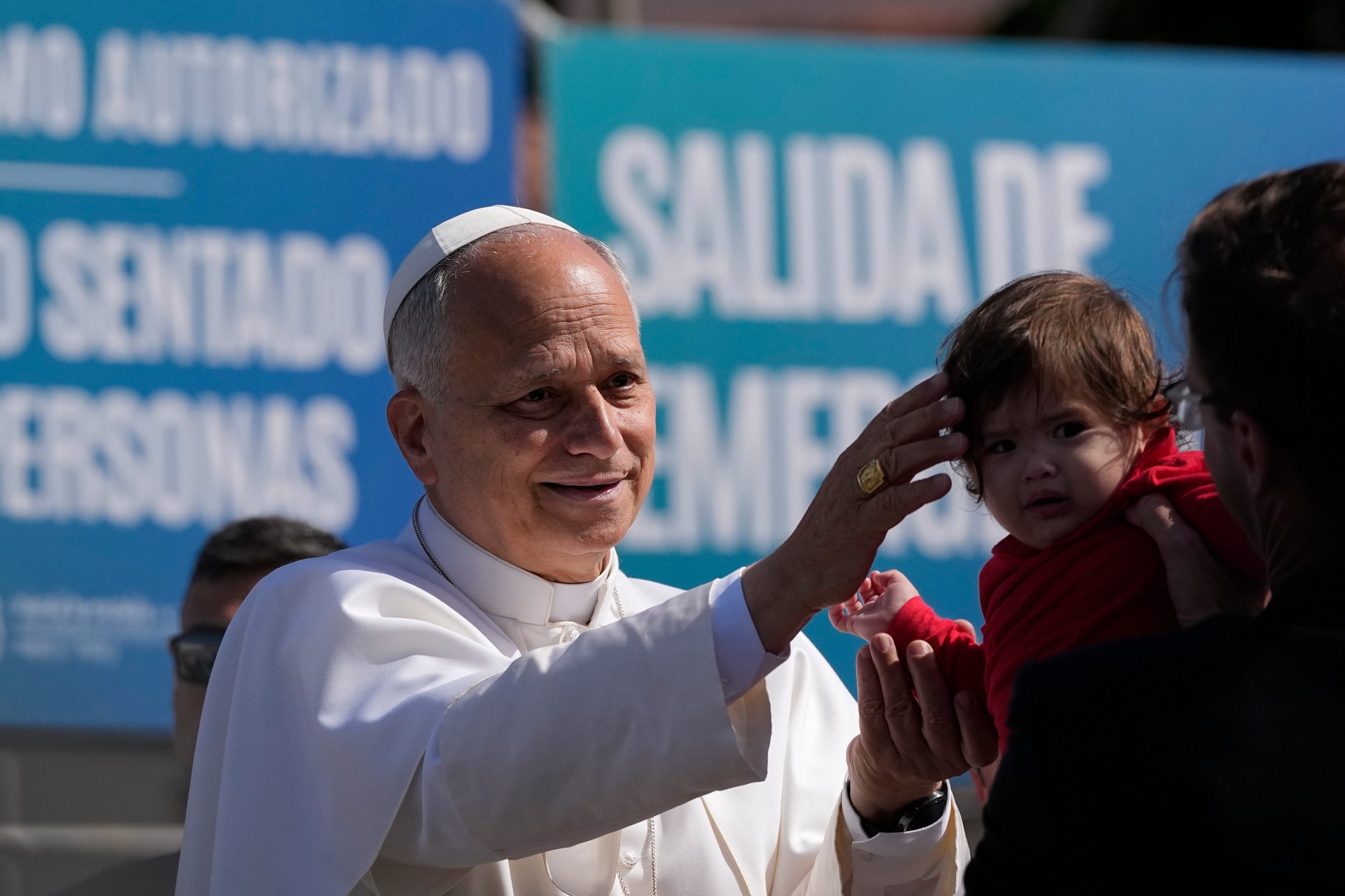
Pope Leo defends migrants at dock – On Thursday, Pope Leo XIV delivered an impassioned message to migrants gathered at the port of Arguineguín in Las Palmas, Spain, emphasizing their inherent value despite the hardships they endure. The visit, part of his final stop on a weeklong trip to the Canary Islands, marked a pivotal moment as the Pontiff urged European nations to confront the moral responsibilities tied to the migration crisis.
“Only then can we understand that that little girl could be our daughter, and that those faces could be part of our family. Then, our conscience is left with no excuses,” the Pope stated. “Human dignity has no passport and does not lose its value when crossing a border.”
Speaking to both migrants and officials, Leo denounced those who exploit them as “monsters” and criticized societies that remain indifferent to their plight. His remarks called for a collective shift in perspective, urging people to view migrants not as mere statistics but as individuals with hopes, fears, and dreams. “We must recognize that their suffering is not just a distant issue but a reflection of our own complicity,” he said, highlighting the urgent need for solidarity.
Arguineguín: A Symbol of Struggle and Hope
Located on Gran Canary Island, the port of Arguineguín has long been a focal point for those seeking refuge in Europe. Known as the “dock of shame” since 2020, it has borne witness to some of the most harrowing moments of the migration journey. That year, over 3,000 migrants were forced into a vessel designed for just 500, their exhaustion captured in haunting photographs that spread across global media. These images revealed the systemic failures in managing the crisis, as migrants from West Africa braved the deadly Atlantic crossing.
Today, the port is striving to shed its reputation as a place of despair. Volunteers and Catholic organizations are working tirelessly to transform Arguineguín into a “port of hope,” offering shelter, medical aid, and emotional support to those who arrive aboard homemade boats such as “cayucos” and “pateras.” The Pope’s presence underscores the growing international focus on these efforts, which aim to humanize the migrant experience and challenge the narrative of neglect.
Regional Dynamics and the EU Pact
While the Canary Islands are often seen as a tropical retreat for European tourists, their role as a gateway to the continent hides a more complex reality. In 2024, the archipelago welcomed a record 46,843 migrants, many of whom come from sub-Saharan Africa, including Senegal, Mali, Mauritania, and the Gambia. Meanwhile, arrivals via air from Latin America, particularly Venezuela and Cuba, have added to the mix, creating a diverse tapestry of displaced individuals.
Recent years have seen a decline in the number of migrants reaching the islands, thanks to agreements between Spain and the European Union with countries like Mauritania, Senegal, and Morocco. These partnerships aim to intercept departures and bolster maritime patrols, reducing the number of people attempting the perilous journey. However, the crossing has grown increasingly deadly, with over 3,090 fatalities reported in 2025 alone. In the first half of 2026, another 1,300 lives have been lost, according to the Spanish NGO Caminando Fronteras.
The EU Pact on Migration and Asylum, a new legal framework, is set to take effect this Friday. While it offers a structured approach to managing migration, human-rights advocates warn it could enable large-scale deportations from African migrant camps. “We are concerned because European politics is restrictive, not bridging gaps but constructing walls,” said Rev. Fernando Redondo, head of the Spanish bishops’ conference migration office. The Pope’s remarks align with this critique, framing the crisis as a call to action for nations of origin and transit.
Personal Stories and Moral Imperatives
Leo’s address was deeply personal, as he listened to the testimonies of migrants and those who assist them. Among the stories shared was that of a woman whose teenage daughter perished during the journey, a tragedy that left her crying as volunteers pulled her from the water. Tito Villarmea, captain of the salvage boat Guardamar Urania, recounted this moment during a conversation with the Pope at the pier. “I wish we didn’t have to save anyone again,” Villarmea said, “but let’s work as a society to reduce this tragedy and build a more just world.”
The Pope also addressed the broader implications of the crisis, stressing that migrant deaths must serve as a moral wake-up call. “This tragedy must appeal to the conscience of the nations of origin,” he declared, emphasizing that these countries are responsible for creating conditions that allow for human flourishing. He urged transit nations to shield vulnerable individuals from criminal networks and called for the international community to foster cooperation rather than division.
Europe’s Conscience and the Path Forward
Leo’s remarks extended to Europe, accusing it of becoming desensitized to the suffering of migrants. “The EU cannot claim to uphold human dignity while the Mediterranean and Atlantic turn into unmarked graves,” he said, a powerful metaphor for the growing toll of the migration crisis. His words challenged European leaders to reconcile their rhetoric with the reality of displaced lives, urging a more compassionate and inclusive approach.
As the Pope left the port, his message resonated with the migrants who had gathered to hear him. “I want to bow before your dignity,” he said, “for you are not just numbers or files. You are people who have left behind families and homes. You carry dreams that no one has the right to despise.” This acknowledgment of their humanity aimed to inspire both empathy and action, positioning the migrants as central to the conversation about justice and solidarity.
The Canaries, though geographically isolated, remain a critical link in the chain of migration. Their rocky shores have become a graveyard for many, with thousands perishing in the waters surrounding the islands. Yet, amid this tragedy, there is a flicker of hope. The Pope’s visit, combined with the efforts of local volunteers, seeks to highlight the resilience of migrants and the potential for change. As the EU Pact enters its new phase, the focus will be on whether Europe can rise to the challenge of protecting the most vulnerable while addressing the root causes of displacement.
Leo’s speech at Arguineguín serves as a reminder that the migration crisis is not merely a logistical problem but a profound moral one. By standing alongside those who have endured so much, the Pope has redefined the narrative, urging a shift from apathy to active engagement. The journey of migrants continues, but with every story shared and every life saved, there is a chance for the world to recognize the humanity in every face that reaches for a better future.