Supreme Court Prohibits Alabama from Using Nitrogen Gas for Execution
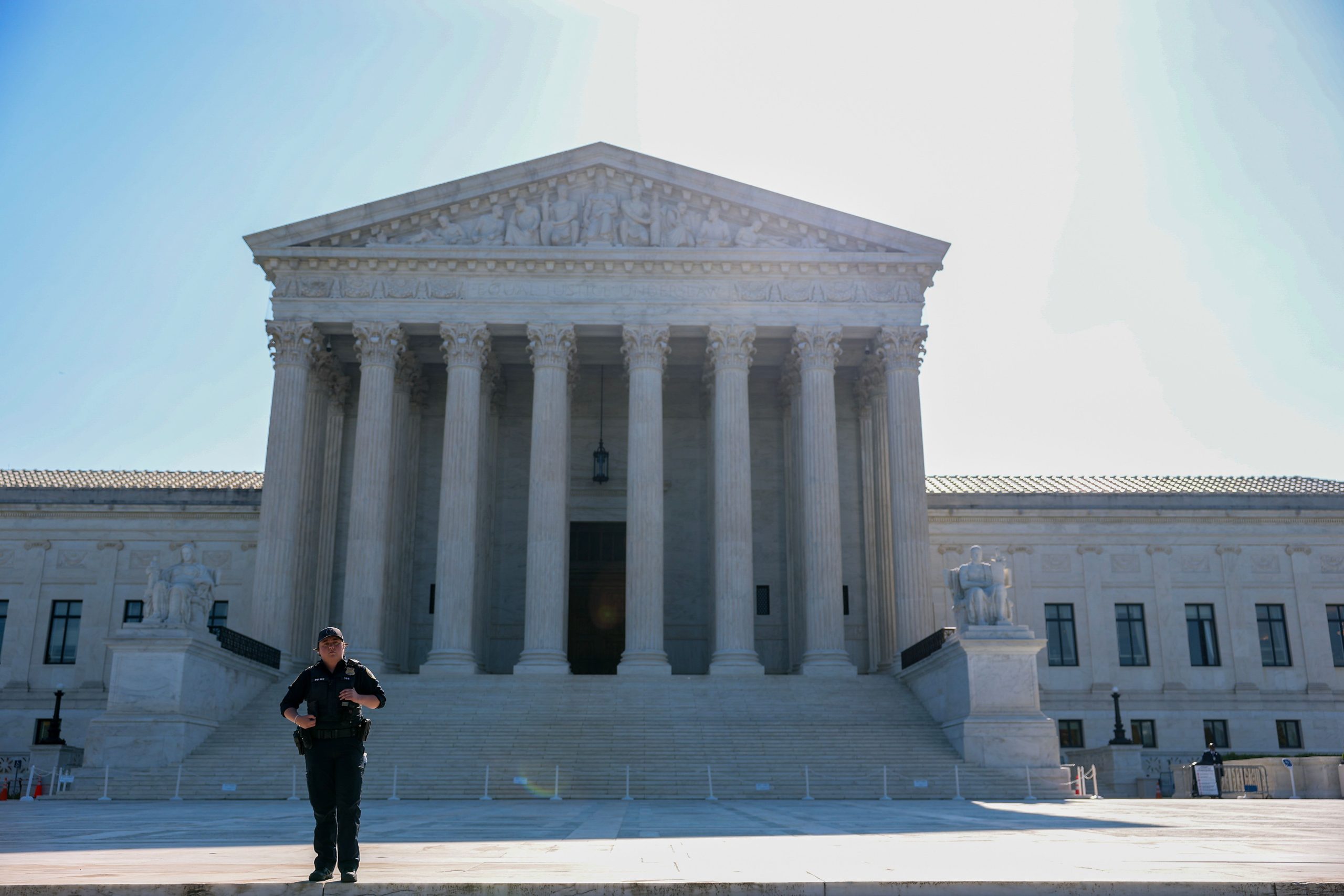
Supreme Court prohibits Alabama from using – On Thursday evening, the Supreme Court issued a ruling that temporarily halts Alabama’s use of nitrogen gas as a method for carrying out executions. The decision aligns with a prior injunction from a federal appellate court, which had previously determined that the gas-based method constitutes a violation of the Eighth Amendment’s prohibition against cruel and unusual punishment. The ruling comes as a critical moment in the ongoing legal debate over execution techniques and their alignment with constitutional standards.
A Legal Challenge to a New Method
The court’s order, delivered in a concise one-sentence statement, concluded that Alabama’s attempt to proceed with the nitrogen gas execution was “denied.” While Justices Clarence Thomas, Samuel Alito, and Neil Gorsuch expressed support for the state’s position in a separate opinion, they opted not to draft a formal dissent. This divergence highlights the ideological split within the bench regarding the acceptability of the method.
Jeffery Lee, the man at the center of this dispute, was convicted of two murders in 1998 and was set for execution on July 11. His legal team argued that the nitrogen gas method, which involves placing the prisoner in a chamber filled with the gas to induce unconsciousness and then allowing them to suffocate, causes prolonged suffering. According to Lee’s advocates, the process can lead to several minutes of agonizing asphyxiation, far exceeding the pain associated with traditional execution methods.
Appellate Court’s Stance and Medical Evidence
Earlier in the week, a federal appeals court had ruled that Alabama’s nitrogen gas protocol poses a “substantial risk of serious harm,” specifically citing the potential for severe pain beyond the act of death. This finding was bolstered by testimony from medical professionals who submitted a brief to the Supreme Court, asserting that the method “necessarily causes inhumane suffering.”
Observers who have witnessed nitrogen gas executions describe the experience as harrowing. Prisoners often exhibit visible distress, including convulsions, gagging, and prolonged vocalizations as they struggle for breath. Justice Sonia Sotomayor, in a 2025 dissent, characterized the suffocating process as “intense psychological torment,” a sentiment echoed by advocates who argue the method lacks the swift finality of lethal injection.
Historical Context of the Court’s Rulings
The Supreme Court has consistently applied the Eighth Amendment to scrutinize execution methods since 2008. In prior cases, the court has required states to demonstrate that their chosen techniques do not inflict unnecessary pain. This precedent was invoked in the current case, where Alabama’s proposal to use nitrogen gas was challenged by Lee’s legal team. They argued that the state must provide an alternative method—such as a firing squad—should the nitrogen gas process be deemed unconstitutional.
Alabama’s defense hinges on the assertion that nitrogen gas is a humane alternative. The state contends that the method does not produce the severe pain associated with older execution practices. In fact, the court had previously approved the use of nitrogen gas in Alabama in 2024, marking its first such execution. Since then, eight individuals have been put to death using the technique, seven of them in Alabama. The state also emphasized practical concerns, noting that assembling a firing squad is logistically challenging and time-consuming.
Broader Trends in Capital Punishment
The ruling coincides with a recent uptick in executions across the United States. According to the Death Penalty Information Center, 47 people were executed in 2025—marking the highest number in over a decade. So far this year, 15 executions have taken place, excluding Lee’s pending case. This surge has been driven in part by the growing scarcity of drugs used in lethal injections, as major pharmaceutical companies withdraw their support for the process.
As a result, states have turned to alternative execution methods, including firing squads and gas chambers, to maintain their death penalty programs. Alabama’s use of nitrogen gas represents a novel approach in this evolving landscape. However, the Supreme Court’s intervention underscores the judiciary’s role in ensuring that these methods meet constitutional standards. The decision also raises questions about the long-term viability of nitrogen gas as a replacement for traditional execution techniques.
Implications for the Future
While the Supreme Court’s order temporarily halts Lee’s execution, it does not resolve the broader issue of nitrogen gas as a valid method. The state may now seek a rehearing or appeal the decision, potentially leading to further legal battles. For now, Lee’s fate is postponed, though he remains under the threat of the death penalty.
Justice Sotomayor’s 2025 dissent, which highlighted the psychological impact of the nitrogen gas method, serves as a key reference in this case. Her argument that the method “necessarily causes inhumane suffering” reflects a growing concern among legal scholars and human rights advocates. Meanwhile, the state’s position that nitrogen gas is “not cause the kind of severe pain that characterized cruel punishments before the founding” underscores the debate over whether the method is truly more humane than its predecessors.
The ruling also has implications for the administration of justice in states facing drug shortages. As lethal injection becomes increasingly difficult to execute due to pharmaceutical companies’ objections, alternative methods are being tested. Alabama’s use of nitrogen gas, however, is now under renewed scrutiny, with the Supreme Court emphasizing the need for a reliable and constitutionally sound procedure.
President Trump, who has advocated for expanding the death penalty during his second term, may view this decision as a setback for his agenda. Despite the recent rise in executions, the number of people on federal death row remains relatively low, with only three individuals currently awaiting the sentence. This contrast highlights the disparity between state and federal approaches to capital punishment and the political influence on judicial rulings.
As the legal system grapples with the ethics of execution methods, the nitrogen gas debate exemplifies the tension between innovation and tradition. The Supreme Court’s decision reaffirms its commitment to evaluating the suffering caused by each technique, ensuring that the state’s methods align with the constitutional guarantee of humane treatment. For Jeffery Lee, this means a brief reprieve, but the question of whether nitrogen gas will ever be accepted as a valid execution method remains unresolved.
The case also reveals the broader challenges facing states in maintaining consistent execution protocols. While Alabama has been a pioneer in adopting nitrogen gas, the Supreme Court’s intervention demonstrates that even established methods must undergo continuous legal examination. This dynamic ensures that the death penalty remains subject to judicial oversight, even as new techniques are introduced to address changing circumstances and public sentiment.
With the execution delayed, the focus shifts to the next steps in the case. Alabama may attempt to modify its protocol or present additional evidence to support the nitrogen gas method. Meanwhile, the legal community watches closely to see how this ruling might influence future cases and shape the trajectory of capital punishment in the United States.