UK Leaders Call for Calm Amid Belfast Anti-Immigration Protests Triggered by Street Stabbing
U K leaders call for calm – Following a violent attack in Belfast that left a man with severe injuries, UK officials urged citizens to remain composed. The incident, which occurred late Monday in north Belfast, involved a Sudanese asylum seeker accused of attempting to kill a 40-year-old victim. The suspect, a 30-year-old man not yet identified, was arrested and charged with attempted murder, possession of a knife in a public area, and threats to kill. A kitchen knife was recovered from the scene, though police have not yet determined the motive behind the assault.
Community Shock and Protests Emerge
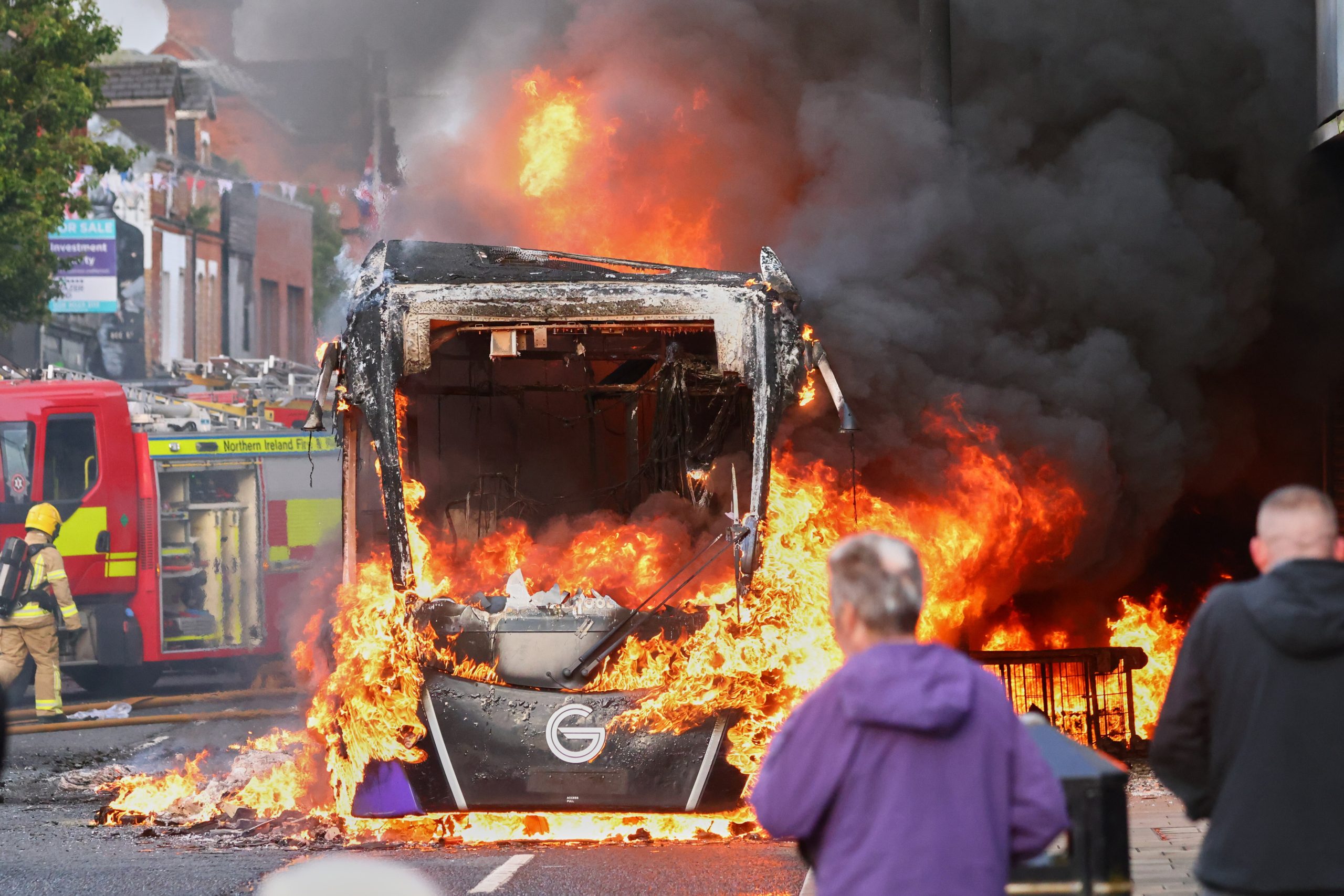
The attack, captured on video and shared widely online, ignited fierce anti-immigration demonstrations across Northern Ireland. Protesters, many clad in black hoodies and some wearing masks, gathered in Belfast’s streets, where tensions escalated into acts of vandalism. A bus in east Belfast was set ablaze, and vehicles, trash bins, and other property were damaged as crowds demanded accountability. The demonstrations, though initially focused on the suspect’s asylum status, have drawn broader attention to debates over immigration policy and public safety.
“This brutal attack will have sent shock waves through the community, causing real concern,” said Ryan Henderson, assistant chief constable of the Police Service of Northern Ireland. He noted that while the motive remains under investigation, there is no indication the attack was linked to terrorism. Henderson also emphasized that authorities are not currently pursuing additional suspects.
Political Responses and Immigration Debates
Northern Ireland’s leaders, including the chief constable Jon Boutcher, have called for unity and cautioned against targeting specific communities. Boutcher revealed that the suspect was living in the UK on a five-year visa issued in September 2023. According to police, the man had traveled from Sudan to Paris and Dublin before settling in Belfast as an asylum seeker. His lack of prior familiarity with the local area has raised questions about his integration and potential ties to the broader immigrant population.
Meanwhile, Northern Ireland Secretary Hilary Benn faced scrutiny in Parliament over the suspect’s immigration status. Benn admitted uncertainty about whether the attacker arrived in the UK illegally, highlighting the complexity of the issue. This ambiguity has fueled criticism from politicians like Gavin Robinson, leader of the Democratic Unionist Party, who has called for stricter measures to control immigration. Robinson’s comments reflect growing concerns among some factions about the perceived impact of asylum seekers on public order.
Link to Earlier Southampton Stabbing Case
The Belfast incident has reignited discussions about immigration-related violence, drawing parallels to a separate case in Southampton, England. Last December, a university student named Henry Nowak was stabbed to death by Vickrum Digwa, a Sikh man who initially claimed he was the victim of a racist attack. The incident sparked violent clashes in Southampton, with protesters confronting police and accusing immigration of fostering criminal behavior. Digwa was later convicted of murder and sentenced to life in prison with a minimum of 21 years, though his case has intensified debates about race and policing in the UK.
The Southampton tragedy, in which Nowak was killed by a knife wielded by Digwa, has been cited by activists and U.S. Vice President JD Vance as evidence of immigration’s role in societal unrest. The Belfast attack, while distinct in its circumstances, has been used by critics to amplify these arguments. Demonstrators in Belfast have echoed similar sentiments, holding signs that read “Illegal Migration Is Destroying Our Civilisation” and targeting locations associated with asylum seekers.
Efforts to Mitigate Escalation
Authorities have emphasized the need for public restraint, urging citizens to avoid spreading graphic images or misinformation. Police and senior politicians have worked to temper the fervor of protests, stressing that the investigation is ongoing and that the suspect’s actions should not be generalized to entire immigrant communities. “It is time for calm,” stated the office of Keir Starmer, the UK’s leader, who condemned the attack as “sickening” and vowed “no tolerance for abhorrent scenes of violence like this on our streets.”
Starmer’s remarks underscore the political weight of the situation, as the incident has become a focal point for discussions on immigration and security. The combination of the Belfast stabbing and the Southampton case has created a narrative linking immigrant populations to recent acts of violence, despite the fact that both victims and perpetrators were British in the Southampton case. This has prompted calls for a more nuanced approach to immigration policy, balancing concerns over safety with support for asylum seekers.
Community Impact and Public Sentiment
The Belfast attack has not only sparked immediate protests but also deepened divisions within the local community. As the suspect’s background is scrutinized, some residents have expressed fear about the growing presence of asylum seekers, while others have defended their right to seek refuge. The protests have seen participants from diverse backgrounds, with slogans and chants reflecting both anger and solidarity. Police have reported that the situation is being closely monitored, with efforts to prevent further unrest and ensure public safety.
Meanwhile, the broader UK context has shown how immigration-related tensions can escalate rapidly. The Southampton case, which involved a knife attack on a British student, had already led to violent demonstrations last week. The Belfast incident has now amplified these concerns, with some activists using the event to argue for stricter immigration controls. However, officials have stressed the importance of distinguishing individual cases from systemic issues, urging the public to avoid hasty judgments.
As the investigation continues, the focus remains on understanding the suspect’s motives and his journey to the UK. The police have confirmed that he was not known to local authorities, which has added to the sense of unpredictability surrounding the attack. Despite this, the case has already become a symbol of larger debates about identity, belonging, and the role of immigration in shaping public discourse. The streets of Belfast and Southampton now serve as reminders of how a single act can spark widespread reaction and rekindle long-standing controversies.
With the situation evolving, leaders across the UK are working to bridge divides and restore confidence in both the police and immigration processes. The challenge lies in addressing public fears while ensuring that the rights of asylum seekers are upheld. As the days pass, the impact of these protests will likely extend beyond local communities, influencing national conversations about migration and security in the years to come.