What a Monopoly importer learned when it tried to make things in the U.S.A.

Lessons from the Board: A Monopoly Importer’s American Manufacturing Experiment
What a Monopoly importer learned when – For generations, the classic board game has offered valuable insights into economics. Players learn the advantages of accumulating property, the power of consolidating railroads, and the strategic utility of a get-out-of-jail-free card. However, a newly released special edition of the game is now delivering a different, more contemporary lesson regarding the complexities of domestic production.
The game is distributed by the WS Game Company, a firm that, much like the vast majority of toy manufacturers, outsources the creation of its premium board games to China. This reliance on overseas production changed course after the company faced a significant financial setback. Last year, the business received a seven-figure tariff invoice, prompting CEO Jonathan Silva to investigate whether it was feasible to manufacture a profitable board game within the United States.
The Search for Domestic Dice
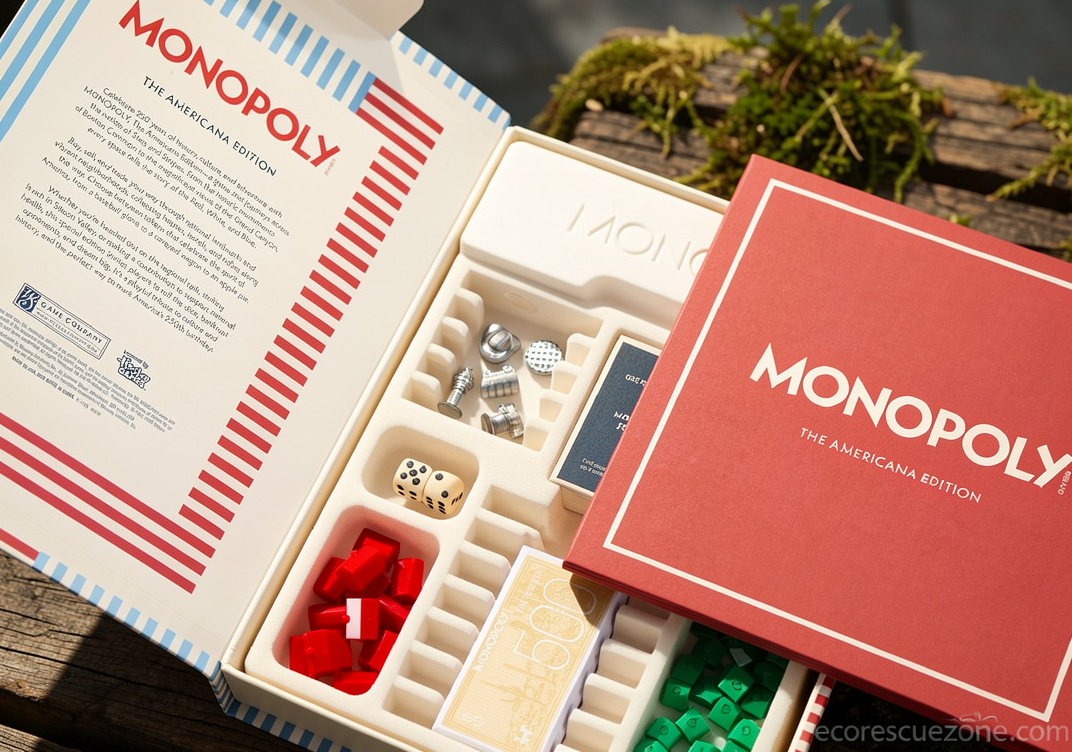
Silva selected a customized version of Monopoly, designed to celebrate the nation’s 250th anniversary. The initiative nearly failed before it even began due to a seemingly simple component: the dice. Finding a domestic supplier proved to be a major hurdle.
“We turned over every single leaf trying to find someone who would make 10,000 dice for us in the U.S.,” Silva says. “It requires special machinery. It requires investment. And that type of stuff just can’t happen on a random Tuesday and be ready in a couple of months.”
While the dice presented a unique challenge, Silva successfully located other necessary components within the country. The game boards are printed at a former Hasbro facility located in Massachusetts. Meanwhile, a local firm named Pioneer Packaging supplies the trays that hold the currency. Additionally, a small Indiana-based enterprise produced custom metal tokens shaped like iconic American symbols, including a cowboy hat, a covered wagon, and a slice of apple pie.
Costs and Timelines
Coordinating these various domestic suppliers was a time-consuming endeavor. The assembly process stretched beyond a year, causing Silva to miss the initial sales window for the 250th birthday celebration. Furthermore, the financial implications were steep. Although the games retail for $80 each, the manufacturing expenses were at least twice as high as they would have been had the production remained in China.
“When I place a purchase order in China, they have all those capabilities under one roof,” Silva says. “For one item, it took up way too much of our resources and time to bring it to market.”
The difficulty of moving production back home is not unique to WS Game Company. Approximately 80 percent of toys and games sold in the United States originate in China. This dominance stems from decades of infrastructure development, where China has constructed a