Feeling restless? Level up your life by starting a side quest

Daftar Isi
The Case for Doing Something Pointless: Why Adults Need Side Quests
Ecorescuezone.com – There is a particular kind of exhaustion that has nothing to do with physical fatigue. It creeps in after months of optimized routines, career milestones, and the relentless optimization of every waking hour toward some measurable outcome. You scroll through your calendar and realize every block is labeled, every evening has a purpose, and the last time you did something purely because it felt good was… when? The answer, for many adults, stretches back decades.
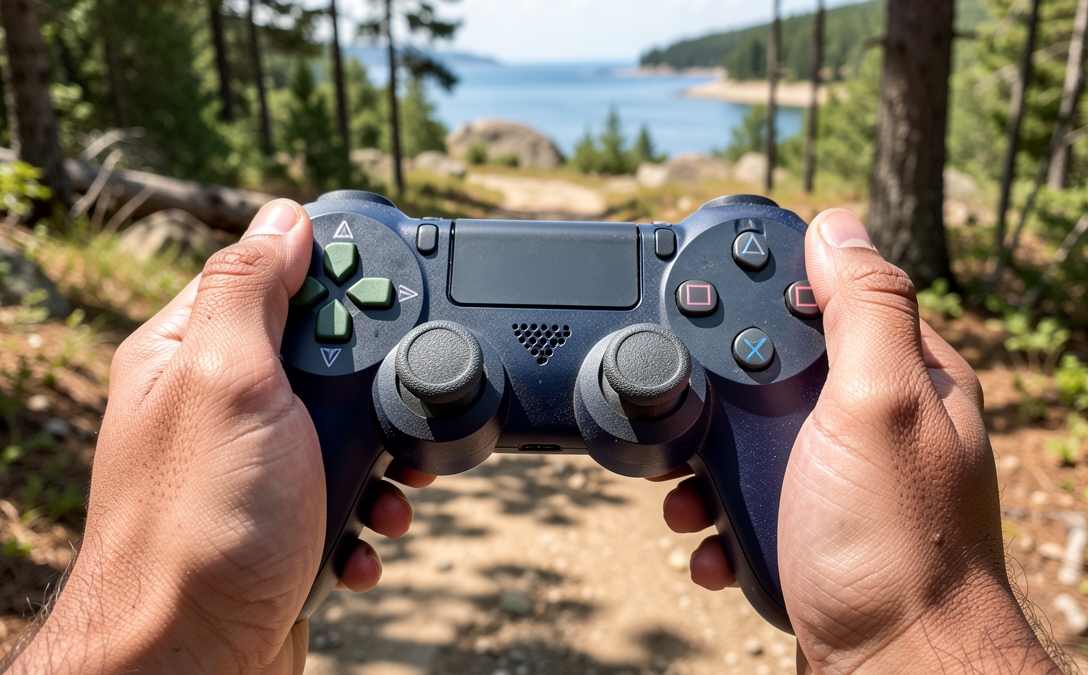
Video game designers have long understood that a player who never deviates from the main storyline eventually burns out. They built in what they call side quests: optional missions that pull you off the critical path, let you explore a forgotten village, talk to a stranger, or solve a puzzle with no stakes beyond curiosity. The world grows richer. The character gains depth. And when you finally return to the primary objective, you carry something new.
Transplanted into ordinary adult life, a side quest is simply an activity whose sole justification is whimsy, exploration, or the sheer pleasure of doing it. It answers no productivity metric. It builds no résumé line. Its value lives entirely in the experience itself.
What the Research Says About Play
The case for structured play in adulthood is not merely sentimental. Studies across developmental psychology and neuroscience indicate that play helps humans adapt to adversity, rehearse survival behaviors, sharpen problem-solving, and strengthen collaborative bonds. Engaging in unfamiliar activities activates neural pathways that routine tasks leave dormant, producing what researchers describe as a heightened state of wonder and cognitive openness.
“Doing something you’ve not done before will open up the brain’s different neural networks. You’ll get this sense of wonder and awe.”
Kyra Gaunt, an ethnomusicologist and author of The Games Black Girls Play: Learning the Ropes From Double-Dutch to Hip-Hop, frames the side-quest metaphor explicitly in gaming terms. For her, stepping outside the main storyline does not weaken it; it deepens it.
“Just like in the gaming world, it makes the main quest stronger. It gives it more nuance or new dimension or brings out a facet of you that you convinced yourself you couldn’t [be].”
Public speaker and play-workshop facilitator Jeff Harry has long argued that the right entry point into adult play is a simple retrospective question: what did you love doing as a child before the world told you to grow up? Finger painting. Chasing fireflies. Testing how far a swing could launch you. Pretend scenarios where you were a pirate or a veterinarian. Those impulses did not vanish; they were merely filed under “not now” and never revisited.
Identifying Your Play Style
Play researcher and psychiatrist Stuart Brown, whose work underpins the National Institute for Play, has collected thousands of personal play histories to map the ways different people find joy in unstructured activity. His framework sorts adults into categories such as the “dreamer,” who gravitates toward fantasy, alternate worlds, and imaginative scenarios, and the “organizer,” who finds satisfaction in arranging objects, building systems, or connecting people into collaborative structures.
“The idea is to find the type of play activity that naturally gives you a sense of joy and engagement and sustained motivation.”
Knowing your inclination is useful, but Gaunt pushes further: the most productive side quest may be one that sits entirely outside your comfort zone. She recalls enrolling in a figure-drawing class a couple of summers ago, staring at a live model, and thinking, “I can’t draw.” Her instructor’s reply was to let her hand follow her vision rather than her self-doubt. The exercise, she reports, had an immediate spillover effect on her writing the following day, making it feel easier and more fluid.
“The next day, my writing was easier. My writing was better.”
When You Cannot Name the Quest
Not everyone arrives at a clear activity. Sahara Moné, curator of Let’s Play NYC, a community organization dedicated to normalizing play for adults, advises those who feel too depleted or overcommitted to simply pause, listen inwardly, and follow whatever small urge surfaces. The acting class you’ve meant to take since college graduation. The pottery wheel you walked past last month. The improv night you kept postponing.
“That’s a nudge. It’s very loud. It’s a good place to start.”
The ARTSN Framework: Turning an Impulse into an Action
Once a candidate activity emerges, Gaunt recommends filtering it through an acronym she developed called ARTSN, designed to keep the quest bounded and reflective rather than open-ended and anxiety-inducing:
A — Achievable. The activity must be small enough to begin this week, not next quarter. A single class session, a one-hour walk on an unfamiliar trail, a thirty-minute sketch. Scale matters more than ambition.
R — Revealing. Choose something that will teach you an unexpected fact about your own preferences, limits, or capacities. The point is information about yourself, not mastery of a skill.
T — Time-bound. Give the quest a defined start and stop. A weekend workshop, a single evening, a two-week trial. Finite boundaries reduce the dread of indefinite commitment.
S — Specific. Attach a clear, narrow goal. Not “get better at art” but “draw one figure from memory after class.” Specificity converts vague intention into a concrete action.
N — Notice. Afterward, pause and observe. What surprised you? What delighted you? What made you want to stop? Gaunt frames this as the most important letter: the side quest’s true payload is the data it returns about you.
Releasing the Outcome
The final, perhaps most radical, instruction is to stop trying to control what happens. Adult environments are saturated with performance metrics, grading rubrics, and optimization loops. A side quest, by definition, has no score. You are allowed to be bad at it. You are allowed to enjoy the process without extracting a lesson or a credential.
“Adults spend so much time in environments where they’re trying to control the outcome. Side quests, on the other hand, release us from worrying about that.”
The next time the restless feeling surfaces—that low hum of “I am doing everything correctly and it is not enough”—the answer may not be another optimization. It may be a Tuesday evening spent badly drawing a stranger’s hand, or a Saturday morning spent learning the rules of a board game no one else at the table knows. The main quest will still be there when you return. It will be richer for the detour.
Related Reading
Frequently Asked Questions
What is Feeling restless Level up your life?
Feeling restless Level up your life is the main topic of this guide. The article explains the context, practical details, and next steps readers should understand.
Why does Feeling restless Level up your life matter?
Feeling restless Level up your life matters because readers are looking for a useful answer, not just a short summary. Good content should match search intent and help them decide what to do next.