Record cyclosporiasis outbreak tests the response of a ‘weakened’ health system


Daftar Isi
Record Cyclosporiasis Outbreak Tests the Response
Ecorescuezone.com – The record cyclosporiasis outbreak tests the response of a federal and state health apparatus that many experts say has been hollowed out over the past year. More than 15,700 Americans have now been confirmed ill with Cyclospora, the parasite behind weeks-long diarrhea and gastrointestinal misery, according to the Centers for Disease Control and Prevention. Cases trace primarily to iceberg lettuce grown in Mexico, and what started in May as a handful of reports has grown into the largest cyclosporiasis event ever documented in the United States, spanning numerous states and overwhelming the agencies charged with containment.
Critics argue the timing is no coincidence. In the months preceding the surge, sweeping federal workforce reductions eliminated entire teams once tasked with public-awareness campaigns and with coordinating crisis response across borders. The result, they contend, is a slower, less coherent reaction than the scale of contamination demands.
Inside the federal scramble
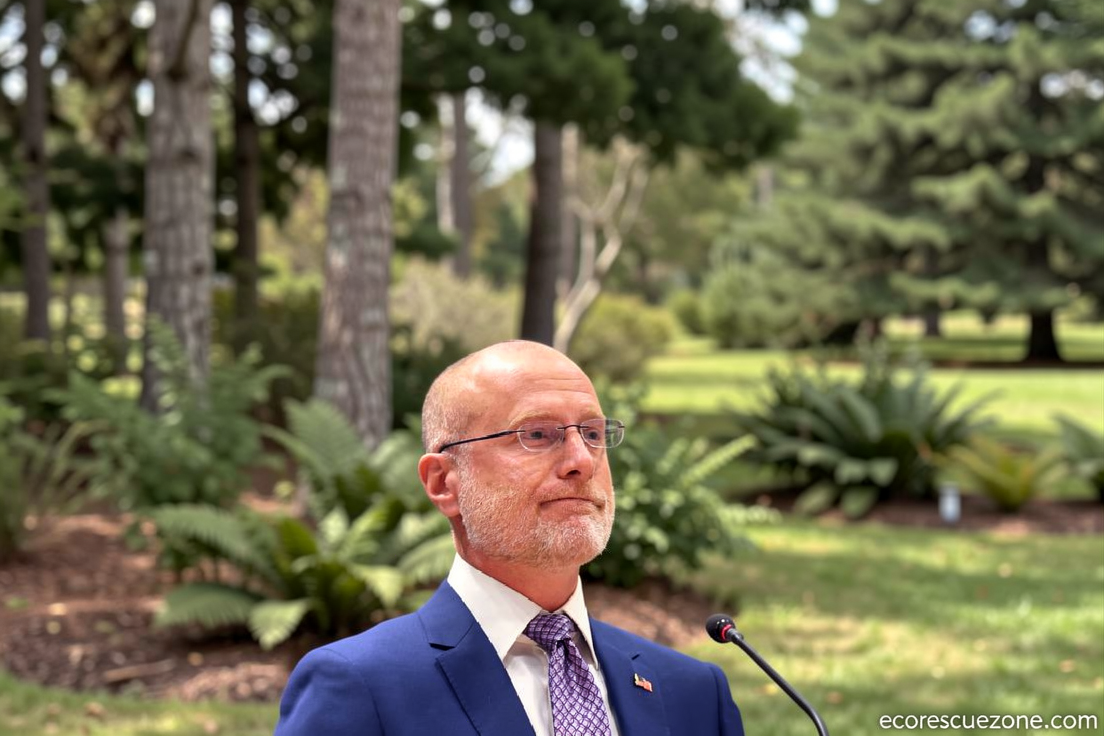
Susan Mayne, an epidemiologist who previously led the FDA’s Center for Food Safety and Applied Nutrition, described the operational disarray she now observes. That center has been folded into the Human Foods Program, and the personnel who once managed foreign regulatory partnerships were among those cut. Speaking directly about the Mexico dimension of the current crisis, she said:
“And now we have this outbreak with Mexico – I don’t know who’s managing that partnership, [but] those relationships obviously have been disrupted.”
Mayne characterized the episode as proof of a structural erosion that runs from county health departments up through the federal agencies that fund nearly every state food-safety program.
“I think that that has really pushed us into a new level of vulnerability in terms of our food safety system.”
The Department of Health and Human Services, parent agency to both the FDA and CDC, issued a written statement saying that Human Foods Program staff who serve as foreign liaisons have been reinstated. The FDA separately affirmed that it “continues to work with federal, state and international partners to investigate these outbreaks” and that it “deploys personnel where they have the greatest public health impact.”
State programs absorbing the shock
Most state outbreak-investigation and food-safety programs run on grant dollars from the FDA and CDC. Last year the administration trimmed CDC grant allocations by roughly 40 percent — about $5.8 billion as of May — and each state has absorbed that shock differently.
Kentucky’s Cabinet for Health and Family Services reports its food-safety workforce has contracted by 30 to 50 percent. The Ohio Department of Health told reporters in writing that its Cyclospora response has not been compromised by staffing losses. Michigan, which carries the highest caseload of any state in this outbreak, successfully challenged the grant cuts in court, keeping disease surveillance, field investigation, reporting, and public messaging operational for now, according to a statement from the Michigan Department of Health and Human Services.
West Virginia confronts a layered problem. Beyond the federal funding cliff, the state contends with rigid job-classification rules that make hiring and retaining the specialists needed to investigate foodborne-illness spread extraordinarily difficult.
The human cost of empty desks
Bob Custard spent four decades advising local governments on clean water, rabies prevention, and food safety. He now presides over the West Virginia Association of Sanitarians, a body representing roughly 160 environmental-health professionals. Speaking as a public-health consultant, Custard described a state apparatus so understaffed that officials cannot keep pace with the interviews and fieldwork required to track a diarrheal pathogen of this magnitude.
“It’s like we have a house, and we decided to take smoke detectors out.”
He recalled a county that, just two years ago, employed four full-time sanitarians to investigate environmental hazards and food-safety violations — a capacity that has since evaporated.
Frequently asked questions
What is Cyclospora and how long do symptoms last?
Cyclospora cayetanensis is a single-celled parasite that causes prolonged diarrhea, abdominal cramping, fatigue, and sometimes low-grade fever. Without treatment, symptoms can persist for weeks or months. A course of antibiotics, typically trimethoprim-sulfamethoxazole, shortens the illness significantly.
Which foods are linked to the current outbreak?
The CDC has traced the majority of confirmed cases to iceberg lettuce grown in Mexico and distributed across multiple U.S. states. Consumers are advised to wash produce thoroughly and to watch for updated guidance from their state health department.
How are state health departments funded, and what changed last year?
State food-safety and outbreak-investigation programs rely heavily on federal grants from the FDA and CDC. In the most recent budget cycle, CDC grant allocations were reduced by approximately 40 percent, roughly $5.8 billion as of May, forcing states to cut staff, delay investigations, or seek judicial relief to maintain operations.
What should a consumer do if symptoms appear after eating lettuce?
Contact a primary-care provider or local health department, mention recent produce consumption, and request a stool sample for Cyclospora testing. Early diagnosis allows prompt antibiotic treatment and helps public-health teams narrow the contamination source.