Exclusive: Meet the inaugural winner of Fat Marmot Week

Daftar Isi
Dawn the Marmot Takes the Crown in Colorado’s First-Ever Fat Marmot Week
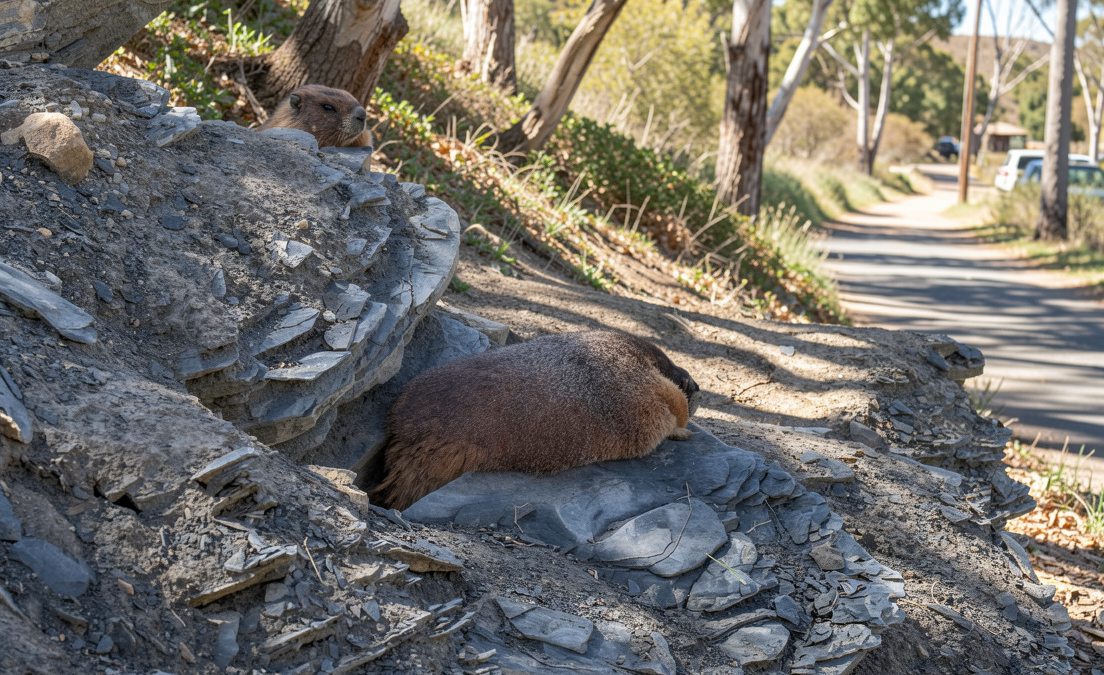
Ecorescuezone.com – A chunky, rock-tasting father named Dawn has been crowned the fattest of eight competing yellow-bellied marmots in the inaugural edition of Fat Marmot Week, a public voting event organized by the Rocky Mountain Biological Laboratory in Colorado. Dawn’s victory was confirmed on two fronts: the public popular vote and the researchers’ own measurements of actual body mass. The marmot added 4.5 pounds during the month of August, bringing his total weight to 13 pounds — the largest gain among all eight contestants.
The event was designed to draw attention to a group of cat-sized alpine rodents that spend more than half the year in a state of deep physiological shutdown, and to generate much-needed financial support for the science that tracks them. With federal and institutional research budgets under sustained pressure, the Marmot Project turned to public spectacle as a survival strategy.
Why a Weight Contest? The Biology Behind the Spectacle
Yellow-bellied marmots inhabit high-elevation meadows across the Rocky Mountains, where snow blankets the landscape for months each year. To endure those winters, these rodents enter true hibernation: they curl into tight balls, let their core body temperature plummet, and reduce their breathing rate to a fraction of normal. They survive entirely on fat reserves accumulated during the brief summer feeding window.
This makes them, by any biological measure, the largest true hibernators on Earth. The distinction matters. Brown bears, which inspired the analogous Fat Bear Week in Alaska, do not technically hibernate. They enter a state called torpor — a deep sleep with reduced metabolic activity, but without the extreme thermoregulatory collapse that defines true hibernation. Marmots, by contrast, undergo the full physiological transformation, dropping body temperature by tens of degrees and relying exclusively on stored lipid for energy.
Understanding how these animals manage such an extreme metabolic transition has implications far beyond the alpine meadow. Researchers studying hibernation physiology have long hoped to glean insights relevant to human medicine, including organ preservation and potential treatments for metabolic disorders. The Marmot Project, which has tracked individually tagged marmots in the wild since 1962, represents one of the longest continuous datasets of its kind in mammalian ecology.
The Contest and Its Results
Eight marmots — Dawn, G, Dan’s Hat, Citroen, Open Kite, 1, Dandelion, and Stonehenge — were the contestants. Throughout August, enthusiasts were invited to follow their bulking-up progress and ultimately cast votes for the animal they considered the fattest. The public vote crowned Dawn as champion.
On Saturday, the Marmot Project independently confirmed the result using its own size and weight estimates, declaring Dawn the competition’s “true” winner as well. The laboratory described the victorious father as one who “emjoys the taste of rocks,” a nod to the species’ well-documented habit of gnawing on mineral-rich stones to supplement their diet.
Among the editorial staff covering the event, an informal internal vote went to a different contestant: Stonehenge, a resilient mother who had lost her entire litter to a hungry badger earlier in the year. Her comeback story resonated with the team even as the data pointed elsewhere.
Fundraising Under Pressure
The creative energy behind Fat Marmot Week is not a one-off stunt. It is part of a broader effort to plug gaps left by shrinking research budgets. Dan Blumstein, a UCLA professor who directs the Marmot Project, has been candid about the financial precariousness of long-term fieldwork.
“We have some funding for next year, but after that, it’s looking very dire,” Blumstein said.
One of the project’s more unconventional revenue streams is an OnlyFans account called OnlyMarms, which promises subscribers “uncensored marmot content.” By the start of August, that account had generated roughly $4,000 toward research costs. Blumstein expressed hope that the publicity surrounding Fat Marmot Week would amplify donations beyond what the subscription model alone could deliver.
The inspiration for the whole enterprise traces back to Alaska’s Fat Bear Week, an annual online event in which more than a million people vote for the most heavily built brown bear in a set of camera-trap photographs. Translating that format to a smaller, less photogenic — but scientifically more extreme — hibernator was the Marmot Project’s way of inserting itself into the public imagination.
Why Six Decades of Data Matter
The Marmot Project’s value lies not in any single season’s observations but in the accumulated weight of sixty-plus years of continuous monitoring. Individually tagged animals, tracked across generations, provide a longitudinal record of how a high-elevation ecosystem responds to shifting climate conditions, predator dynamics, and land-use change.
“These long-term studies provide us the insights to understand how organisms, plants, animals, whatever, respond to a changing environment,” Blumstein told NPR’s Ayesha Rascoe in an interview earlier this month.
That continuity is precisely what makes the project vulnerable to funding gaps. A single year of lost support does not merely pause a grant cycle; it severs a thread of data that cannot be restarted without losing decades of comparative context. The spectacle of a marmot gaining half a stone of fat in August, however entertaining, ultimately serves a quieter purpose: keeping the cameras running, the tags in place, and the sixty-year record intact.
Related Reading
Frequently Asked Questions
What is Exclusive?
Exclusive is the main topic of this guide. The article explains the context, practical details, and next steps readers should understand.
Why does Exclusive matter?
Exclusive matters because readers are looking for a useful answer, not just a short summary. Good content should match search intent and help them decide what to do next.