Are you sure that Kimmel clip was real? Late-night AI deepfakes are spreading online

Daftar Isi
AI-Generated Talk Show Monologues Are Flooding Feeds — and Viewers Can’t Tell the Difference
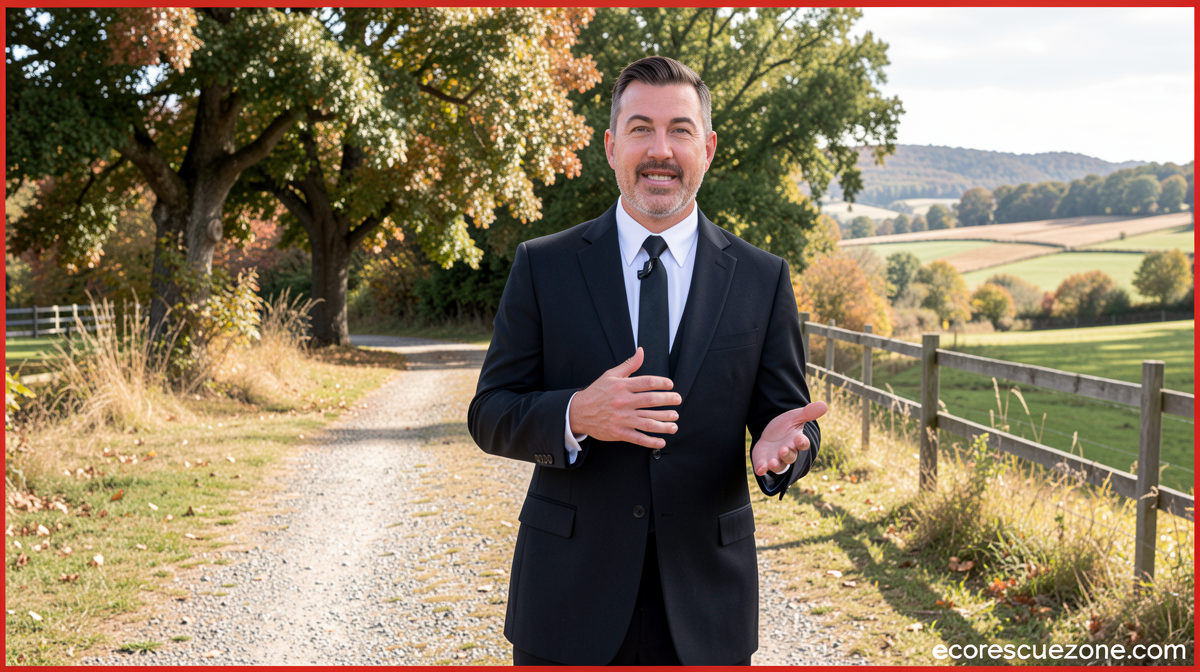
Ecorescuezone.com – Jimmy Kimmel’s summer hiatus from his ABC late-night program should have meant a quiet stretch for fans of his nightly political commentary. Instead, social media platforms have been saturated with clips that appear to show the comedian dissecting everything from President Donald Trump dozing off mid-meeting to the president’s public jabs at Michigan Senate candidate Abdul El-Sayed. The problem: none of those clips are real. They are synthetic video, stitched together by generative artificial intelligence, and they are proliferating at a pace that worries media researchers and late-night industry observers alike.
Why Late-Night Hosts Are Prime Targets
The format of a late-night monologue makes it uniquely susceptible to cheap, convincing forgery. Unlike a film actor or a concert singer, a talk show host typically occupies a single chair, faces a fixed camera, and speaks for several uninterrupted minutes. That static framing means a forger needs very little source material to produce a passable imitation. High-resolution audio of the host’s voice is abundant online, and a single still image can be animated into a talking-head clip with current-generation tools.
Hany Farid, a computer science professor at Dartmouth College who studies deepfake detection, described how little effort the process now demands.
“In many cases, I can take a single image from a late show host and just animate it. Here’s a voice, fifteen seconds. Here’s a script. Go.”
That low barrier to entry, combined with the sheer volume of authentic clips already circulating in feeds, creates what one observer calls a camouflage effect. Audiences scroll past thousands of genuine late-night segments each week; a synthetic clip nestled among them inherits the credibility of its neighbors.
The Camouflage Effect in Practice
Jed Rosenzweig, founder and editor of the online publication LateNighter.com, has been tracking the surge of fabricated talk show monologues and argues that the genre’s built-in context makes it harder to spot than, say, a deepfake of a politician giving a speech in an unfamiliar setting.
“Jimmy Kimmel really does go on television and talk about politics all the time, and these clips really do get posted on social media every day. So if you see a Kimmel thumbnail tied to something Trump did yesterday, there’s a built-in context and trust there that gives [it] a kind of camouflage. It just has to look like one more Jimmy Kimmel clip in a feed that’s already filled with Jimmy Kimmel clips.”
Still, Rosenzweig notes several giveaways for attentive viewers. The hand gestures often feel slightly off. The scripted language lacks the cadence and spontaneity of a live monologue. And after roughly ten seconds, the cloned likeness tends to vanish, leaving only a synthetic voice narrating over stock news footage.
Those cues have not stopped the clips from accumulating hundreds of thousands of views. Comments sections on platforms like YouTube routinely contain viewers thanking the host for “speaking the truth,” suggesting that at least a subset of the audience accepts the fabrication at face value.
A Political Flashpoint
The stakes are elevated because Kimmel’s relationship with the current White House is openly adversarial. Trump has repeatedly demanded that the comedian be dismissed from his show. Meanwhile, the Federal Communications Commission and ABC are locked in a legal dispute over free-speech protections for broadcast programming. In that climate, a wave of synthetic clips mocking or criticizing the president could be weaponized to harden the administration’s posture toward the network.
“ABC are being scrutinized on a nightly basis for what Jimmy Kimmel is saying,” Rosenzweig said.
Other hosts have not escaped the phenomenon. Jon Stewart, long associated with The Daily Show, has also been the subject of AI-generated imitations. But the volume and political salience of the Kimmel clips make them the most conspicuous case.
Who Is Behind the Clips, and Why
The small number of creators producing these synthetic monologues have not publicly explained their motives. Representatives for Kimmel, Stewart, Sean Hannity, and Greg Gutfeld either declined or did not return requests for comment. Farid speculates that the drivers range from ideological persuasion to straightforward monetization through ad revenue on short-form video platforms.
He also observes an asymmetry: deepfake monologues from right-leaning talk show hosts are comparatively rare on social media. When they do appear, they tend to take the form of promotional scams rather than political commentary.
“The things I’ve seen are more on the side of scams and fraud. It’s like, ‘Sean Hannity says you should buy this cryptocurrency!'”
Why the Audience Still Matters
Although overall viewership of late-night programs has been trending downward for years, roughly one in four Americans still tunes in on a regular basis. A 2025 survey conducted by the Associated Press-NORC Center for Public Affairs Research found that the majority of remaining viewers identify as Democrats and that a growing share consume clips online rather than watching full episodes on linear television. That demographic skew may explain why the deepfake ecosystem has gravitated toward left-leaning hosts: the audience that shares and engages with political commentary is disproportionately reachable through the very platforms where these clips circulate.
Farid frames the broader concern in terms of information ecology. Late-night television has long functioned as a nightly ritual through which many Americans process the day’s news and calibrate their own opinions. When synthetic content masquerades as that ritual, the effect is not merely a prank.
“The deepfakes we are seeing, it’s essentially disinformation campaigns that now seem to be coming out of the [voices] of those very people that we’re used to listening to. So they’re quite effective.”
As generative video tools grow cheaper and more accessible, the line between a genuine three-minute monologue and a fabricated one will continue to blur. For viewers scrolling through a feed already dense with late-night clips, the practical takeaway is simple: a clip that arrives out of context, features slightly unnatural gestures, or pivots abruptly from a cloned face to raw news footage deserves a moment of skepticism before it is shared.
Related Reading
Frequently Asked Questions
What is Are you sure that Kimmel clip?
Are you sure that Kimmel clip is the main topic of this guide. The article explains the context, practical details, and next steps readers should understand.
Why does Are you sure that Kimmel clip matter?
Are you sure that Kimmel clip matters because readers are looking for a useful answer, not just a short summary. Good content should match search intent and help them decide what to do next.