Canada claps back at Trump’s efforts to rename Lake Ontario as ‘Lake America’

Canada Claps Back at Trump’s Lake Renaming
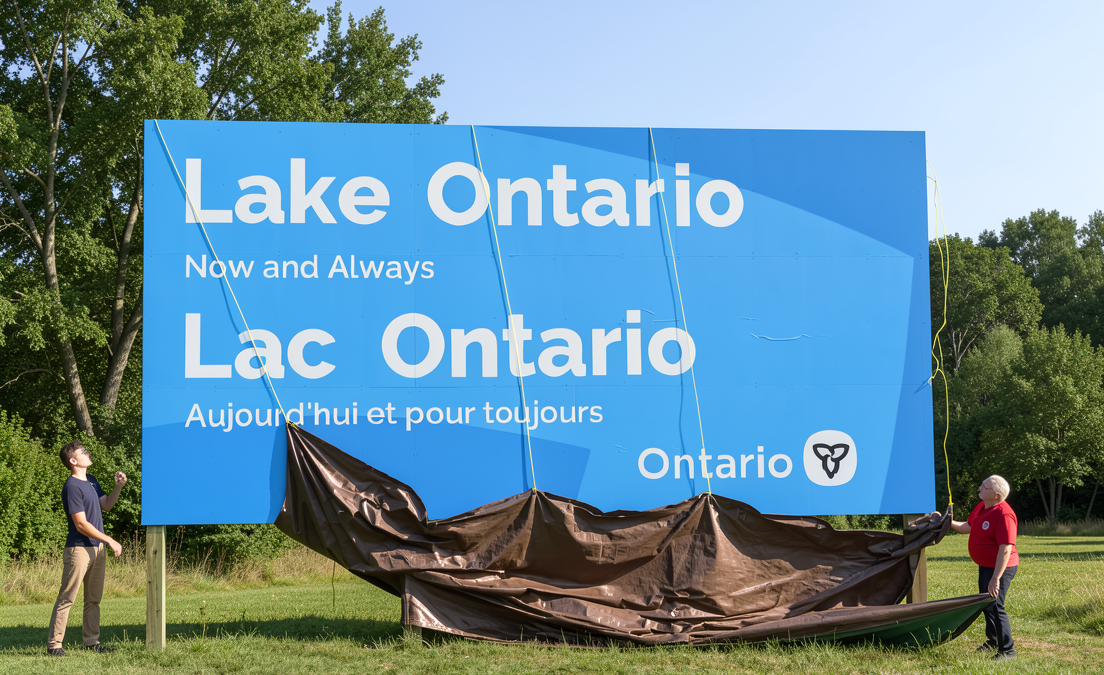
Ecorescuezone.com – Canada claps back at Trump with a towering roadside billboard bolted to a highway median near the U.S.-Canada border. Installed on Saturday by Ontario Premier Doug Ford, the sign reads “Lake Ontario — Now and Always” in both English and French and faces southbound American traffic that funnels thousands of motorists into Ontario each summer. It is a direct, visible rebuke to President Donald Trump’s executive order instructing federal agencies to refer to the Great Lake as “Lake America.”
The location was chosen with surgical intent. Ford placed the message on a corridor where American visitors cross the border, ensuring the audience targeted by the renaming decree sees it first thing at the turnpike. The gesture converts a diplomatic spat into a roadside spectacle that cannot be scrolled past, muted, or ignored.
“President Trump can call it whatever he wants, but I can tell you the rest of the world will always call it Lake Ontario,” Ford told reporters at the unveiling.
The premier framed the episode in terms of national character rather than cartography alone.
“We’re resilient and we’re strong Canadians who are always going to protect our sovereignty, always, and we’ll never ever back down from a bully, ever.”
The Trade War Behind the Map Change
The renaming order landed the same week bilateral trade talks between Washington and Ottawa collapsed. Trump announced a 50 percent tariff across a broad swath of Canadian imports, escalating an already tense confrontation with America’s oldest continental ally. Prime Minister Mark Carney responded by pledging to mirror U.S. tariffs “dollar for dollar,” signaling Ottawa would not absorb the cost unilaterally.
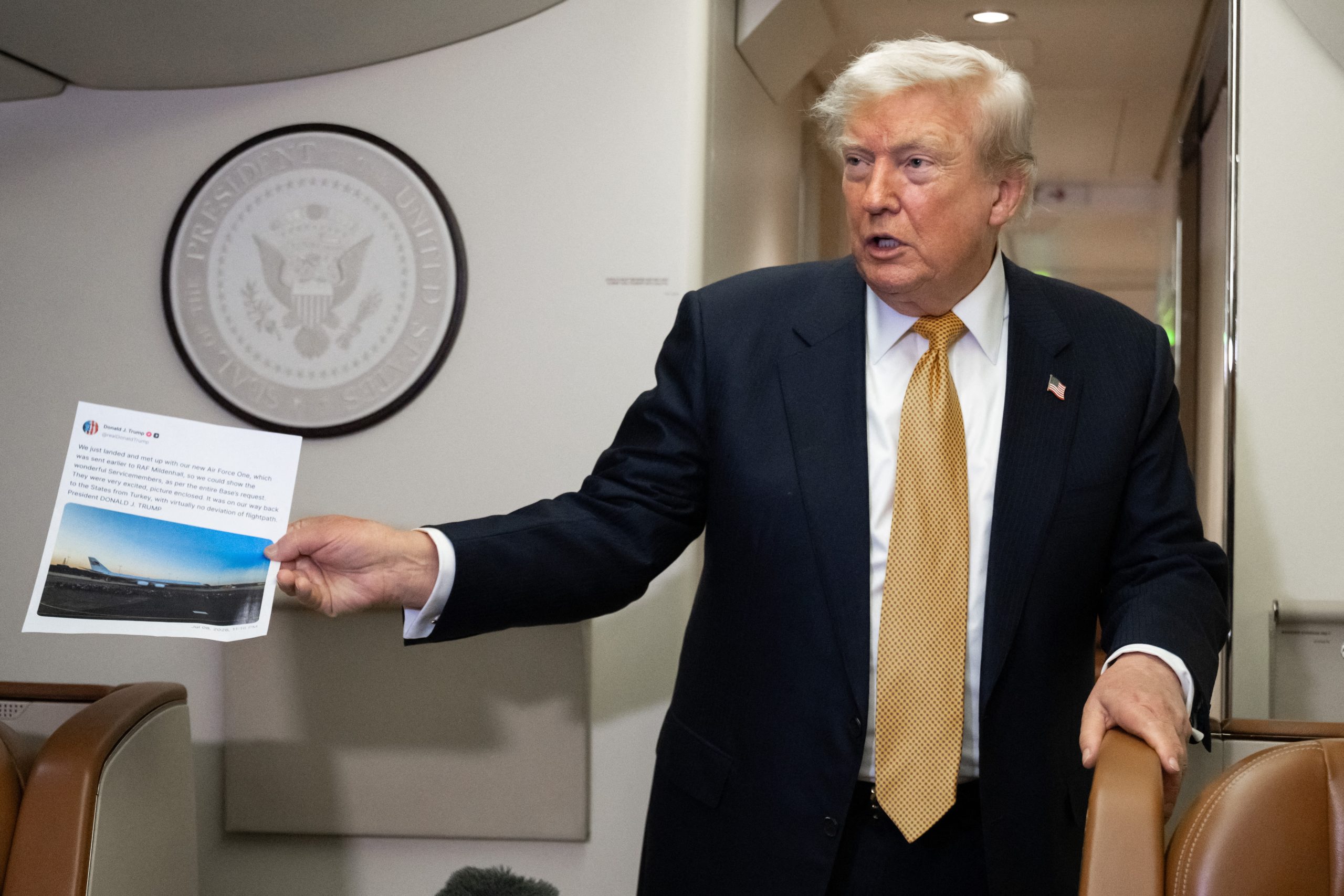
At the Oval Office signing ceremony, the president linked the two threads explicitly, describing the lake’s new name as a consequence of what he characterized as Canadian trade behavior.
“People — oftentimes they’ll ask me, who’s the worst to deal with on trade? And I said, that’s easy. Canada. They are the worst at trade. And they feel entitled, and just — we can’t have that.”
A Sunday post on Truth Social sharpened the rhetoric further: “Canada has been ripping us off for years — NO LONGER!”
What the Order Actually Changes — and What It Doesn’t
The directive instructs U.S. federal agencies to use “Lake America” in official documents, maps, and communications. It does not alter the lake’s name on the Canadian side, nor does it bind private entities, foreign governments, or international bodies. The water body straddles the international boundary, with the border line cutting roughly through its center. New York State occupies the southern shore; Ontario, Canada, the northern. The lake ranks fourth among the five Great Lakes, holding roughly 8.4 trillion cubic meters of water and serving as a critical freshwater resource for tens of millions on both sides of the border.
This is not the first shared waterway Trump has attempted to rebrand. Last year he signed a similar order renaming the Gulf of Mexico the “Gulf of America,” a move that provoked a formal objection from Mexico and a subsequent legal dispute involving Google, which had updated its mapping product for U.S.-based users.
“We have a gulf, and we have a lake, now all we need is an ocean,” Trump quipped at the signing ceremony, underscoring the pattern.
Ottawa’s Unified Pushback and Google’s Mapping Dilemma
Ford’s billboard echoed remarks made by Prime Minister Carney the previous week on X, where the prime minister wrote that Canadian men and women “know that things must be called by their name, and this lake is called Lake Ontario — today and forever.” The alignment between the federal and Ontario provincial governments gave the pushback a unified political front, even as the two levels maintain separate jurisdictions over trade and natural resources.
Within hours of the order taking effect, Google published a blog post confirming it had formally changed the display name for the lake to “Lake America” for users accessing Google Maps from within the United States. The company explained that it updates its maps “to reflect name changes in official government sources,” the same policy applied the prior year when Mexico objected to the Gulf renaming. A user in Canada continues to see “Lake Ontario”; a user in the United States sees “Lake America.” For now, Canada claps back at Trump with concrete and steel rather than diplomatic notes.
Frequently Asked Questions
Will the lake actually be renamed? No. The executive order changes only how U.S. federal agencies label the water body in official documents and communications. The Canadian side, international bodies, private companies, and foreign governments are unaffected. The lake’s internationally recognized name remains Lake Ontario.
Can Canadians still call it Lake Ontario? Yes. The order has no legal force on the Canadian side of the border. Ontario and the federal government have both reaffirmed that the lake’s name is unchanged.
What did Google do, and why? Google updated its mapping product so that users accessing Google Maps from within the United States see “Lake America.” Users in Canada and elsewhere continue to see “Lake Ontario.” The company cites a standing policy of reflecting official government name changes in its map data.
What is the trade context? The renaming order was announced the same week bilateral trade negotiations collapsed and Trump imposed a 50 percent tariff on a broad range of Canadian imports. Prime Minister Carney pledged reciprocal tariffs “dollar for dollar,” making the lake dispute one visible thread in a wider economic confrontation.