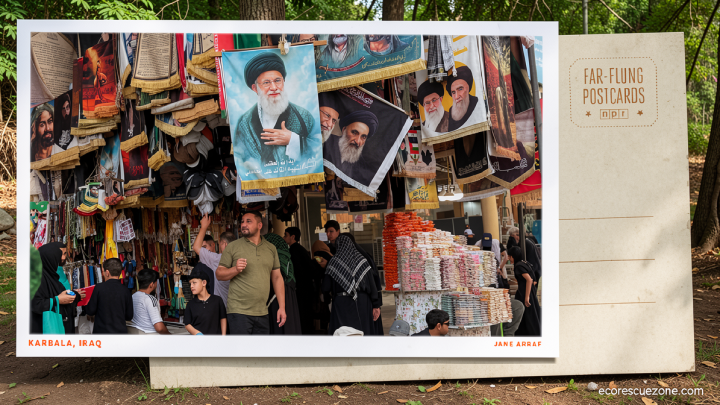
Families of pilgrims likely caught in floods are desperate for news from Nepal

Daftar Isi
Desperate Families Await Word as Nepal Flood Search Enters Its Fifth Day
Ecorescuezone.com – More than 2,400 people remain unaccounted for in the mountain valleys along the Nepal-China border, where catastrophic flooding last week sent nearly 30-foot walls of water and debris crashing through settlements. As of Sunday, Nepal’s Foreign Secretary Amrit Bahadur Rai confirmed that 734 bodies had been recovered, while rescue crews continued pulling survivors from rubble and debris fields. The International Red Cross placed the total number of people affected at over 90,000, a figure that underscores how vast the disaster zone stretches across the Himalayan foothills.
Dozens of Americans are among the missing. U.S. State Department Spokesperson Tommy Pigott stated Sunday morning that 85 American citizens had yet to be located. He added that nine Americans had been safely evacuated and that no U.S. citizen deaths had been confirmed at that point.
“We’ve also now seen nine Americans be safely evacuated. We are currently unaware of any U.S. citizen deaths at this time,” Pigott said.
The Pilgrims of Mount Kailash
Many of the missing Americans were not casual tourists. They were on a pilgrimage to Mount Kailash, the sacred peak tucked into the remote Tibet Autonomous Region of China, a destination revered by Hindu, Buddhist, Jain, and Bonpo traditions as a once-in-a-lifetime spiritual journey. The trek typically begins in Kathmandu, crosses the Nepal-China border at Gyirong Port, and winds through high-altitude passes before reaching the base of the 21,791-foot mountain.
For Divya Chandrashekar, the stakes are intensely personal. Her brother-in-law Ragu Rajan and his wife Archana Suresh, a couple from Murphy, Texas, had spent the previous year planning their Mount Kailash pilgrimage. They departed Kathmandu on August 25 and were crossing the Nepal-China border when the floods struck. Their last confirmed position was near the Gyirong Port border checkpoint on the morning of the disaster.
The Bhote Koshi river — Nepali for “Tibetan river” — obliterated the border checkpoint and the Friendship Bridge linking the two countries. Footage broadcast by China’s state television network CCTV captured a towering wall of mud and water slamming into the structures at the crossing.
“Spiritual, loved the outdoors, enjoyed their treks, very good parents,” Chandrashekar described the couple. She added that Rajan and Suresh had been planning to mark their 25th wedding anniversary in November.
A Daughter’s Long Wait
Shreya Ahuja, based in North Carolina, spoke with her parents Deepak and Madhu Ahuja just hours before the flood hit. Both are U.S. citizens who run small businesses in Dallas. They had completed the pilgrimage — undertaken for her father’s 60th birthday — and told her they were making their way back toward the border post.
“I tried texting them; I tried calling them,” Ahuja recalled. “And initially, I wasn’t too concerned. I feel like everyone thinks, what are the chances that they were in that exact spot?”
That quiet optimism, shared by thousands of families now waiting in airports, consulates, and living rooms across the United States, has given way to anxious vigil as each passing hour brings no confirmation.
Relief Efforts Underway
The U.S. State Department has ramped up support at its embassies in both Beijing and Kathmandu and activated $3.6 million in emergency assistance. That package includes emergency food relief designed to feed 10,000 households for up to three months.
Catholic Relief Services is distributing the first $500,000 tranche of that aid. Senthil Kumar Gurunathan, the organization’s South Asia representative, warned that delivering supplies would be extraordinarily difficult because flooding and mudslides have severed major road corridors. He identified an urgent need for food, clean water, clothing, menstrual hygiene products, and mental-health support.
“People who have survived have literally lost everything they had because they just had to flee their homes to save their lives,” Gurunathan said. “We are actually trying to find alternative roads, safer roads, which can actually help us to get the lifesaving stuff to people.”
The first shipments of U.S. assistance reached the districts of Rasuwa and Nuwakot over Saturday and Sunday. The consignment included 500 blankets, 500 mosquito nets, 500 insulating foam sheets intended for shelter floors, and 2.5 tons of food supplies.
Monsoon Rains Loom
Nepali authorities have issued warnings that the ongoing monsoon season could trigger additional flooding across the already devastated region. Heavy rainfall in the hills and mountain areas of central Nepal is forecast to continue through Tuesday, September 1, based on the country’s meteorological forecasting division.
The U.S. Embassy in Nepal cautioned on social media that the expected rainfall “may cause flash flooding, debris flows, landslides, riverbank erosion, and further interruptions to roads, flights, and rescue operations.” For the families still waiting for word of a missing parent, spouse, or friend, that warning transforms an already unbearable silence into a countdown against the next storm.
Thousands of Nepali rescue workers remain deployed across the affected valleys. People were still being found alive as late as this weekend, a fact that sustains hope even as the body count climbs and the weather turns again. The search, for now, continues.
Related Reading
Frequently Asked Questions
What is Families of pilgrims likely caught in floods?
Families of pilgrims likely caught in floods is the main topic of this guide. The article explains the context, practical details, and next steps readers should understand.
Why does Families of pilgrims likely caught in floods matter?
Families of pilgrims likely caught in floods matters because readers are looking for a useful answer, not just a short summary. Good content should match search intent and help them decide what to do next.