A jury in Malta acquits a businessman in the killing of reporter Daphne Caruana Galizia

Daftar Isi
Malta’s Longest-Running Murder Trial Ends Without a Conviction for the Alleged Mastermind
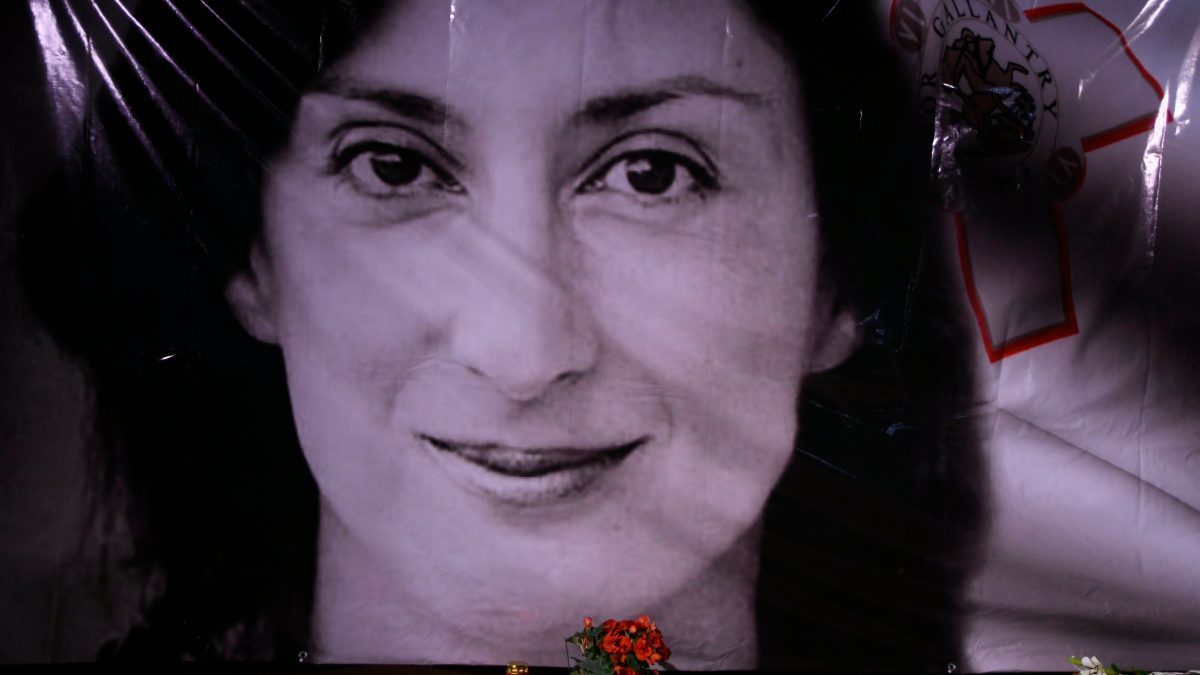
Ecorescuezone.com – VALLETA — After nearly a decade of legal proceedings, public outcry, and political upheaval, a Maltese jury returned a not-guilty verdict on Wednesday for Yorgen Fenech, the wealthy businessman prosecutors had identified as the architect behind the 2017 assassination of investigative journalist Daphne Caruana Galizia. The acquittal closes the final chapter of a case that reshaped the island nation’s political landscape and exposed deep institutional fractures within its justice system.
Fenech, who had been indicted in 2021 on two counts — complicity in murder and criminal conspiracy — stood before the Valletta court as the last of six defendants to face trial in connection with the killing. Prosecutors had argued that he ordered the car bomb and personally financed it. He maintained his innocence throughout, and the jury agreed, clearing him on both charges.
A Killing That Rocked a Small Island
Caruana Galizia, then 53, was killed on October 16, 2017, when a car bomb was detonated as she drove past her home in Birżebbuġa. The explosion sent shockwaves far beyond Malta’s borders. Across Europe, the murder of a journalist who had spent years documenting corruption in the island’s political and commercial elite became a symbol of how impunity could take root even in a European Union member state — the smallest one, at that.
Her reporting had zeroed in on figures close to then-Prime Minister Joseph Muscat, accusing them of holding offshore companies in tax havens, details that surfaced through the Panama Papers disclosure. She also scrutinized opposition politicians and major business operators, accumulating more than 40 libel suits by the time of her death. The sheer volume of those suits became, in itself, evidence of how threatening her work was perceived to be.
From Arrest to Resignation
Fenech’s role in the plot was not discovered quietly. In 2019, police intercepted him aboard his yacht as he was sailing out of Maltese waters. That arrest ignited weeks of mass demonstrations across the island. The protests ultimately forced Muscat from office, making the journalist’s murder a direct catalyst for a change of government.
Fenech had been part of a consortium that secured a widely contested government contract to construct a power station on the island — a connection prosecutors wove into their narrative of motive and opportunity.
The Family’s Verdict
Caruana Galizia’s sons were present in the courtroom when the verdict was read. They departed without addressing reporters. Later, the family issued a statement on Facebook expressing that the outcome denied their mother “the justice she deserves.”
“Nine years after Daphne’s brutal assassination, the institutional failures that enabled her murder remain unaddressed and unreformed. Lasting justice means no person should ever face the same risks again,” the statement read. “Our country failed to protect Daphne. It owes it to her to prevent other lives being lost.”
The family had been at the vanguard of the accountability campaign since 2017, pressing for transparency at every stage of the investigation and trial.
What the Other Defendants Received
While Fenech walked free, the remaining defendants in the case received substantial sentences:
In 2022, brothers George Degiorgio and Alfred Degiorgio each pleaded guilty to carrying out the killing and were handed 40-year prison terms. In 2025, Jamie Vella and Robert Agius were convicted of complicity — specifically, supplying the explosive device — and received life sentences, the maximum penalty available under Maltese law. Vincent Muscat, who admitted his role in the plot in 2021, was sentenced to 15 years. Taxi driver Melvin Theuma, who described himself as a middleman in the arrangement, received a presidential pardon in 2019 in exchange for his testimony.
Institutional Failures and the Question of Reform
An independent inquiry into the assassination, published in 2021, concluded that the Maltese state “has to bear responsibility” for the murder, tracing a culture of impunity back to the highest echelons of government. That finding has lingered over every subsequent development in the case, including Wednesday’s verdict.
Maltese criminal trials traditionally bar cameras from the courtroom, and Wednesday’s proceedings followed that convention. Outside the Valletta courthouse, however, the scene was anything but orderly. As Fenech exited, hecklers shouted at him while he made his way to a waiting vehicle. He offered no comment.
For a nation of roughly 550,000 people, the Caruana Galizia case has functioned as a prolonged stress test of its democratic institutions. The acquittal of the alleged mastermind, even as lower-level participants serve long sentences, leaves open the question of whether Malta’s justice system can deliver the kind of accountability its citizens demanded in the streets after 2019 — and whether the institutional reforms the family and civil-society advocates continue to press for will ever materialize.
Related Reading
Frequently Asked Questions
What is A jury in Malta acquits a businessman?
A jury in Malta acquits a businessman is the main topic of this guide. The article explains the context, practical details, and next steps readers should understand.
Why does A jury in Malta acquits a businessman matter?
A jury in Malta acquits a businessman matters because readers are looking for a useful answer, not just a short summary. Good content should match search intent and help them decide what to do next.