Billions of sea stars have died. A Northwest tribe is trying to save the species

Billions of Sea Stars Have Died — A Tribe Fights Back
Ecorescuezone.com – Billions of sea stars have vanished from Pacific Northwest waters over roughly the last decade, and among the hardest-hit species is the sunflower star, which lost an estimated 90 percent of its population. On a gusty spring morning under a National Weather Service small-craft advisory for waters east of the San Juan Islands, a Samish Indian Nation vessel called the Chinook (Yómech) threaded Rosario Strait carrying twenty hand-reared sunflower stars toward traditional tribal grounds near Anacortes, Washington.
The operation was originally slated for October. Divers patrolling the archipelago detected a resurgence of sea-star wasting disease — the same pathogen behind the species’ collapse — and the release was shelved. Six months passed before conditions permitted the team to proceed.
The Pathogen Behind the Collapse
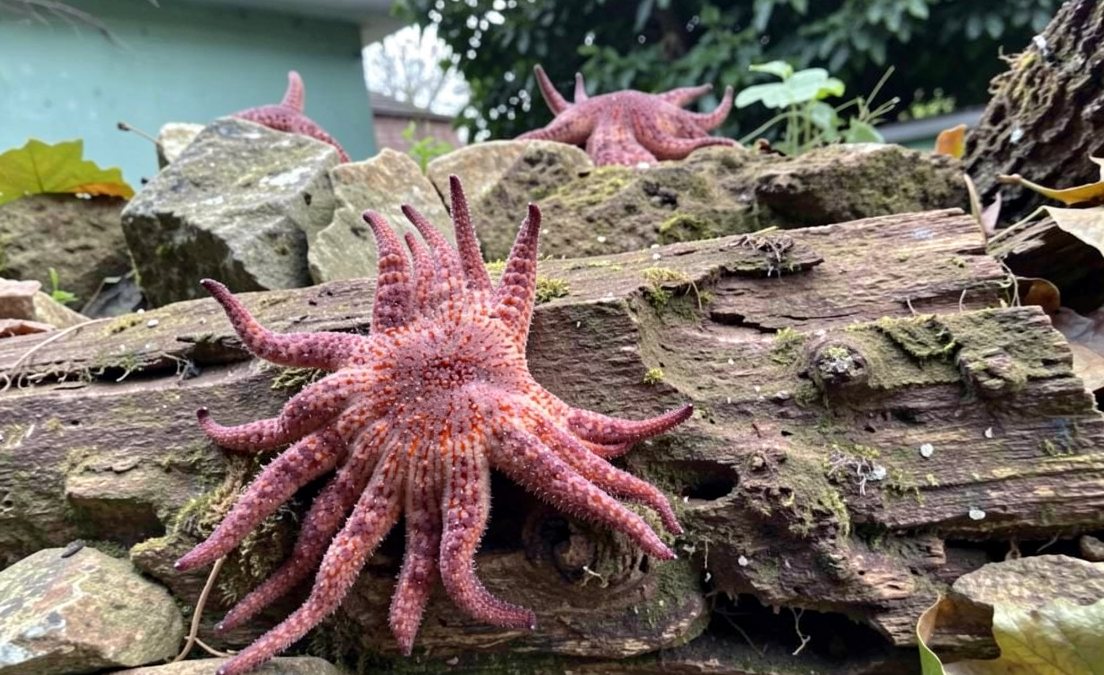
Sunflower stars boast twenty-four radiating arms and can span more than three feet across, making them the fastest-moving sea stars on record. They cruise the seafloor at up to five feet per minute in pursuit of sea urchins and sea cucumbers. As apex predators they anchor entire food webs; pull them out and the ecosystem restructures around their absence.
That restructuring arrived on an industrial scale. After roughly a decade of investigation, researchers traced the wasting disease to a strain of Vibrio bacteria that liquefied sea-star tissue across a swath stretching from northern Mexico to Alaska, striking dozens of species at once.
“This was a really, really big outbreak,” said Jason Hodin, research scientist at the University of Washington’s Friday Harbor Laboratories. “It spread from northern Mexico all the way to Alaska, affecting dozens and dozens of sea star species.”
Hodin’s team linked the surge to marine heat waves amplified by climate change, which supplied the warm-water conditions the Vibrio pathogen required to multiply. The resulting die-off was measured in billions of individuals across multiple taxa.
“We definitely have lost a lot of sea stars,” Hodin said. “We’ve lost 90% of our sunflower stars, we think.”
Conservation Stalemate and a Tribal Breeding Program
No species bore the blow more severely than the sunflower star. International conservation bodies classify it as critically endangered; Canada lists it as endangered. The Biden administration moved to extend Endangered Species Act protections, but the current administration has not acted on that proposal. A NOAA spokesperson said the department is concentrating on other “mission critical” priorities.
In June, the nonprofit Center for Biological Diversity filed suit seeking formal federal protection for the species, pressing whether law will ultimately shield an animal already teetering at extinction’s edge.
Against that regulatory backdrop, the Samish Indian Nation and University of Washington researchers have spent the past year collaborating to rebuild a viable captive population. The Friday Harbor lab now houses hundreds of sunflower stars spanning every life stage — from microscopic larvae to adults roughly the diameter of a stop sign. Through iterative trial and error the team has learned to breed these poorly understood animals and even treat individuals when wasting disease infiltrates the tanks.
The Morning of Letting Go
Four sloshing tubs of three-year-old stars — each slightly larger than an adult’s outstretched hand — were loaded aboard the Chinook. The researchers who raised them had assigned names to every individual: Nacho, Baby Carrot, Pluot, and others drawn from snack-food vocabulary.
“I really am close to them,” said research assistant Julia Knopf. “I do feel like a parent. You raise them, you take care of them, you want the best for them, but then you know the best for them is letting them go out in the wild, just like letting your kid go out into the world.”
Research assistant Chloe Schwab described what happens when wasting disease takes hold inside a tank: “It’s not a pretty death,” she said, “and it’s really sad to see.” The stars possess no faces, no blood, no brains. Yet their caretakers insist each one carries a distinct personality.
“They’re very charismatic,” research assistant Tess Chapman observed. “They have little eyespots at the end of their arms. They’re always looking at you.”
Frequently Asked Questions
What caused the sea-star die-off?
A wasting disease linked to a strain of Vibrio bacteria, amplified by marine heat waves tied to climate change, killed an estimated 90 percent of sunflower stars and struck dozens of other species from northern Mexico to Alaska.
Who is leading the recovery effort?
The Samish Indian Nation partners with University of Washington researchers at Friday Harbor Laboratories to breed, rear, and eventually release sunflower stars back into tribal waters near Anacortes, Washington.
Is the sunflower star federally protected in the United States?
A Biden-era proposal to extend Endangered Species Act protections has not been acted on by the current administration. The Center for Biological Diversity filed suit in June seeking formal listing.
How many stars were released in the most recent operation?
Twenty hand-reared, three-year-old sunflower stars were transported aboard the Samish Nation vessel Chinook (Yómech) through Rosario Strait toward traditional waters near Anacortes.