The U.S.-Iran battle over the Strait of Hormuz raises risks for global waterways

Strait of Hormuz Tensions Escalate as U.S. and Iran Compete for Control of Vital Shipping Lane
The U S Iran battle over – Following a recent truce between Washington and Tehran, the International Maritime Organization unveiled a coordinated effort to extract vessels and thousands of maritime workers stranded in the Strait of Hormuz. This critical maritime corridor has remained largely inaccessible since American and Israeli forces launched strikes against Iran in late February.
Coordinated Evacuation Effort
The IMO indicated that this rescue mission would proceed through tight collaboration with Iranian authorities, Omani officials, neighboring coastal nations, American representatives, and commercial shipping entities. Vessels received instructions to navigate along the southern portion of the strait, following Oman’s territorial waters rather than utilizing the northern passage adjacent to Iran’s shoreline.
John Canias, who previously served as a seafarer before transitioning to a maritime operations coordinator role with the International Transport Workers Federation, participated in evacuation planning discussions. He reported that more than one hundred vessels successfully departed from the approximately six hundred ships that had been positioned in the region.
Setback for Evacuation Operations
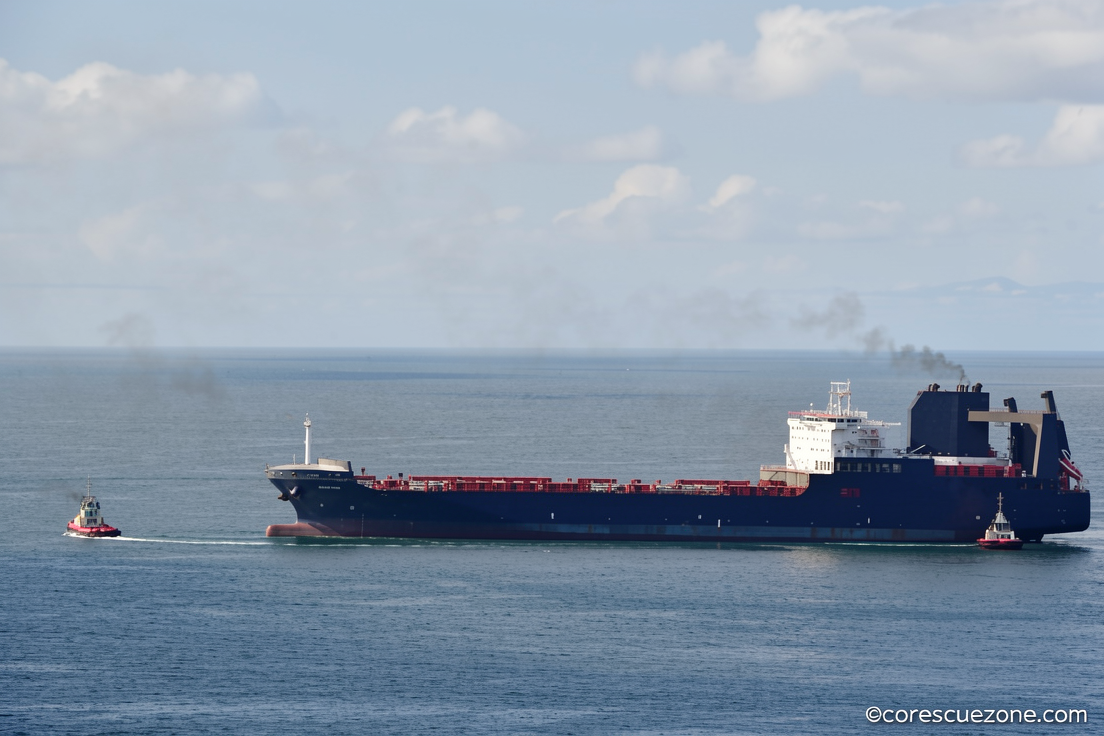
MarineTraffic, the organization monitoring maritime movements, documented that operations temporarily stalled when the Ever Lovely, a cargo vessel registered in Singapore, came under attack while traversing the Oman-adjacent corridor. This incident caused renewed congestion in the strategic waterway.
While no party immediately claimed responsibility for the assault, Iran’s Revolutionary Guard issued criticism through state broadcaster IRIB. The military branch objected that the evacuation proceeded without Iranian participation and asserted that Tehran alone possessed authority to designate acceptable shipping routes. Canias expressed disappointment regarding the development.
“This is almost like a Groundhog Day, right? There is a potential opening and there isn’t,” he remarked.
Geopolitical Implications for Global Commerce
Prior to hostilities commencing, approximately twenty percent of international oil and natural gas supplies flowed unimpeded through the Strait of Hormuz. Currently, Iranian dominance over the passage threatens established navigation freedoms while establishing concerning precedents for other maritime corridors worldwide. The primary objective of ongoing American-Iranian military engagement centers on securing control of this essential waterway.
Gregory Brew, serving as a senior analyst for Eurasia Group, a worldwide political risk advisory organization, explained that Tehran believes it holds advantage in its confrontation with Washington. The Iranian government seeks to establish an altered arrangement governing the strait’s operations.
“Any ships coming and going have to coordinate with them, have to get clearance from them,” Brew stated. “And they’re pushing back against any effort by the United States to undermine that position.”
Historical Precedents and Future Concerns
Todd Huntley, who directs Georgetown University’s National Security Law Program and previously served as a Navy attorney, emphasized that asserting ownership over the strait contradicts centuries of maritime tradition. He noted that the United States Navy underwent restructuring following the Revolutionary War specifically to guarantee that American commercial vessels and other ships could navigate freely across global oceans.
Huntley warned that formally acknowledging Iranian authority over the Strait of Hormuz might encourage other nations to assert similar claims over critical passages. He cited examples such as the United Kingdom or Morocco potentially claiming jurisdiction over the Strait of Gibraltar, or Malaysia asserting control over the Malacca Strait, which serves as the primary shipping connection between the Pacific and Indian Oceans.
“There is the risk that other countries are going to claim control and then either surcharging or imposing restrictions on how ships can transit,” Huntley cautioned.
Ami Daniel, chief executive officer of Windward, a maritime intelligence organization, pointed out that nations exercising unilateral authority might leverage strategic waterways to resolve territorial disagreements or deploy them as geopolitical instruments. She suggested that Russia could restrict American vessels from accessing the Northern Passage or Arctic routes, while China might prevent American commercial enterprises from utilizing the Taiwan Straits.
Nitya Labh, a research fellow within Chatham House’s International Security Program, observed that maritime threats have characterized human history. However, she highlighted that numerous waterways possess established frameworks designed to prevent conflicts. The Turkish Straits operate under the Montreux Convention, an agreement specifically created to safeguard those passages during periods of international tension. Similarly, the Strait of Malacca, situated between the Malay Peninsula and Sumatra, maintains mechanisms that help preserve free navigation despite regional complexities.