Voters are fed up with data centers. Both parties are trying to cash in for midterms

Daftar Isi
Data Centers Have Become the Midterms’ Most Expensive Shared Enemy
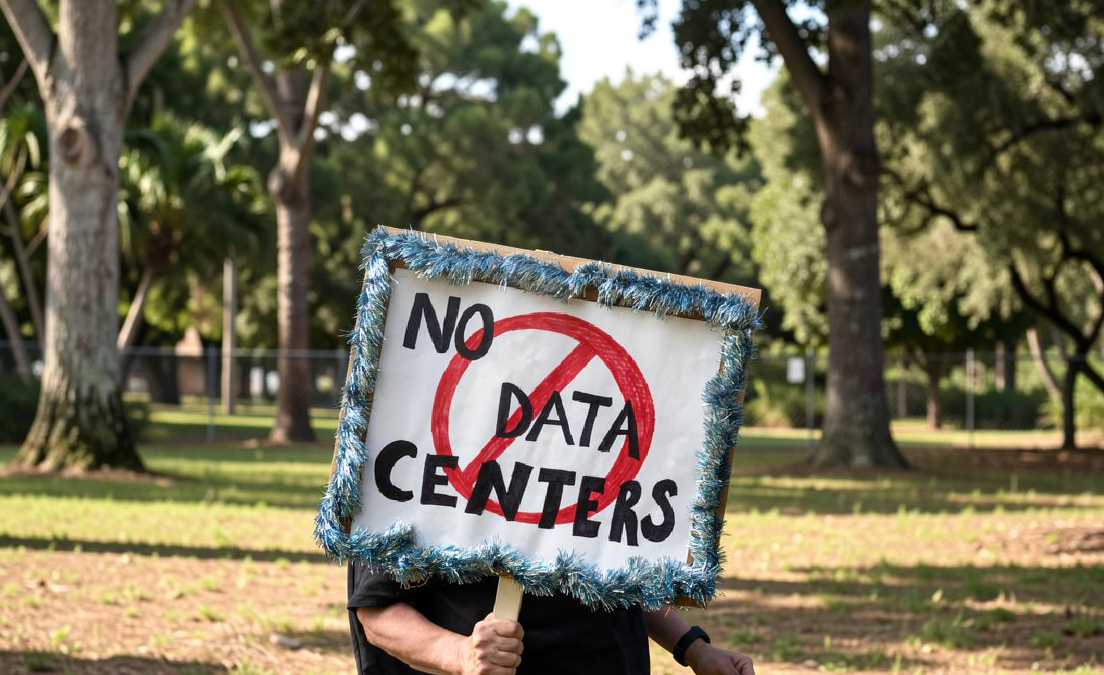
Ecorescuezone.com – A June Reuters/Ipsos survey revealed that 77 percent of Americans worry data centers will push electricity prices higher, while two-thirds of Democrats and half of Republicans said they would oppose a new facility in their own neighborhood. That shared unease has now translated into a staggering wave of paid political advertising. Since January, campaigns and outside groups have poured more than $45 million into television and digital spots that name data centers by name, according to an analysis of political advertising data compiled by the firm AdImpact. The spending spans gubernatorial contests, House districts, and Senate races across the country.
The Numbers Behind the Bipartisan Blitz
The dollar figures tell a story of near-perfect symmetry between the parties. From January through August, Republican-backed ads touching on data centers exceeded $22 million, while Democratic-backed spots surpassed $21 million, with independent groups filling the remainder. Yet the volume of messaging diverged sharply: Democrats aired roughly 127 such advertisements compared with 67 from the Republican side, and they distributed their spots across a wider array of states and individual races.
The frequency of mentions has accelerated dramatically as Election Day approaches. In January, only a handful of ads referenced data centers. By June that number had climbed to 62, jumped past 110 in July, and reached approximately 164 in August. The clustering is concentrated in swing states where races remain genuinely competitive, including Wisconsin and Michigan.
Why Both Parties Converged on the Same Grievance
Despite the partisan labels attached to each spot, the core argument is remarkably uniform: sprawling computing facilities receive excessive tax incentives, inflate household utility bills, and require tighter regulatory oversight. Michael Franz, co-director of the Wesleyan Media Project, which tracks political advertising, framed the convergence as a rare alignment of incentives.
“Apart from a chance to talk about affordability, Democrats can latch on to environmental concerns,” Franz explained. “For Republicans, criticizing data centers is a way to go in opposition to big corporations, in opposition to a system that doesn’t care about you.”
He characterized data centers as a unique policy issue where MAGA Republicans and liberal Democrats arrive at the same destination, a convergence that gives each side ready-made talking points without forcing them to abandon their base’s core grievances.
State-by-State Showdowns
Georgia has emerged as the single largest battleground for data-center advertising. More than half of the Republican Party’s spending on such ads has landed in the Peach State, which has captured roughly 30 percent of total data-center ad spending nationwide. The contest for governor alone has generated $12.8 million across nine advertisements.
Six of those Georgia spots urged voters to withhold support from Republican Lt. Gov. Burt Jones, who lost the June runoff to healthcare billionaire Rick Jackson. Some were produced by Georgians for Integrity, an outside group that has deployed millions of dollars attacking Jones since 2025. The ads wielded data centers as a symbolic bogeyman, tying the issue to allegations of corruption surrounding the lieutenant governor.
In Wisconsin, the Believe in Wisconsin PAC spent $634,795 in August to air a spot for Democratic gubernatorial nominee David Crowley. The ad pledges that Crowley “will lower costs, make housing affordable, stop AI data centers from making your energy bills skyrocket.”
Across the country in Florida, Republican gubernatorial nominee Byron Donalds positioned himself as a bulwark against data-center-driven price increases, vowing to “protect Florida families and communities from data centers that jack up utility rates and make everything else more expensive” and to “fight for a ratepayer protection plan.” The Friends of Byron Donalds PAC paid over $2.5 million to broadcast that message.
Parallel advertising has supported Democrat Rob Sand in Iowa and Republican Ty Masterson in Kansas, confirming that the issue has crossed regional and partisan lines.
Internal Party Dynamics
Behind the unified public messaging, internal party conversations reveal more nuance. A Republican operative, speaking to NPR on condition of anonymity, explained that the party has refrained from issuing a formal public position because views within its ranks remain divided. The operative noted that the most popular internal answer is conditional: data centers could be tolerated “as long as they pay for their own energy,” while also acknowledging that such facilities are viewed as necessary to win the technological race against China and to generate jobs in local communities.
On the Democratic side, Olivia Davis, a spokeswoman for the Democratic Governors Association, confirmed that affordability and utility-cost concerns are driving the issue into paid media.
“That’s why it’s being included in paid media,” she said.
What Voters Should Watch
The Ohio Senate race offers another instructive case study. Supporters of Democratic nominee Sherrod Brown have spent millions portraying his opponent, Republican Sen. Jon Husted, as “the face of data centers,” accusing him of “giving corporations over $2.5 billion in out of control tax breaks and causing electric bills to spike.” The framing illustrates how quickly a single infrastructure decision can be recast as a moral failing in campaign rhetoric.
For voters in competitive districts, the practical implication is straightforward: the next several weeks of advertising will increasingly frame every local utility rate increase, every state tax-incentive debate, and every grid-expansion proposal through the lens of data-center accountability. Whether candidates follow through on campaign promises once elected remains the open question that the $45 million in advertising has not yet answered.
Related Reading
Frequently Asked Questions
What is Voters are fed up with data?
Voters are fed up with data is the main topic of this guide. The article explains the context, practical details, and next steps readers should understand.
Why does Voters are fed up with data matter?
Voters are fed up with data matters because readers are looking for a useful answer, not just a short summary. Good content should match search intent and help them decide what to do next.