Whatever happened to the U.S. campaign to ban child marriage?

Daftar Isi
A Federal Push to End Child Marriage in America Faces a Long Road
Ecorescuezone.com – On July 16, four members of Congress introduced a bill that would establish a uniform minimum marriage age of 18 across all fifty states. The Child Marriage Prevention Act, sponsored by Representative Gwen Moore of Wisconsin and Senators Dick Durbin, Brian Schatz, and Kirsten Gillibrand, represents the most significant federal legislative attempt yet to close a legal gap that has allowed minors to wed adults in dozens of jurisdictions. The proposal arrived amid a broader global push to eliminate the practice, though critics argue that statutory reform alone has repeatedly failed to change outcomes on the ground.
The Scale of the Problem
The United Nations has long classified child marriage — any union in which one partner has not yet turned 18 — as a fundamental human rights violation. The agency points to a cascade of harms: early pregnancy, social isolation, interrupted schooling, curtailed career prospects, and elevated risk of domestic violence. Each year, the U.N. estimates that roughly 12 million girls enter such unions worldwide. Boys, too, are affected; the organization notes that child grooms are thrust into adult roles for which they are unprepared, often pressured to abandon education and assume financial responsibility for a household.
The international community has set a target of eliminating child marriage entirely by 2030. In September, the U.N. General Assembly adopted a resolution designating November 27 as the International Day to End Child, Early and Forced Marriage, adding a recurring diplomatic marker to the cause.
What the Numbers Show in the United States
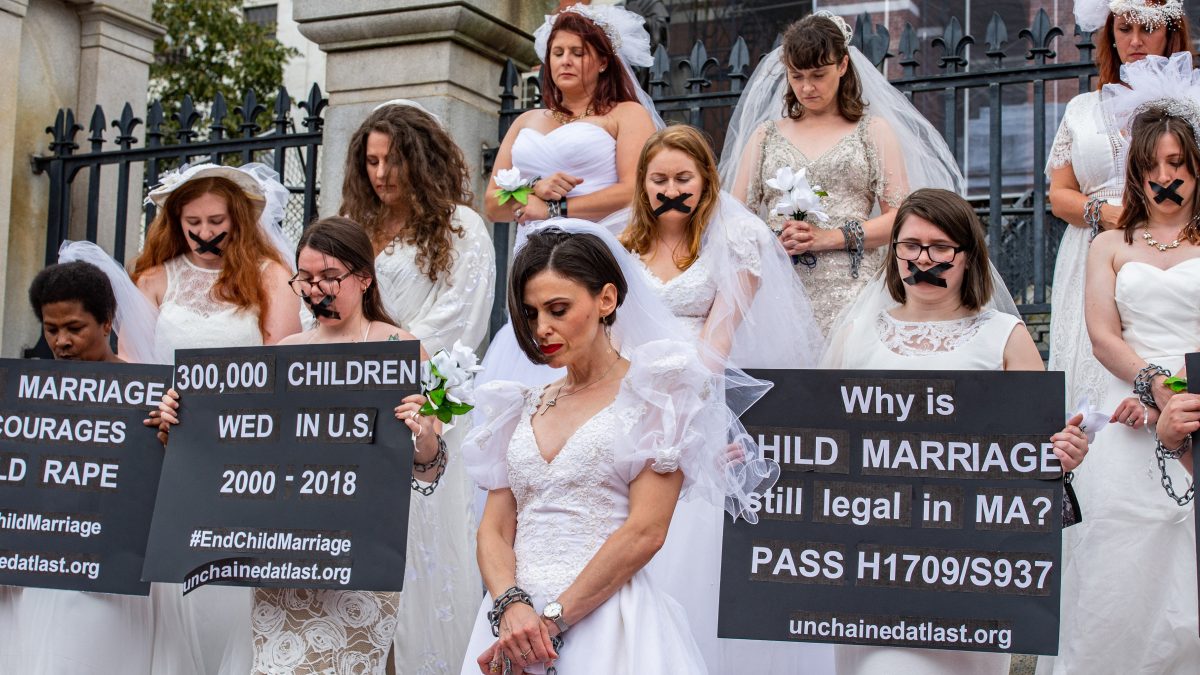
Advocacy groups compiling state marriage records have documented more than 314,000 legally sanctioned marriages involving minors between 2000 and 2021. Among those unions, some brides were as young as ten years old. The overwhelming majority paired underage girls with adult men.
Fraidy Reiss, founder of the nonprofit Unchained At Last, which works to end forced and child marriage domestically, has calculated that at least 66,415 of those marriages — approximately one in five — took place when the bride was at an age at which sexual relations would constitute a crime under state law. The relevant age threshold varies by state, ranging from 14 to 18. In roughly ninety percent of that subset, Reiss reports, marital exemptions embedded in state statutory-rape statutes effectively shielded the adult spouse from prosecution. Beyond criminal exposure, married minors also confront procedural obstacles when attempting to retain counsel, file for divorce, or secure protective orders against abuse.
The Legislative Landscape
As of the bill’s introduction, child marriage remained lawful in thirty-four states, Wisconsin included. Moore framed the federal intervention as a complement to state-level reform rather than a replacement for it.
“In 34 states, including Wisconsin, child marriage is legal. Many of these marriages are between young girls and adult men. It’s time we end this predatory practice,” Moore said in a statement. “I know that advocates have pushed for reform at the state level, which has led some states to change their laws. This federal legislation would help bolster and support those efforts, including helping states get the data to understand its prevalence in their jurisdictions and then take action to address it.”
The bill’s four congressional cosponsors cited the compiled marriage-record data in their announcement, emphasizing the frequency with which underage girls were wed to significantly older men.
When Law Meets Reality: The Indian Example
Legislation, however, does not automatically translate into practice. India has prohibited marriage under age 18 for decades, yet the most recent National Family Health Survey revealed that one in five women aged twenty to twenty-four had married before their eighteenth birthday. UNICEF estimates that at least 1.5 million girls under eighteen are married in India every year. The gap between statute and lived experience underscores a recurring challenge: without enforcement mechanisms, cultural shifts, and economic support for families, a marriage-age floor on paper may do little to protect children.
A Global Wave of Reform
Since 2021, a diverse set of nations — Sierra Leone, England, the Philippines, and the Dominican Republic among them — have enacted or advanced legislation fixing the marriageable age at eighteen with no exceptions. These moves reflect growing consensus that the practice, once normalized across continents, requires uniform legal boundaries.
The Diplomatic Dimension
For organizations working alongside survivors in countries where child marriage remains widespread, the American legal gap carries outsized symbolic weight. Casey Carter Swegman, director of public policy at the Tahirih Justice Center, which has a long history of advocating for survivors of forced and child marriage and served as a key partner in developing the proposed bill, described the frustration felt by colleagues abroad.
“The one thing we hear all the time from places — Cameroon, Guatemala, you name it — is: ‘It makes my work harder when a politician can say to my face, the United States allows child marriage, so why should I do anything?’ The best thing that we can do to help the global movement is to get our house in order,” Swegman said.
Swegman also cautioned against equating a minor’s apparent agreement with genuine consent. A fifteen-, sixteen-, or seventeen-year-old’s assent, she argued, does not necessarily mean the decision to marry was made freely, particularly when family pressure, economic dependency, or social expectation shape the choice.
What Comes Next
The Child Marriage Prevention Act now enters the standard legislative process, where it will face committee review, floor debate, and the possibility of amendment or stall. Opponents have raised objections to specific provisions, while others oppose the federal measure altogether, preferring state-by-state action. Whether the bill advances, stalls, or is reshaped will determine whether the United States joins the growing cohort of nations that have drawn a firm legal line at eighteen — or whether it remains an outlier in a practice the international community has committed to ending by 2030.
Related Reading
Frequently Asked Questions
What is Whatever happened to the U S campaign?
Whatever happened to the U S campaign is the main topic of this guide. The article explains the context, practical details, and next steps readers should understand.
Why does Whatever happened to the U S campaign matter?
Whatever happened to the U S campaign matters because readers are looking for a useful answer, not just a short summary. Good content should match search intent and help them decide what to do next.