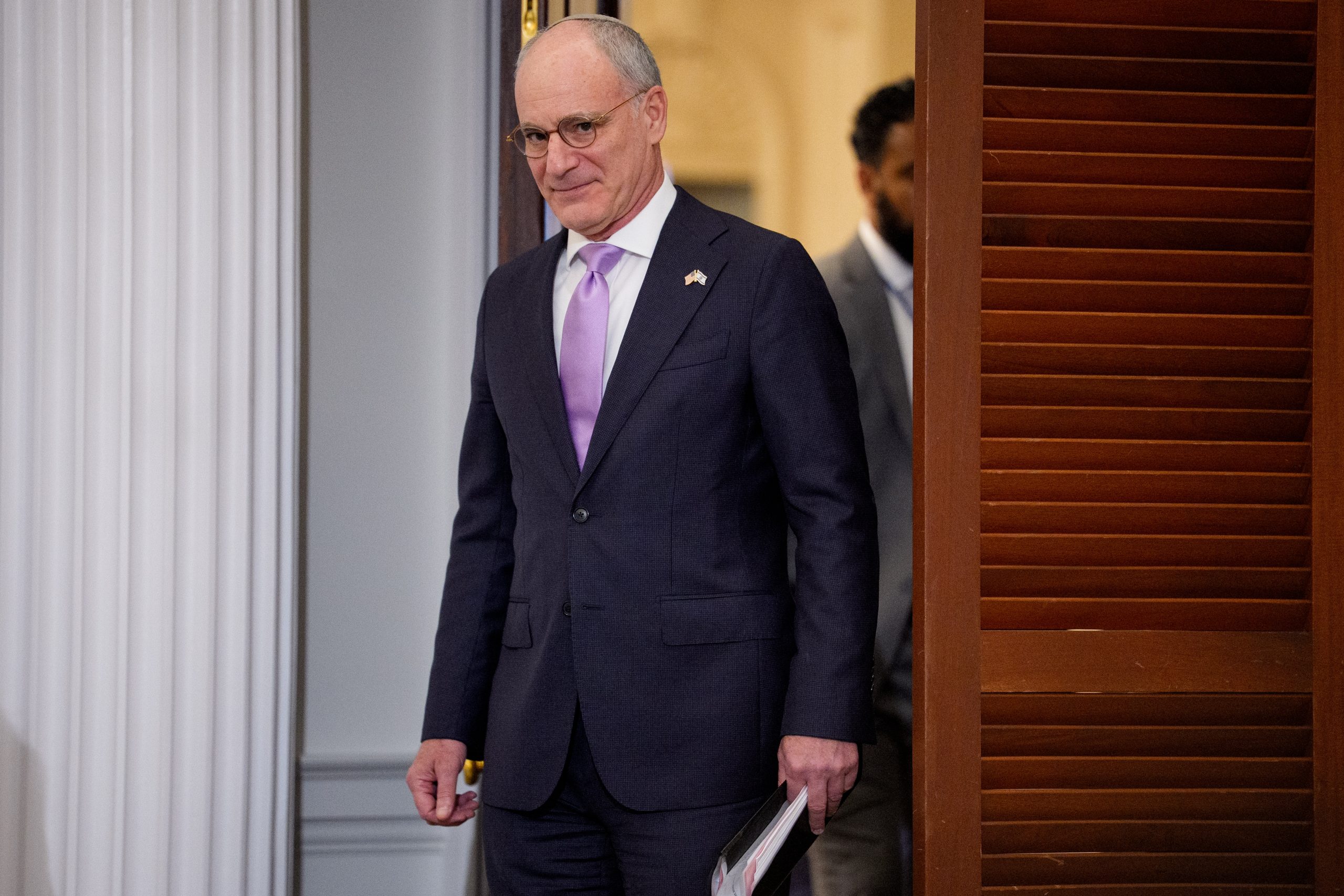
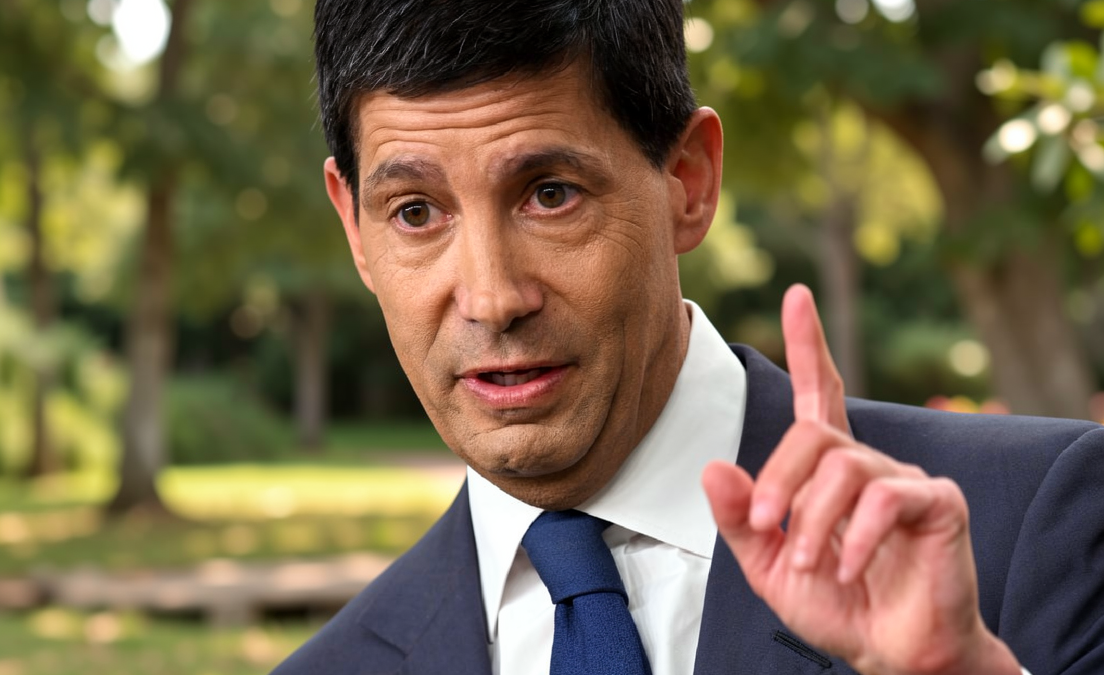
The stakes as high as Kevin Warsh is set to give his first major speech as Fed Chair

Daftar Isi
Warsh Faces Market Pressure at Jackson Hole as Inflation Remains Stubbornly Above Target
Ecorescuezone.com – The Teton Range looms over Jackson Lake Lodge in Wyoming, but the real altitude this week belongs to the economic questions that Federal Reserve Chairman Kevin Warsh will confront when he takes the stage Friday for his first major address as the central bank’s top decision-maker. The annual Jackson Hole symposium, a decades-old tradition where Fed chairs have historically used a captive audience of economists, policymakers, and market participants to articulate their macroeconomic worldview, has become the single most-watched event on the financial calendar for the month. This year, the pressure on Warsh to deliver something concrete — rather than another carefully calibrated abstraction — is palpable.
Inflation Still Running Hot
The numbers driving investor anxiety are unambiguous. Consumer prices rose 3.7 percent over the twelve months through July, measured by the Fed’s preferred gauge of underlying inflation. That figure represents a modest improvement from the 4.1 percent reading recorded in May, yet it remains nearly double the central bank’s 2 percent objective. After years of elevated price growth that forced the Fed through an aggressive tightening cycle, the persistence of inflation above target has left markets searching for a credible signal that the next phase of monetary policy will be anchored to data rather than to political convenience.
Warsh, who assumed the chairmanship in May, has repeatedly pledged to bring price stability back within reach. What he has not offered, however, is a granular explanation of the mechanism by which he intends to do so. His public posture has been one of deliberate opacity: he has urged businesses and investors to monitor economic conditions themselves rather than to decode the intentions of policymakers in Washington. For a market that prices in expectations with millisecond precision, that posture has generated frustration.
“I’d like to hear him be a bit more communicative,” Kathy Bostjancic, chief economist at Nationwide, told reporters. “We’re not talking forward guidance. Just some understanding of how he views the inflation dynamics right now.”
The distinction Bostjancic draws matters. Forward guidance — explicit promises about future rate paths — has fallen out of favor among many central bankers since the post-2020 era revealed how quickly such commitments can become liabilities. What economists are asking for is something narrower: a coherent reading of the inflation trajectory as Warsh himself interprets it, sufficient to reduce the uncertainty premium embedded in bond yields and equity valuations.
High-Altitude Rhetoric or Sea-Level Forecast?
Many in the policy community expect Warsh to maintain what one observer called a “high-altitude” register at Jackson Hole — framing structural questions about productivity, demographics, and global shocks rather than previewing specific policy moves for the coming months. Last month, immediately after the committee voted to hold the benchmark rate steady, Warsh signaled exactly that orientation.
“If I could, in the high mountain air in Jackson, Wyoming, I’d like to also frame the big questions,” he said. “What’s really happening with productivity? What’s really happening with demographics? What’s really happening to the global economy amid the shocks?”
When pressed by reporters last month for any preview of the speech’s content, Warsh declined to offer one.
“I look at it like a blank piece of paper right now,” he said. “I haven’t made a decision whether it’s going to be a big-picture speech or more of a set-up of all the action that we’re going to have between September and December.”
That ambiguity is itself a market variable. Futures markets currently price roughly a one-in-three probability that the Fed will raise its benchmark rate at the mid-September meeting — a probability that would have been near zero a year ago. The mere existence of that tail risk, and the absence of a clear communication framework to resolve it, is what makes Friday’s remarks so consequential for Treasury yields, the dollar, and equity positioning.
The AI Inflation Paradox
One thread Warsh is expected to touch on is the macroeconomic footprint of the artificial-intelligence investment boom. The capital expenditure wave surrounding data centers, advanced computing hardware, and related infrastructure is, in the short run, a demand-side pressure on prices — particularly for construction labor and semiconductor components. Yet Warsh has publicly expressed the view that, over a longer horizon, the productivity gains embedded in AI deployment will exert a disinflationary force on the economy.
“In the near term at least, there’s clear evidence that AI is an inflationary force,” Matthew Luzzetti, chief U.S. economist at Deutsche Bank, noted. “But there’s hope that over the medium term, if we look several years out, it will begin to be a disinflationary force by lifting productivity growth, making the economy far more productive, and therefore putting downward pressure on prices as we look ahead.”
Reconciling those two time horizons — acknowledging near-term price pressure while arguing that the same technology will ultimately lower the inflation trend — is precisely the kind of nuanced framing that Jackson Hole’s format is designed to accommodate. Whether Warsh will attempt that reconciliation on Friday, or defer it to subsequent communications, will shape how markets interpret the Fed’s next several moves.
Why the Timing Matters
The symposium’s placement in late August, sandwiched between the July inflation print and the September policy meeting, gives it an outsized influence on rate expectations. A speech that tilts toward hawkish clarity could compress the probability of a September hike; one that leans into structural abstraction without anchoring the near-term path could leave the uncertainty premium intact and keep volatility elevated into autumn. For a chair who has spent his first months in office cultivating an image of intellectual independence from market noise, the challenge is to speak plainly enough to reassure without surrendering the flexibility that flexibility itself is meant to preserve.
The Tetons will be quiet on Friday. The markets, however, will be listening.
Related Reading
Frequently Asked Questions
What is The stakes as high as Kevin?
The stakes as high as Kevin is the main topic of this guide. The article explains the context, practical details, and next steps readers should understand.
Why does The stakes as high as Kevin matter?
The stakes as high as Kevin matters because readers are looking for a useful answer, not just a short summary. Good content should match search intent and help them decide what to do next.