School districts face a back-to-school math problem: The high price of diesel

Daftar Isi
Diesel Prices Create a Back-to-School Budget Crisis
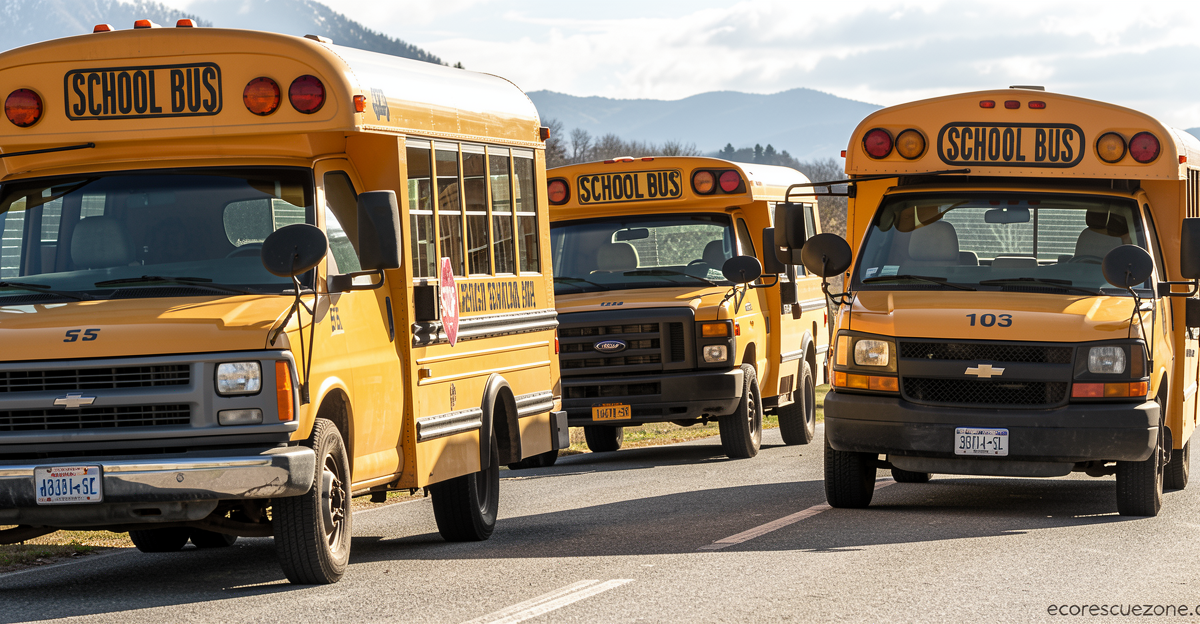
Ecorescuezone.com – Every August, finance directors across the country finalize transportation budgets for the coming year. This fall, however, School districts face a back-to-school problem they did not fully anticipate: diesel fuel costs have surged past every projection. Because roughly 90 percent of the nation’s 480,000 school buses still run on diesel, even a modest price spike at the pump cascades into millions of dollars in added expense across thousands of districts at once.
The scale of the jump is difficult to overstate. As of Wednesday, AAA’s fuel-tracking data placed the national average diesel price at $5.62 per gallon. Twelve months earlier, that same gallon cost $3.70. Multiply a nearly two-dollar increase by the tens of thousands of miles a single bus covers daily, and the arithmetic quickly becomes a solvency question for any district operating on a fixed transportation line item.
A Spring Shock That Never Receded
The spike did not creep in gradually. Districts first felt the pressure in spring, when the war with Iran tightened global fuel markets. By May, a joint survey conducted by organizations representing school superintendents and commercial bus operators found that more than half of the districts polled were already spending past their transportation budgets on diesel alone. The shortfall was not a forecast; it was a present-tense gap in the ledger.
Yakima, Washington: Fewer Trips, Longer Routes
In the Yakima School District, assistant superintendent of finance and operations Jacob Kuper ran the projections for the 2026–2027 year and discovered that higher diesel prices alone would inflate the district’s fuel bill by roughly 38 percent — about $130,000 in unbudgeted spending.
“The equivalent of one teacher,” Kuper noted, highlighting how fast a single fuel line item can swallow an entire salary.
Instead of absorbing the overage, Kuper restructured operations. The district merged bus routes, staggered bell times across campuses, cut the total number of daily trips, and loaded more students per vehicle. Fewer trips meant fewer driver-hours, which in turn lowered both fuel consumption and labor costs.
“So then you save on the actual number of drivers you need,” he explained.
Those changes put Yakima on track to save between $400,000 and $500,000 over the year — comfortably offsetting the diesel premium. The trade-off, however, is not costless. With fewer drivers covering longer routes or extended shifts, the physical and scheduling burden on individual operators rises.
“You have fewer drivers with longer routes or longer total hours per day. That means more difficult days for drivers,” Kuper acknowledged.
He also pointed to Yakima’s compact geography as a mitigating factor. Compared with sprawling rural districts where a single route can span dozens of miles of back roads, merging routes in Yakima adds only modest ride time for students.
“We’re fortunate we have a small geographical footprint,” he said.
A National Pattern of Compression
Yakima’s experience is not an outlier. The same May survey found that 40 percent of responding districts were consolidating bus routes in some form, while around 20 percent reported restricting non-mandatory trips — field trips, for example — to preserve fuel for required transportation. A smaller but growing cohort said it was actively evaluating a transition away from diesel vehicles altogether.
Elleka Yost, director of advocacy and research at the Association of School Business Officials International and one of the survey’s sponsoring bodies, cautioned that many districts are dipping into reserve or “rainy-day” funds as a stopgap. That buys short-term breathing room, she warned, but it erodes the financial cushion districts will need for future shocks, from facility repairs to unexpected enrollment swings.
Boise, Idaho: Electrifying the Fleet
In Boise, transportation supervisor Lanette Daw has focused on a different lever: reducing the number of stops per route. Each additional stop, she explained, adds deadhead mileage and idling time that burns fuel without moving a single student.
“Every stop adds mileage and cost,” she said.
This week the Boise district also added eight electric buses to its fleet, purchased with funding from the federal Clean School Bus Program. The district is now studying whether a larger electric share of the fleet could meaningfully lower long-run fuel expenditure.
Frequently Asked Questions
Why are diesel prices hitting school bus budgets so hard right now?
The war with Iran tightened global fuel markets in spring, pushing the national diesel average from $3.70 to $5.62 per gallon in roughly twelve months. Because about 90 percent of the 480,000 school buses in the United States still run on diesel, that price jump translates directly into millions of dollars in unbudgeted operating costs for districts nationwide.
What are districts actually doing to cope?
The most common responses include consolidating bus routes, staggering bell times, trimming non-mandatory trips, and loading more students per vehicle. Some districts are drawing on reserve funds as a short-term bridge, while a growing number are evaluating electric or hybrid buses funded through programs like the federal Clean School Bus Program.
Will electrifying the fleet solve the problem?
Electric buses eliminate per-gallon fuel costs and reduce idling emissions, but they require upfront capital investment, charging infrastructure, and driver retraining. Districts like Boise are piloting small electric additions to measure real-world savings before committing to a larger fleet transition. For most districts, electrification remains a long-run strategy rather than an immediate fix.