Cuban artist and dissident exiled from country after 5 years in prison arrives in US

Luis Manuel Otero Alcántara Returns to Freedom After Cuban Imprisonment
A Journey Home to Miami
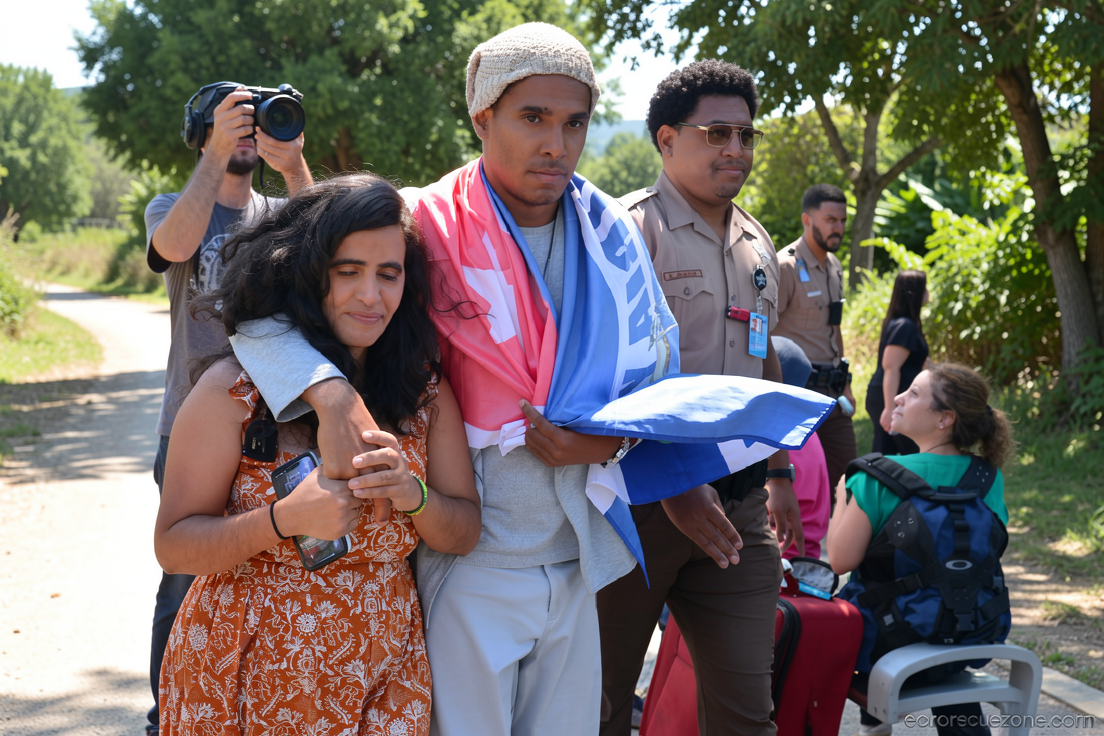
ecorescuezone.com – On Saturday, the vibrant streets of Miami welcomed back one of Cuba’s most prominent voices of dissent. Luis Manuel Otero Alcántara, the celebrated artist and musician who has become synonymous with resistance against the island nation’s government, touched down in the United States following his release from a lengthy incarceration. The 38-year-old creative had been serving a five-year prison term, which concluded with the stipulation that he depart his homeland permanently.
His arrival was met with an outpouring of emotion from supporters who had gathered at the airport. The crowd erupted in cheers and song, many raising their mobile devices high above their heads to capture the moment. In a particularly moving gesture, well-wishers wrapped him in a Cuban flag bearing the inscription “Patria y Vida,” which translates to “Homeland and Life.” This phrase holds deep significance, as it serves as the title of a Grammy-winning song that Alcántara helped create, and which has since evolved into a powerful anthem for Cuba’s political opposition movement against state repression.
Accepting Exile as Liberation
According to a social media platform maintained by his devoted friends and supporters, American authorities granted him parole into the country earlier in the week. The supporters noted that Alcántara made the conscious decision to accept exile, recognizing it as the sole path to escaping ongoing persecution while continuing his artistic and activist endeavors. This choice represents not merely a physical relocation, but a commitment to preserving his voice and vision for future generations.
Alcántara’s contributions to Cuban culture extend beyond his individual work. He played a pivotal role in co-founding the San Isidro Movement, a collective of Havana-based artists, writers, and musicians. The organization takes its name from the neighborhood where Alcántara resided, reflecting the deep connection between place and artistic identity in Cuban society.
From Protest to Prison
The trajectory of Alcántara’s life changed dramatically on July 11, 2021, when he was arrested during a public demonstration. The circumstances surrounding his detention drew international attention, and in 2022, a Cuban court handed down a five-year sentence for charges including public disorder, contempt, and disrespect toward national symbols. His arrest and subsequent imprisonment had been consistently condemned by human rights organizations and the United States government throughout the ordeal.
International groups, most notably Amnesty International, designated Alcántara as a political prisoner, a classification that the Cuban government firmly rejected. During his time behind bars, he was held in a maximum-security facility, where conditions were reportedly harsh. Although his release had been anticipated for some time, advocates reported difficulty reaching him for several days, leaving uncertainty about both his whereabouts and his status.
A Symbol of Hope
The legal organization Cubalex, which provides counsel to dissidents and documents human rights violations from abroad, submitted a habeas corpus petition on Alcántara’s behalf on Monday. This legal action underscored the ongoing efforts to secure his freedom and ensure proper treatment under Cuban law.
Until boarding his flight on Saturday, his supporters remained uncertain whether he was truly free or simply being moved within the Cuban prison system. His first destination upon reaching American soil would be the Shrine of Our Lady of Charity, where he planned to make a traditional offering—a gesture connecting his personal faith with his public journey.
Alcántara’s departure does not mark the end of Cuba’s struggle for political prisoners. His advocates noted that other political detainees remain incarcerated, including fellow artist Maykel “Osorbo” Castillo Pérez. They expressed hope that Alcántara’s release would strengthen calls for Pérez’s freedom as well.
Carrying with him from Cuba was a broken statue of the Virgin Mary, which Alcántara described as representing hope and healing. He explained that the damaged figure symbolized the possibility of reconstruction—of putting something whole again from its fragments, much like his own journey from imprisonment to freedom.