Nicaragua’s President Ortega says no more elections, extending his 20-year rule

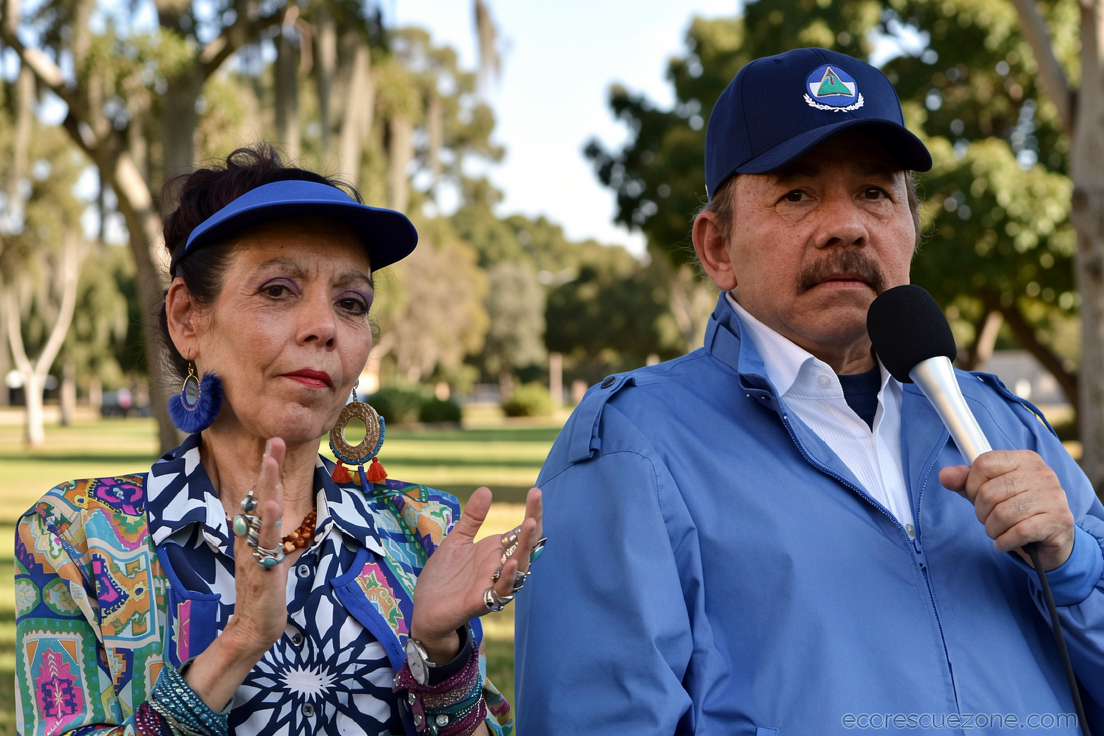
Ortega Declares End to Electoral Process in Nicaragua
Ecorescuezone.com – Nicaragua s President Ortega says no more elections will take place in his country, marking a historic moment that extends his two-decade rule. The announcement effectively closes the door on democratic transitions through voting, strengthening Ortega’s position as Nicaragua’s long-serving leader. This decisive move signals a permanent departure from electoral politics in the Central American nation.
The timing proved significant, arriving during celebrations of the Sandinista Revolution’s anniversary. This 1979 uprising toppled the Somoza dictatorship and first elevated Ortega to national prominence. After returning to power in 2007, Ortega has steadily dismantled democratic institutions while consolidating control across all government branches.
Constitutional Changes and Power Consolidation
Ortega’s journey toward absolute authority has been both methodical and uncompromising. Following the deadly 2018 protests that claimed hundreds of lives during a severe government crackdown, Ortega and his wife Rosario Murillo—who serves as co-President—have maintained their grip through increasingly authoritarian tactics. Their approach has shifted from managing opposition to eliminating it completely.
In January 2025, the government-controlled Congress passed legislation extending the presidential term from five to six years. This strategic move postponed Nicaragua’s next elections, originally scheduled for November 2027. Many observers interpret this extension as another step toward permanent rule.
International Legitimacy Challenges
Ortega’s claim to power encounters substantial obstacles internationally. He proclaimed victory in the 2021 presidential election, yet global observers widely denounced the vote as fraudulent. His administration imprisoned every realistic challenger, guaranteeing a predetermined result. The United States notably refuses to recognize Ortega’s presidency, maintaining diplomatic distance.
There won’t be anymore elections. Parties put in place by the Yankees, put in place by the Somoza regime, coming back to power — that story is over.
Never, never, never.
During this speech, Ortega criticized the United States while dismissing future democratic elections. His words emphasized a return to pre-revolutionary political structures, positioning the Sandinista era as Nicaragua’s only legitimate governance model.
Opposition Voices and Political Prisoners
Nicaragua s President Ortega says his announcement represents an escalation of authoritarianism, according to human rights organizations and opposition figures. Juan Sebastián Chamorro, who ran in the 2021 election and remained imprisoned until his 2023 release to the United States alongside more than 200 political prisoners, shared his perspective on the administration’s strategy.
Ortega and Murillo are evidently afraid at the idea that the slightest political opening could create the conditions for dissent to manifest and threaten their grip on power.
Tiziano Breda, a senior Latin America analyst with ACLED, observed that rather than staging another manipulated election, the government chose to eliminate electoral competition entirely. He compared Nicaragua’s path to one-party states like China and Cuba.
The Mechanism for Recognition of Political Prisoners reports at least 46 individuals remain incarcerated for political reasons. Despite these numbers, the government denies political prisoners exist. Danny Ramírez Ayérdiz, a Nicaraguan attorney monitoring abuses from Argentina, described the announcement as revealing “the face of a dictatorship that, without any shame, has entrenched itself in power.”
Repression and Diplomatic Pressure
Since the U.S. military operation capturing Venezuela’s former President Nicolás Maduro during a January raid, Nicaragua promised to release additional prisoners. This commitment has seen minimal follow-through, with little transparency about the process. At least one activist has died in custody since that announcement.
The Ortega-Murillo administration has released hundreds of activists, religious leaders, and politicians to the United States and Guatemala in recent years. Many of those freed had their Nicaraguan citizenship revoked, leaving them stateless until resettlement.