As Flock battles public scrutiny, other police surveillance companies see an opening

As Flock Battles Public Scrutiny, Rivals See Opportunity
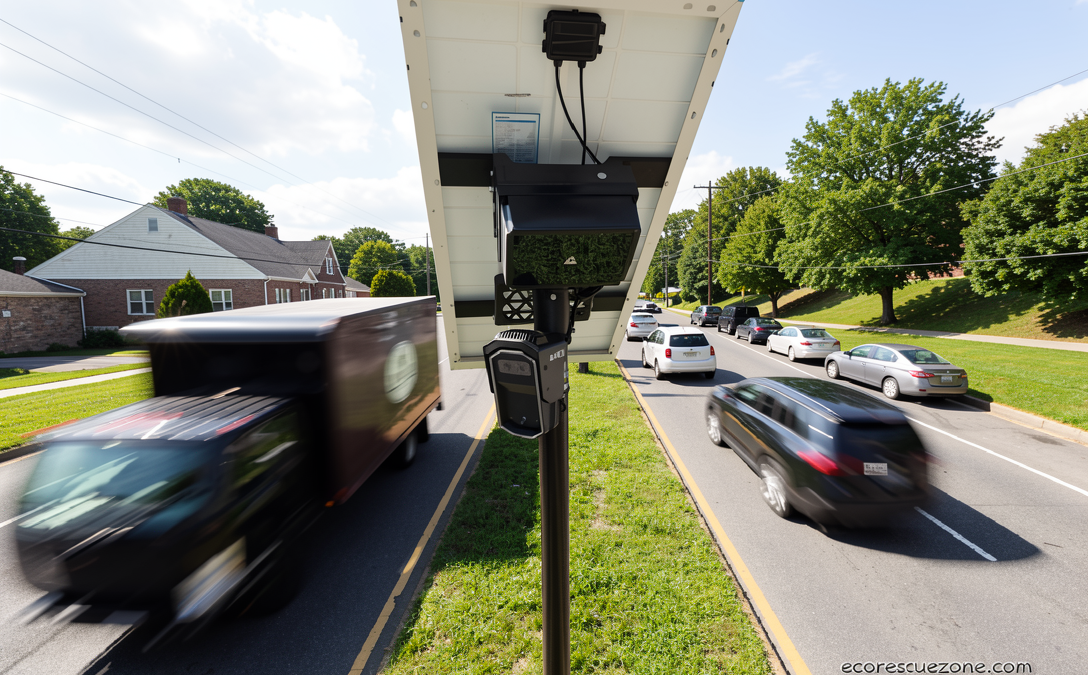
Ecorescuezone.com – As Flock battles public scrutiny over its automated license plate reader network, competing surveillance vendors are quietly recalibrating their sales pitches. More than 130,000 ALPR cameras now line streets across American towns and cities, per the crowdsourced mapping effort DeFlock.org. What started as a narrow traffic-enforcement tool has morphed into a backbone of municipal policing — and the backlash it has provoked is reshaping how every vendor in the space markets its product.
A Library Meeting That Became a National Flashpoint
Last Monday, a packed conference room at a Washington, D.C. public library hosted members of DeFlock DC, a grassroots coalition pressing the Metropolitan Police Department to terminate its contract with Flock Safety. Residents came not to tour a gadget but to understand exactly where Flock’s cameras sit across the capital and how the data flows. The gathering underscored a broader reality: the company whose plate readers have become the most recognizable symbol of municipal surveillance is now under sustained community pressure in cities nationwide.
The evening’s sharpest remark came from Loreal Hawk, a DeFlock DC organizer, who reminded the audience that the underlying technology predates any single vendor. Axon, Motorola Solutions, and Verkada have all sold comparable plate-reading systems to police departments for years. Flock simply happened to be the brand residents recognized when the privacy revolt ignited.
Why One Brand Drew the Fire
Flock’s visibility made it the easiest target. Its units are conspicuous, frequently mounted at eye level on intersections, and CEO Garrett Langley has built a high-profile social-media presence touting neighborhood-safety outcomes. The company also received public credit for helping track a suspect in last year’s Brown University shooting, which killed two students and wounded nine others.
“On a very personal level, I go to bed every night very proud of the impact we have in the world,” Langley said.
That confidence has since eroded. Andrew Ferguson, a George Washington University law professor and author of Your Data Will Be Used Against You: Policing in the Age of Self-Surveillance, described the shift in blunt terms:
“The Flock ALPR technology has captured the public’s attention” and triggered a realization that “maybe we don’t want to be surveilled all the time.”
Ferguson added that Flock now carries “the target put on its back,” a phrase capturing how rapidly goodwill dissolved once residents grasped what the cameras actually record and share.
The Shared-Database Problem
Most ALPR units, Flock’s included, use artificial intelligence to pull not only the plate number but the vehicle’s make, model, and color. Flock then pools those images into a shared national database open to subscribing agencies. A department in one state can query records for vehicles that have never entered its jurisdiction — an architecture that privacy advocates identify as the single largest point of contention.
Matthew Guariglia, a senior policy analyst at the Electronic Frontier Foundation, framed the concern in terms that extend well beyond one vendor’s product:
“People got really mad at Flock because they realized that it was a window into a whole network of surveillance.”
Guariglia, who opposes the technology broadly rather than singling out one company, warned that once cameras feed a shared network, “suddenly your cameras are being used to enforce things that you don’t agree with or that are not illegal in your town.” He cited a Texas case in which deputies queried Flock data to investigate a woman suspected of traveling out of state to obtain an abortion. Separate incidents have surfaced in which officers used plate-reading records to track women, and in at least some cases information flowed to federal immigration agencies without the originating department’s explicit intent.
Concessions and Ongoing Pushback
Last week Flock announced a package of operational changes: a shortened data-retention period and new safeguards designed to keep local searches contained within local boundaries. The American Civil Liberties Union and allied privacy groups called the steps insufficient, arguing that the fundamental architecture of a shared, cross-jurisdictional database remains intact. Competitors, meanwhile, are already adjusting their outreach materials to emphasize local-only data handling, positioning themselves as the “privacy-respecting” alternative while the industry’s most visible name absorbs the public’s anger.
Frequently Asked Questions
What exactly does an ALPR camera capture? Each pass-by triggers a photograph of the rear license plate. Modern units, including Flock’s, also extract vehicle make, model, and color via on-board AI before uploading the record to a searchable database.
How many ALPR cameras operate in the United States? DeFlock.org, a crowdsourced tracking project, currently maps more than 130,000 units across towns and cities nationwide.
Who are Flock’s main competitors in the plate-reading market? Axon, Motorola Solutions, and Verkada have all sold comparable systems to municipal and state police departments for years.
What changes did Flock announce last week? The company shortened its data-retention period and introduced safeguards intended to restrict local searches to local boundaries, though privacy advocates say the shared-database architecture itself remains unchanged.